
Coccidophilus citricola
Coccidophilus citricola
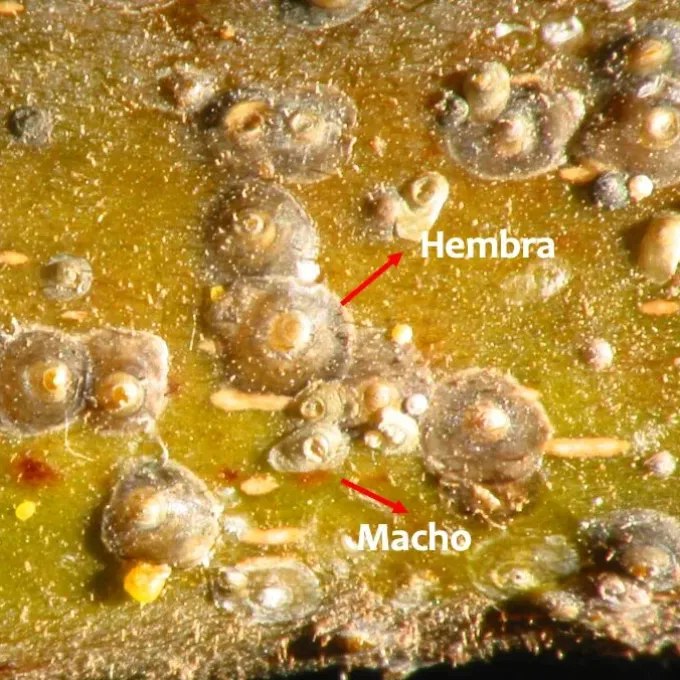
Description
How to identify
Coccidophilus citricola is a small beetle belonging to the Coccinellidae family, known for acting as a biological control agent against scale insects.
Adult specimens typically exhibit a dome-shaped body morphology, which is a common trait among many species of lady beetles found in citrus orchards.
Their coloration is generally dark or brownish, providing them with excellent camouflage against the bark and foliage of the host plants they inhabit.
Larvae of this species are active predators, moving across plant surfaces to locate and consume various stages of coccids and scale insects.
Given their tiny size, identifying this species often requires professional entomological tools or magnifying glasses for precise classification.
What it damages
While Coccidophilus citricola itself acts as a predator, its presence is a reliable indicator that the host plant is suffering from a scale insect infestation.
Citrus crops, including lemons, oranges, and mandarins, are the primary hosts that sustain the pests which these beetles feed upon.
The scale insects they prey on cause direct damage by extracting vital sap from leaves, branches, and fruits, weakening the overall structure of the tree.
A significant secondary issue is the growth of sooty mold, which thrives on the honeydew secreted by scale insects, effectively blocking photosynthesis.
Without sufficient natural control or intervention, heavy infestations can lead to stunted tree growth, severe defoliation, and significant economic losses.
When it appears
The life cycle and activity of Coccidophilus citricola are closely synchronized with the seasonal development of their prey populations.
Springtime marks the beginning of their activity as rising temperatures trigger the emergence of both the predator and the harmful scale insects.
During the summer months, the population of these beetles often peaks as they take advantage of the abundant food supply found on citrus trees.
As temperatures begin to drop in the autumn, the beetles transition into their overwintering phase, finding shelter in tree crevices or debris.
In warmer subtropical regions, the biological cycle may continue almost year-round, provided that host insects remain present and active.
Signs of infestation
The primary symptom of an infestation is the appearance of dense clusters of scale insects, often found on the undersides of leaves or along stems.
The presence of a sticky substance known as honeydew on the leaves is a classic sign of sap-sucking pest activity that needs immediate attention.
Visual identification of Coccidophilus citricola usually involves locating the tiny beetles in close proximity to the active colonies of scales.
Leaf yellowing, curling, and premature leaf drop are common physical indicators that a citrus tree is under significant stress from pests.
Increased ant activity on the tree trunk and branches is often a strong signal that scale insects are being protected and farmed by ants.
Control measures
A balanced approach to pest management is essential, prioritizing the preservation of natural predators like Coccidophilus citricola.
When chemical control is necessary, it is vital to select selective insecticides that minimize harm to beneficial predatory beetles.
Mechanical removal through regular pruning of infested branches is an highly effective method to reduce pest load without using chemicals.
The application of horticultural oils or organic soaps provides a safe and effective way to manage scale insect populations without environmental damage.
- Conduct regular orchard inspections for early detection.
- Ensure proper nutrient management to increase tree vigor.
- Avoid broad-spectrum pesticides to keep beneficial insects alive.
Taxonomy
- Latin name
- Coccidophilus citricola
- Order
- Coleoptera (beetles)
- Family
- Coccinellidae
- EPPO code
- CCCPCI
Discussion
No discussions yet — be the first.