
Coccidophilus
Coccidophilus
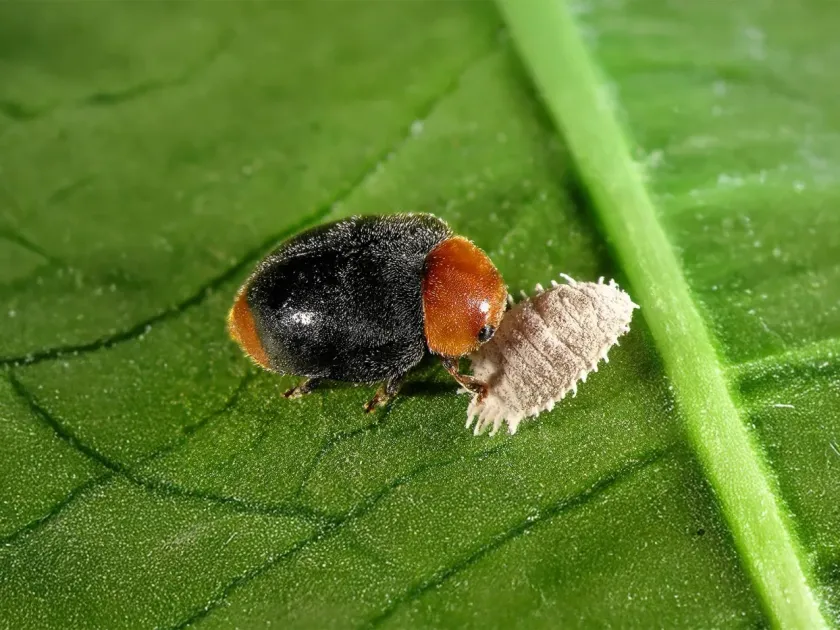
Description
How to identify
Coccidophilus is a genus belonging to the Coccinellidae family (lady beetles). While often studied for their role in ecosystems, certain species can behave as pests in specific agricultural environments, necessitating proper identification and management.
Adult beetles are typically small, hemispherical, and often dark-colored, which allows them to blend in with bark or foliage. Their morphology is characteristic of ladybirds, with hardened elytra protecting their soft abdomen.
The larvae are campodeiform, featuring well-developed legs that enable rapid movement across plant surfaces. They are usually found in areas with high insect density, searching for food sources.
Systematically, they are classified under the order Coleoptera. Proper identification requires a microscope to examine specific anatomical traits, such as the shape of the antennae and mouthparts.
They are hardy insects, possessing a protective exoskeleton that allows them to survive fluctuating environmental conditions in orchards and greenhouses.
What it damages
Damage caused by Coccidophilus is often indirect, primarily involving the disruption of biological control programs that rely on specific beneficial insects.
They may negatively affect fruit crops by outcompeting specialized predators that are essential for regulating scale insect and mealybug populations.
In cases where their primary prey is scarce, some individuals have been observed to feed on tender plant tissues, resulting in stunted shoot growth and localized leaf necrosis.
Their presence in protected cropping systems can be problematic if they prey upon the biological control agents introduced to manage other greenhouse pests.
In large-scale agricultural settings, their interference with the natural balance of beneficial arthropods can lead to outbreaks of secondary pests.
When it appears
Adult activity begins in early spring, correlated with rising temperatures and the onset of sap flow in host plants.
Their peak activity is usually recorded during the summer months, aligning with the highest reproductive rate of the insects they inhabit alongside.
The life cycle includes a complete metamorphosis, passing through the egg, larva, pupa, and adult stages within a few weeks, depending on environmental factors.
Pupation occurs in sheltered sites, such as the underside of leaves or within crevices in bark, which provides protection from predators and adverse weather.
Overwintering occurs in the adult stage, where they aggregate in protected areas, including leaf litter, soil debris, or under loose tree bark.
Signs of infestation
Evidence of their presence includes the observation of small, dark beetles on branches and twigs, particularly near colonies of scale insects.
Stunted development of young leaves and shoots, accompanied by small, localized necrotic spots, may indicate feeding behavior during periods of food scarcity.
Larval activity can be confirmed by visual inspections of host plants, where the movement of larvae indicates a reproducing population.
A noticeable decrease in the efficacy of naturally occurring parasitic wasps or other predators can serve as a sign of high Coccidophilus density.
The discovery of pupae attached to the underside of leaves confirms that the population has successfully completed its development cycle on the site.
Control measures
Effective management requires a combination of agricultural practices designed to maintain ecological balance and limit unwanted population growth.
The use of broad-spectrum insecticides should be avoided to prevent the destruction of beneficial predators that naturally suppress these populations.
Cultural control practices, such as removing old bark from tree trunks and clearing leaf debris, are effective in reducing their overwintering success.
Monitoring using yellow sticky traps allows growers to determine population density and implement targeted actions when thresholds are exceeded.
- Regular monitoring of tree bark and foliage density.
- Encouraging indigenous beneficial insect populations.
- Minimal use of persistent synthetic chemical pesticides.
Taxonomy
- Latin name
- Coccidophilus
- Order
- Coleoptera (beetles)
- Family
- Coccinellidae
- EPPO code
- CCCPSP
Discussion
No discussions yet — be the first.