
Clivina
Clivina
Description
How to identify
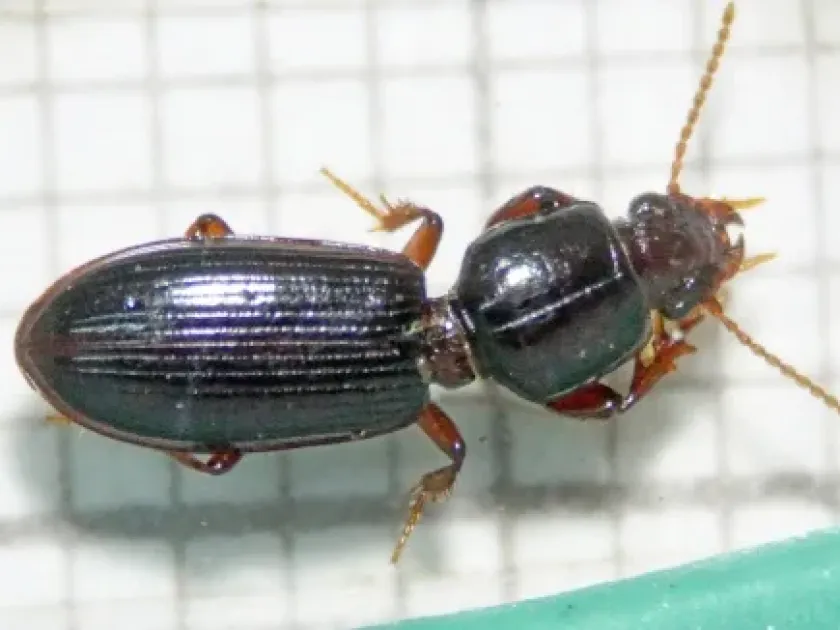
Clivina is a genus of ground beetles (Carabidae) that are specifically adapted to a subterranean lifestyle. These beetles typically measure between 5 and 7 millimeters in length and possess an elongated, cylindrical body shape.
Their most distinctive feature is their specialized fossorial (digging) legs, which are heavily built and armed with spines. These limbs allow the beetles to navigate efficiently through soil, constructing elaborate tunnel systems.
The head of the Clivina beetle is equipped with strong, well-developed mandibles. These mouthparts are designed for cutting through organic matter and plant tissues, making them significant pests in agricultural environments.
The larvae are worm-like in appearance and share the same hidden, soil-dwelling habits as the adults. They are highly mobile within the soil profile and are constantly searching for suitable root systems to feed upon.
These insects prefer damp, loose soils rich in organic matter. Consequently, they are frequently found in moist fields, low-lying areas, and plots where soil structure has been loosened by irrigation or excessive moisture.
What it damages
Clivina primarily affects cereal crops, including wheat and barley, particularly during the critical germination and seedling emergence stages. Sugar beets are also known to be vulnerable to their feeding activity.
The beetles and their larvae feed on swollen seeds, roots, and the hypocotyl (the stem portion below the cotyledons). This feeding often results in the destruction of the plant before it ever reaches the soil surface.
Heavy infestations can lead to significant stand loss, resulting in sparse, uneven crop emergence. In severe cases, farmers may be forced to replant the entire field, which causes major economic loss.
The damage is usually localized but can spread rapidly under favorable environmental conditions. If the seedlings are stressed due to cold or dry weather, their ability to recover from Clivina feeding is significantly diminished.
Furthermore, the physical wounds caused by the feeding activity act as entry points for various soil-borne pathogens. This secondary infection often accelerates plant death and further complicates crop development.
When it appears
The activity of Clivina typically begins in the early spring as soil temperatures rise. This warming trend triggers the emergence of overwintering adults from their deep-soil refuges.
The spring period is the most critical time for monitoring, covering the interval from sowing until the tillering stage. During this time, the beetles are actively seeking food to support their reproductive cycle.
While activity might decrease slightly during the warmer, drier months, it often persists in areas with sufficient moisture. The larvae continue to feed and develop throughout the growing season.
As autumn approaches and temperatures drop, adult Clivina beetles retreat to deeper soil layers. They remain inactive during the winter months, protected by the insulation provided by the soil.
For effective management, it is recommended to conduct soil sampling during the winter or early spring to assess population density before making decisions regarding pesticide application.
Signs of infestation
The most visible sign of a Clivina infestation is the presence of "gaps" or uneven patches in the field. These bare spots indicate areas where the seedlings have been consumed or severely damaged.
Careful inspection of affected seedlings often reveals characteristic damage: chewed or severed roots and stem bases. The edges of the damage may appear ragged due to the mechanical nature of the beetle's mouthparts.
After rainfall, small exit holes may become visible on the soil surface, indicating where the adult beetles have emerged from their underground tunnels to move between locations.
If you perform a soil excavation around a damaged plant, you will likely find the beetles or their larvae. They usually reside in the immediate vicinity of the plant roots they are currently feeding on.
Clusters of stunted or yellowing plants often surround the main damage zone. These plants likely have partially damaged root systems that are struggling to support the plant's growth.
Control measures
Managing Clivina requires a multi-faceted approach, integrating agronomic practices with chemical control to achieve sustainable results.
Deep plowing or mechanical soil cultivation is highly effective at disrupting the beetles' tunnel systems. This process exposes the pests to the surface, where they become susceptible to natural predators and desiccation.
Crop rotation serves as a primary preventative measure. By changing the host crop, you disrupt the life cycle of the beetle and reduce the overall pest pressure within the field over time.
Seed treatment with systemic insecticides is the standard and most effective method of chemical control. This creates a protective zone around the germinating seed, deterring or killing the pest during the most vulnerable period.
If population counts from soil sampling exceed economic thresholds, applying soil-applied insecticides during the sowing process can provide additional protection, ensuring a more uniform and robust crop stand.
Taxonomy
- Latin name
- Clivina
- Order
- Coleoptera (beetles)
- Family
- Carabidae
- EPPO code
- CLIVSP
Discussion
No discussions yet — be the first.