
Clitostethus arcuatus
Clitostethus arcuatus
Description
How to identify
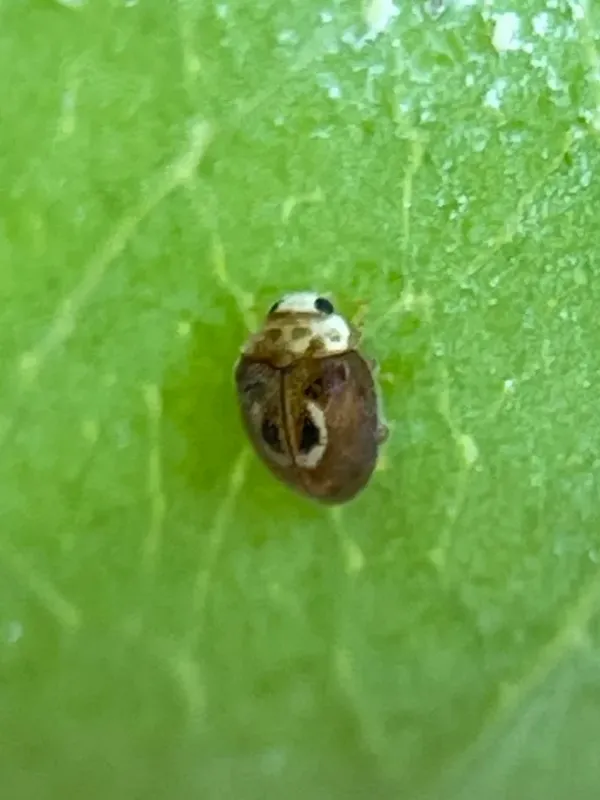
Clitostethus arcuatus is a species of ladybird beetle (family Coccinellidae). It is a very small insect, typically reaching only 2 mm in length, characterized by a specific arc-shaped pattern on its elytra, which provides its common and scientific name.
The larvae of this species are highly mobile and predatory. They are often covered in white, waxy secretions that act as camouflage, allowing them to remain undetected within whitefly colonies while they feed on their prey.
Unlike many other insects associated with crop damage, this beetle is a beneficial predator. It is an essential component of the natural ecosystem, helping to keep populations of various sap-sucking insects in check.
These beetles overwinter as adults, finding shelter in bark crevices, leaf litter, or protected areas in structures. Activity resumes in early spring when temperatures become conducive to the development of their prey.
Identification in the field requires close inspection. They are often spotted moving briskly among colonies of whiteflies on the undersides of leaves, and their presence is a positive sign of natural pest regulation.
What it damages
This species does not cause direct damage to plants; it is exclusively a predator of other insects. Its primary diet consists of whitefly species, such as Aleurochiton aceris, which are common pests on various trees and shrubs.
The damage to the crops is caused entirely by the prey, which are whiteflies. These pests suck plant sap, leading to leaf yellowing, stunting, and the excretion of honeydew, which attracts sooty mold.
Sooty mold growth on leaves blocks sunlight and inhibits photosynthesis. If left unchecked, heavy whitefly infestations can significantly reduce plant vigor and crop yields.
The agronomic challenge lies in ensuring that pest management strategies do not inadvertently kill the Clitostethus arcuatus population. Using broad-spectrum insecticides can eliminate these natural allies, leading to secondary pest outbreaks.
By protecting the predator, growers can maintain a stable environment where pest populations are kept below economic injury levels through natural predation.
When it appears
The life cycle of Clitostethus arcuatus is closely synchronized with the seasonal patterns of its prey. Activity begins in late spring, as temperatures rise, triggering the emergence of whiteflies.
Throughout the summer, several generations can be produced, with populations peaking in mid-to-late summer. This is when the abundance of whiteflies provides maximum food resources for the beetles.
As autumn approaches and temperatures drop, adults prepare for diapause. They move away from the foliage to seek out secure overwintering sites, remaining dormant until the following spring.
The speed of development is highly dependent on environmental factors, particularly humidity and temperature. Optimal conditions lead to rapid population growth, allowing the predators to quickly respond to outbreaks.
Monitoring throughout the growing season helps agronomists estimate the efficiency of natural control and decide whether additional interventions are truly necessary.
Signs of infestation
The presence of Clitostethus arcuatus is identified by observing the small beetles in areas of high whitefly density. Their presence indicates an ongoing biological control effort.
A telltale sign is the observation of empty whitefly pupal cases, which have been cleared out by the predatory larvae of the beetle. These areas often appear clean compared to the surrounding infested parts of the leaf.
Adult beetles are often seen actively patrolling leaves. When disturbed, they may drop from the plant surface, a behavior that helps them avoid potential threats.
Unlike plant-feeding pests, these beetles do not leave behind bite marks, wilting tissues, or necrotic spots. Their activity is purely focused on hunting and consuming pests.
Regular visual scouting with a hand lens is recommended to distinguish between these beneficial ladybirds and other potentially harmful insects in the garden or greenhouse.
Control measures
The primary control strategy for Clitostethus arcuatus is conservation. This means avoiding chemical treatments that might be harmful to this predator and creating an environment that supports its lifecycle.
If whitefly populations exceed thresholds requiring intervention, selective biological agents should be preferred. These avoid the broad impact of traditional synthetic pesticides.
Landscape management, including the planting of nectar-producing plants, can provide supplemental food sources for adult beetles during periods when prey density is low.
- Minimize the use of pyrethroid and organophosphate insecticides.
- Encourage beneficial habitat by leaving leaf litter in managed garden borders.
- Employ IPM (Integrated Pest Management) programs that prioritize natural enemies.
- Conduct regular monitoring to ensure predator presence is accounted for in pest management plans.
By adopting these practices, farmers and gardeners can rely on the natural efficiency of Clitostethus arcuatus, reducing the need for chemical applications and supporting biodiversity.
Taxonomy
- Latin name
- Clitostethus arcuatus
- Order
- Coleoptera (beetles)
- Family
- Coccinellidae
- EPPO code
- CLIUAR
Discussion
No discussions yet — be the first.