
Clitostethus
Clitostethus
Description
How to identify
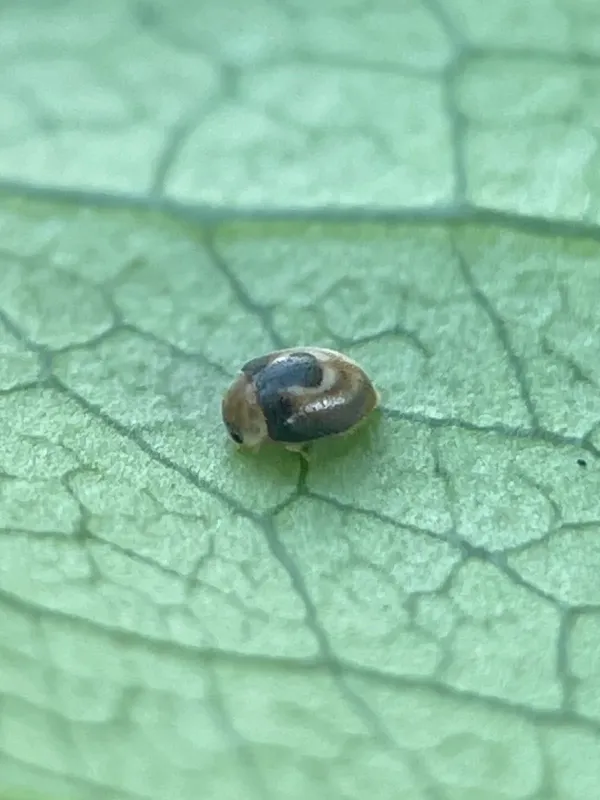
Clitostethus (Clitostethus arcuatus) is a small beetle belonging to the Coccinellidae family (ladybirds), order Coleoptera. While many ladybirds are known for their predatory nature, this specific species is particularly valued in greenhouse environments for its role in biological pest control.
Adult beetles are tiny, measuring approximately 1.5–2 mm in length, and have a distinctive dome-shaped body. Their coloration is generally yellowish to brownish, often with darker patterns on the elytra, which helps them blend into the foliage.
The larvae are elongated and covered with small setae, often featuring a waxy secretion. This appearance allows them to blend in with whitefly larvae, which is a common mimicry strategy and a key trait for those monitoring greenhouse crops.
The life cycle encompasses egg, larva, pupa, and adult stages. Development speed is highly dependent on ambient temperature, meaning that warmer greenhouse conditions accelerate the insect's reproductive cycle significantly.
Clitostethus is an active hunter. Both the adults and larvae are highly mobile, allowing them to search for prey across multiple plants, making them a very efficient agent for controlling pest infestations.
What it damages
Clitostethus primarily feeds on whiteflies, such as the greenhouse whitefly (Trialeurodes vaporariorum), which causes damage to various vegetable crops like tomatoes and cucumbers.
The beetle itself does not consume plant tissue; rather, it provides a protective service by reducing the population of pests that do cause damage. Without such predators, whiteflies would cause significant economic losses.
Whiteflies damage crops by sucking plant sap, which leads to leaf chlorosis, yellowing, and stunted growth. Severe infestations can cause the entire plant to wilt or perish.
Furthermore, whiteflies produce honeydew, a sticky substance that promotes the growth of sooty mold. This mold reduces the photosynthetic capacity of the plants and lowers the market value of the produce.
By consuming whitefly larvae, Clitostethus helps maintain the health of the crop, serving as a critical component in integrated pest management systems.
When it appears
In greenhouse settings, Clitostethus is most active during periods when temperatures remain above 18 degrees Celsius, which is optimal for their metabolic activity.
The peak population density usually occurs during the summer months, correlating with the natural surge in whitefly activity due to warm weather.
During the autumn and winter months, the activity of the beetle may decline as daylight hours decrease and temperatures drop, leading the insects into a period of dormancy.
In heated greenhouse systems, if a stable food supply of whiteflies is present, the beetle may continue to develop and reproduce throughout the year.
Regular scouting is recommended from early spring through autumn to ensure that the population of the predator is sufficient to manage potential pest outbreaks.
Signs of infestation
The primary sign of Clitostethus presence is the observation of their larvae on the underside of leaves, often situated near whitefly colonies.
One can identify their effective work by noticing a decrease in the overall population of whitefly nymphs and the presence of empty nymph skins, which indicate successful predation.
Plants protected by these beneficial insects tend to show better growth, lack of sticky honeydew residues, and minimal signs of yellowing or curling leaves.
Stable or declining numbers of whiteflies in an area with observed ladybird larvae suggest that the biological control system is functioning correctly.
When searching for them, one should inspect the undersides of the leaves carefully, as the tiny adults and larvae can be well-camouflaged among the dense foliage.
Control measures
The most effective strategy is to conserve existing populations of Clitostethus by implementing Integrated Pest Management (IPM) practices.
One must strictly avoid the use of broad-spectrum insecticides, which are often fatal to beneficial insects and can disrupt the natural ecosystem of the greenhouse.
If chemical intervention is absolutely necessary, use selective pesticides that are verified as safe for beneficial predatory beetles.
Maintaining a clean greenhouse environment, including the removal of weeds and plant debris, helps reduce hiding places for overwintering pests and ensures the health of the crop.
Growers can also purchase and release laboratory-reared Clitostethus populations to augment the biological control efforts in cases of severe whitefly pressure.
Taxonomy
- Latin name
- Clitostethus
- Order
- Coleoptera (beetles)
- Family
- Coccinellidae
- EPPO code
- CLIUSP
Discussion
No discussions yet — be the first.