
Cleruchoides
Cleruchoides
Description
How to identify
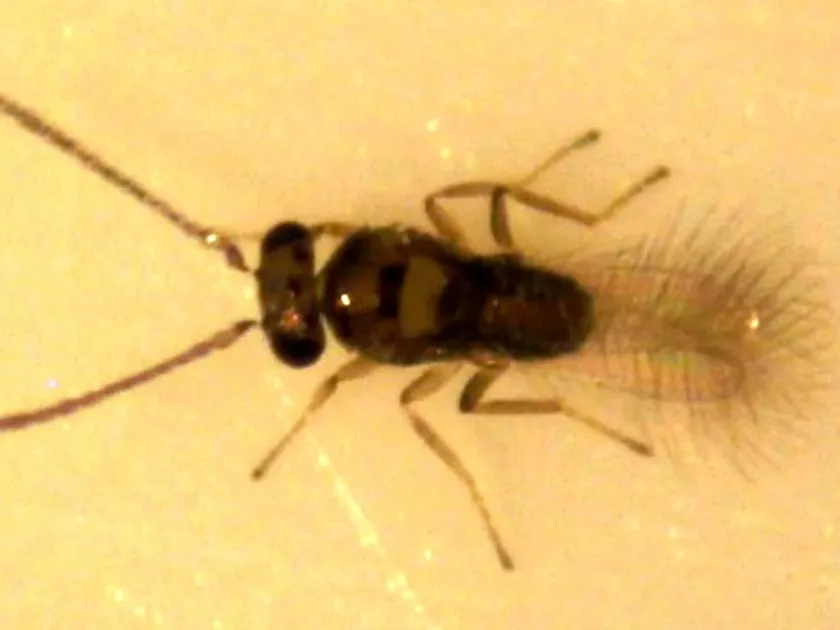
Cleruchoides is a genus of minute parasitic wasps belonging to the family Mymaridae, order Hymenoptera. These organisms are known as fairyflies due to their delicate, feathered wings and very small size.
Adults typically measure less than one millimeter in length. Their bodies are specialized for finding and ovipositing into the eggs of various insect hosts, particularly bugs (Hemiptera).
Taxonomically, they represent a significant group of natural enemies in agricultural ecosystems. Their biology is entirely dependent on the presence of suitable host eggs.
Unlike many other insects, they do not possess mouthparts capable of damaging plant tissues. They have evolved purely as specialists in embryonic stages of other insects.
Research into the diversity of Cleruchoides is ongoing, as many species remain cryptic and are identified primarily through molecular techniques or specialized rearing protocols.
What it damages
Cleruchoides does not inflict any damage on agricultural crops. They are not pests and are actually considered highly beneficial agents in Integrated Pest Management (IPM).
The damage they cause is strictly limited to the populations of harmful insects. By utilizing the eggs of crop-damaging bugs as a food source for their larvae, they prevent these pests from reaching the larval stage.
They act as a natural suppression mechanism, significantly reducing the density of pest populations in fields of grain, vegetables, and fruit crops.
From an agronomic perspective, the presence of these wasps is an indicator of a healthy, functioning ecosystem capable of self-regulation to a certain degree.
Therefore, any impact they have on the environment is entirely positive, contributing to sustainable farming and reduced dependency on chemical pesticides.
When it appears
The seasonal activity of Cleruchoides is synchronized with the reproductive cycle of their host species. They typically appear in fields when host bug species begin laying eggs.
They are active throughout the growing season, from late spring through autumn, depending on the climatic conditions of the region.
Their life cycle is remarkably short, allowing for multiple generations within a single season. This rapid reproduction is essential for tracking host density fluctuations.
Overwintering usually occurs as a larva or pupa inside the host egg, which provides protection against environmental stress and temperature drops.
The peak of their activity usually coincides with the highest egg-laying intensity of the target pests, ensuring maximum impact on the next generation of harmful insects.
Signs of infestation
The primary sign of Cleruchoides presence is the modification of the host eggs' appearance. Parasitized eggs often turn dark or black compared to healthy eggs.
Upon close inspection of egg masses, tiny, clean exit holes can be seen on the eggshells, which indicate that an adult parasitoid has successfully emerged.
The lack of pest larval emergence from observed egg clusters is a clear sign that the egg parasitoid has successfully colonized the population.
Field monitoring involves collecting egg masses from infested plants and incubating them in a laboratory to observe whether pests or parasitoids emerge.
High rates of darkened eggs within collected clusters are a strong indicator that natural biological control by Cleruchoides is effectively functioning in the field.
Control measures
No control measures against Cleruchoides are needed or recommended. They are beneficial allies in the protection of agricultural crops against invasive pests.
The management strategy for these insects focuses on conservation and enhancement. Farmers should prioritize the use of selective insecticides to preserve beneficial wasp populations.
Maintaining diverse habitats near crop fields, such as wildflower margins, helps provide shelter and food resources for adult wasps, thereby increasing their longevity.
Integrated Pest Management programs should explicitly account for the role of egg parasitoids when determining economic thresholds for chemical interventions.
Educational outreach to farm staff about the importance of beneficial insects is crucial to ensure that these natural enemies are not inadvertently eradicated by broad-spectrum pesticide use.
Taxonomy
- Latin name
- Cleruchoides
- Order
- Hymenoptera
- Family
- Mymaridae
- EPPO code
- CLERSP
Discussion
No discussions yet — be the first.