
Anagrus epos
Anagrus epos
Description
How to identify
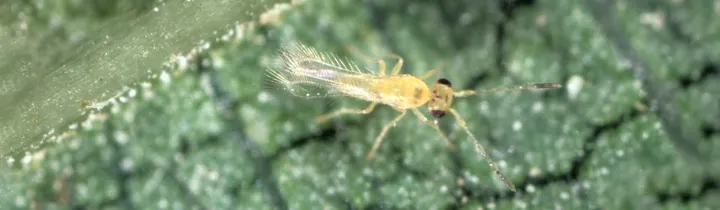
Anagrus epos is a tiny parasitic wasp belonging to the Mymaridae family. Known as fairyflies, these insects are among the smallest in the world, often measuring less than 1 millimeter in length, making them invisible to the naked eye under field conditions.
The adult wasp features a very slender body and delicate, fringed wings, which are characteristic of this family. Their specialized morphology is evolutionarily optimized for navigating dense plant tissues and locating the eggs of their host insects.
As a member of the Hymenoptera order, this species exhibits complex behavioral patterns related to host location. The females use long, sharp ovipositors to deposit their eggs inside the eggs of pests, marking the beginning of their life cycle.
Proper identification usually requires professional entomological expertise, involving the use of microscopy to examine collected samples. Scientists look for the presence of larval stages or emergence holes within the eggs of the target leafhopper species.
This species is globally recognized as an essential component of biological control programs. Its presence in agricultural ecosystems is a strong indicator of sustainable pest management and a balanced environmental state.
What it damages
It is crucial to clarify that Anagrus epos is not a plant pest. Instead, it is a highly beneficial parasitoid that provides natural protection to vineyards by significantly reducing populations of leafhoppers (Erythroneura spp.).
The "damage" caused by this insect is entirely directed toward the pest's eggs. By utilizing the eggs of leafhoppers as a substrate for its own offspring, the wasp prevents the development of larvae that would otherwise consume the vine's foliage and sap.
Consequently, the economic value of Anagrus epos is immense. It serves as a natural insecticide, reducing the necessity for synthetic chemical applications and thereby decreasing the risk of chemical residue on the grapes.
Farmers who actively preserve populations of these wasps benefit from lower pest pressure throughout the season. Their activity helps prevent leaf damage, such as stippling and early defoliation, which are common results of heavy leafhopper infestations.
In short, these wasps act as professional defenders of the crop. They are an asset to any viticulture operation, and their conservation should be a priority for any integrated pest management strategy.
When it appears
The seasonal activity of Anagrus epos is synchronized with the phenology of its host insects. Activity begins in early spring, as temperatures rise and leafhoppers emerge to start their first cycle of egg-laying on the vines.
Multiple generations of the wasp occur throughout the growing season. This high reproductive rate allows the wasp population to mirror the growth of the host population, often providing robust control during the peak infestation periods in mid-to-late summer.
Late-season activity is focused on finding suitable eggs for overwintering. The wasp survives the winter dormant within the host egg, which is often embedded in the protective bark or woody tissues of the grapevine.
Understanding these seasonal patterns is vital for crop management. Any pesticide application during periods of high wasp activity may inadvertently suppress the beneficial population, leading to a secondary outbreak of leafhoppers later in the season.
Monitoring the wasp's life cycle allows agronomists to optimize the timing of necessary vineyard operations. Ensuring the wasp's survival during key windows of its life cycle is essential for maintaining a self-regulating pest management system.
Control measures
Management of Anagrus epos is not about controlling the insect itself, but rather about implementing cultural practices that preserve and encourage its population. The most significant threat to these wasps is the indiscriminate use of broad-spectrum insecticides.
The best approach is to adopt Integrated Pest Management (IPM) practices, prioritizing selective biological agents that are safe for parasitic wasps. Reducing the overall chemical load in the vineyard is the most effective way to sustain these natural enemies.
Providing supplementary resources is also beneficial. Planting cover crops or floral strips near the vines provides nectar and pollen sources for adult wasps, which can significantly increase their longevity and success rate in locating pests.
- Avoid the use of broad-spectrum pyrethroids and organophosphates.
- Establish flowering buffer zones to support beneficial insect nutrition.
- Utilize pheromone-based monitoring for pests to avoid calendar-based spraying.
- Preserve non-cropped habitats adjacent to the vineyard to serve as a refuge.
If intervention is required due to extreme pest pressure, select narrow-spectrum insecticides with minimal residual toxicity for beneficial insects. By protecting Anagrus epos, growers secure a reliable, long-term biological ally in the fight against vineyard pests.
Taxonomy
- Latin name
- Anagrus epos
- Order
- Hymenoptera
- Family
- Mymaridae
- EPPO code
- ANAGEP
Discussion
No discussions yet — be the first.