
Anagrus
Anagrus
Description
How to identify
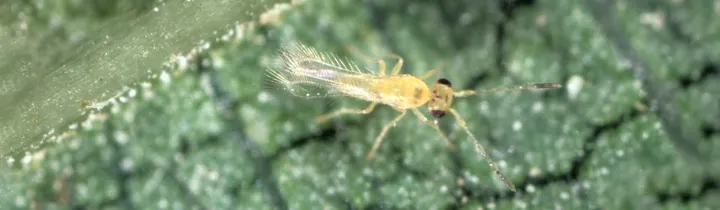
Anagrus is a genus of minute parasitic wasps belonging to the family Mymaridae (fairyflies) within the order Hymenoptera. These insects are exceptionally small, typically ranging from 0.5 to 1 mm in size.
Adult specimens possess a delicate body structure and narrow wings with characteristic fringes of long hairs. Their coloration is generally light yellow to dark brown or black.
It is crucial for agronomists to note that Anagrus is not a plant pest. Rather, it is a highly beneficial insect used widely in biological control programs to suppress populations of various leafhoppers and bugs.
The life cycle of Anagrus is intrinsically linked to the host plants where their prey develops. Due to their narrow specialization, these parasitoids are highly efficient at locating egg clusters even within dense plant foliage.
Specialists define them as obligate egg parasitoids. They detect host eggs by sensing chemical signals from plants damaged by pests or by kairomones released by the pests during oviposition.
What it damages
As a beneficial parasitoid, Anagrus does not damage crops. Instead, it acts as a critical natural regulator, keeping harmful insect populations in check within the agroecosystem.
The primary hosts for Anagrus include eggs of harmful leafhoppers, such as the grape leafhopper (Empoasca vitis), and several species of hemipteran bugs that feed on plant sap.
By suppressing leafhopper populations, Anagrus indirectly prevents the transmission of phytoplasma and viral diseases, for which these pests are frequent vectors.
Agronomists value Anagrus as a potent tool for natural control in intensive orchards and vineyards where reducing chemical inputs is a primary objective.
The parasitism rate of Anagrus can be extremely high, often destroying 60-80% of pest eggs in a localized area, which makes them a keystone species for ecosystem health.
When it appears
The activity period of Anagrus coincides with the breeding season of the target pests, typically spanning from spring through autumn during the crop growth period.
These wasps usually overwinter inside host eggs embedded in plant tissues or as adults in protected refugia near the edges of agricultural fields.
The first generation emerges in early spring as soon as temperatures allow for their development and the commencement of host egg-laying.
Anagrus often produces more generations per season than its host, allowing it to quickly build up numbers in response to pest population outbreaks.
To maintain high levels of Anagrus activity, it is vital to have nectar sources available, as adult wasps require flower nectar for supplementary nutrition.
Control measures
Since Anagrus is a beneficial organism, protection strategies are focused on habitat conservation and minimizing harm to their populations rather than eradication.
Broad-spectrum insecticide use is detrimental, often leading to secondary outbreaks of pests because the natural enemy population is decimated by the chemical application.
- Avoid the use of non-selective broad-spectrum insecticides.
- Prioritize the use of selective pesticides safe for beneficial parasitoids.
- Establish wildflower strips or maintain edge habitats to serve as reservoirs.
- Conduct regular monitoring to ensure chemical interventions are only applied when necessary.
Integrated Pest Management (IPM) strategies should always consider the presence of Anagrus before determining the necessity of chemical crop protection measures.
Taxonomy
- Latin name
- Anagrus
- Order
- Hymenoptera
- Family
- Mymaridae
- EPPO code
- ANAGSP
Discussion
No discussions yet — be the first.