
Anagrus atomus
Anagrus atomus
Description
How to identify
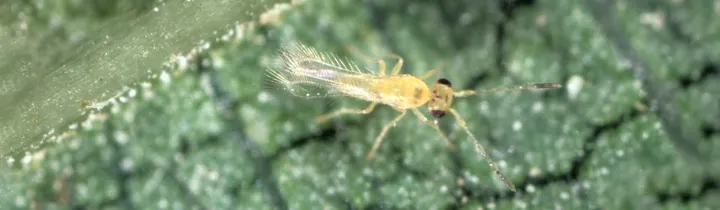
Anagrus atomus is a minute insect belonging to the family Mymaridae, order Hymenoptera. With a body length of approximately 0.5 mm, these wasps are extremely difficult to detect in the field without the aid of specialized magnifying equipment or yellow sticky traps.
The adults are characterized by their dark coloration and slender bodies with feathered wings. These unique wing structures allow them to navigate efficiently through vegetation in search of hosts, despite their extremely small size.
Taxonomically, they are classified as egg parasitoids. This means their entire larval stage is spent inside the eggs of other insects. They have evolved specialized ovipositors capable of piercing the plant tissue where the host eggs are hidden.
The identification of this species in agricultural settings is typically performed by specialists or through laboratory analysis of sampled plant parts. Knowing the presence of this insect is a key indicator of a functional integrated pest management system.
Their life strategy is highly specialized. They utilize chemical cues, often plant volatiles released during host egg-laying, to pinpoint the exact location of their prey, ensuring high efficiency in locating hosts within dense crop canopies.
What it damages
Anagrus atomus is not a pest but a beneficial entomophagous insect. It provides essential ecosystem services by suppressing populations of various hemipteran pests, particularly leafhoppers, which can cause significant damage to crops.
The parasitoid lays its eggs inside the eggs of the target host. Once hatched, the parasitoid larva consumes the content of the host egg, effectively killing the pest embryo before it can hatch and begin feeding on the plant tissue.
The primary hosts for this wasp include species of leafhoppers that frequent vineyards, fruit orchards, and diverse vegetable crops. By targeting the egg stage, Anagrus atomus prevents the development of the nymph stage, which is responsible for most of the direct plant damage.
High rates of parasitism by this species can lead to a significant decline in pest population density. This natural regulation is crucial for maintaining the productivity of fruit and berry crops while reducing the reliance on aggressive chemical interventions.
Their role in the agricultural ecosystem is often underestimated due to their size. However, their impact on the population dynamics of pests is substantial, serving as a primary defense mechanism that operates silently and effectively throughout the growing season.
When it appears
The activity of Anagrus atomus is highly dependent on ambient temperature and the phenology of its hosts. The first generation of adults typically emerges in early spring, coinciding with the arrival and egg-laying activity of leafhopper species.
Throughout the growing season, this species undergoes several generations. Its ability to complete its cycle rapidly allows it to track changes in pest populations, maintaining a steady and continuous presence in the field to exert pressure on host numbers.
Mid-summer is characterized by peak activity, where the highest rates of egg parasitism are observed. This timely pressure is vital for keeping pest numbers below the economic injury level, protecting the crop during its most vulnerable developmental stages.
As temperatures drop in the autumn, the wasps enter a state of diapause. They survive the winter period protected inside the eggs of their hosts, which are embedded in the plant stems or bark, ensuring the species persists until the next spring.
Successful overwintering is facilitated by the presence of suitable refuge areas, such as non-crop vegetation and undisturbed plant residues. These areas act as reservoirs that support the population of Anagrus atomus during the off-season.
Control measures
Effective management strategies for Anagrus atomus focus on conservation rather than elimination. Since they are highly beneficial, crop protection plans should prioritize the preservation of their habitat and minimize exposure to toxic chemicals.
It is recommended to utilize Integrated Pest Management (IPM) practices, emphasizing the use of selective insecticides. Broad-spectrum chemicals should be avoided, especially during peak flight periods, as they can cause non-target mortality among these beneficial wasps.
Establishing floral strips and buffer zones around fields can significantly enhance their population. These areas provide supplementary food sources, such as nectar, which helps increase the longevity and fecundity of the adult parasitoids.
Monitoring the rate of parasitism is a valuable tool for decision-making. By regularly collecting and examining host eggs, agronomists can estimate the level of biological control being achieved and determine if chemical sprays are actually required.
- Prioritize biological control and selective pesticides.
- Maintain natural habitats and refuge areas near crops.
- Monitor pest and parasitoid dynamics before taking action.
- Avoid broad-spectrum insecticide applications during peak activity periods.
Taxonomy
- Latin name
- Anagrus atomus
- Order
- Hymenoptera
- Family
- Mymaridae
- EPPO code
- ANAGAT
Discussion
No discussions yet — be the first.