
Anagrus empoascae
Anagrus empoascae
Description
How to identify
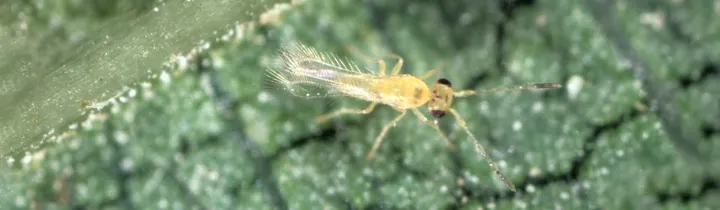
Anagrus empoascae is a species of minute parasitoid wasp belonging to the family Mymaridae (fairyflies) within the order Hymenoptera. Adults are extremely small, typically measuring less than 1 mm in length.
They are characterized by narrow, paddle-shaped wings surrounded by long, fine hairs (fringe), a morphology common to many egg parasitoids adapted to flight in dense foliage.
Despite being considered in the context of pest management, these insects act as crucial natural enemies, strictly regulating the populations of various leafhopper species.
Their bodies are generally pale yellow or light brown, which provides effective camouflage, making them difficult to spot during routine field surveys without magnification.
Identification often requires specialized entomological expertise, as the minute size and morphological similarities with other Mymaridae species complicate field classification.
What it damages
This species is biologically linked to leafhoppers (Cicadellidae), particularly those in the genus Empoasca, which are major agricultural pests globally.
The host plants affected by these leafhoppers include a wide range of crops such as soybeans, grapes, tomatoes, potatoes, and various deciduous fruit trees.
The primary damage is caused by the leafhoppers themselves, which feed by sucking phloem sap, leading to stunted growth, leaf chlorosis, and reduced photosynthetic capacity.
Furthermore, leafhoppers are notorious vectors for various plant pathogens, including phytoplasmas and viruses, which can cause severe systemic disease in crops.
By parasitizing leafhopper eggs, Anagrus empoascae provides essential biological control, significantly mitigating the potential economic damage caused by the host population.
When it appears
The life cycle of this parasitoid is perfectly synchronized with the phenology of its host, typically beginning in the spring as temperatures rise.
The first generation of adults emerges in response to the initial egg-laying activity of overwintering leafhoppers on emerging crop foliage or weed hosts.
Multiple generations occur throughout the growing season, with the total number of cycles dependent on regional climate conditions and host availability.
Population densities usually peak in mid-to-late summer, corresponding with the maximum egg deposition period of the leafhopper hosts.
Overwintering occurs primarily in the larval stage within the host eggs, which are often deposited in the stems or leaf petioles of plants, protecting them from winter cold.
Signs of infestation
The presence of this parasitoid can be indicated by the darkening of host eggs, which shift color as the parasitoid larva develops inside the embryo.
Upon emergence, the adult wasps leave tiny, circular exit holes in the plant tissue, which can be observed under a microscope on the leaf or stem surface.
A decline in the overall leafhopper population, despite favorable conditions for the pest, often indicates high levels of parasitism by natural enemies like this wasp.
Significant leaf yellowing or "hopperburn" observed in a field typically signals a massive leafhopper infestation, requiring an assessment of whether natural control is sufficient.
Routine scouting should involve collecting plant material for laboratory analysis to determine the percentage of parasitized eggs present in the field.
Control measures
Effective management relies on Integrated Pest Management (IPM) strategies that prioritize the conservation of existing natural enemy populations.
- Avoid broad-spectrum insecticide applications, especially during periods when natural enemies are active, to prevent killing beneficial populations.
- Establish floral margins or cover crops to provide nectar and alternative hosts, supporting adult parasitoid survival and longevity.
- Implement rigorous monitoring programs to justify chemical interventions only when economic injury thresholds for leafhoppers are exceeded.
- Manage weed reservoirs within and around the field to prevent early-season colonization by leafhoppers.
- Utilize selective biological control products that are compatible with the conservation of local parasitoid populations.
Taxonomy
- Latin name
- Anagrus empoascae
- Order
- Hymenoptera
- Family
- Mymaridae
- EPPO code
- ANAGEM
Discussion
No discussions yet — be the first.