
Anagrus aegyptiacus
Anagrus aegyptiacus
Description
How to identify
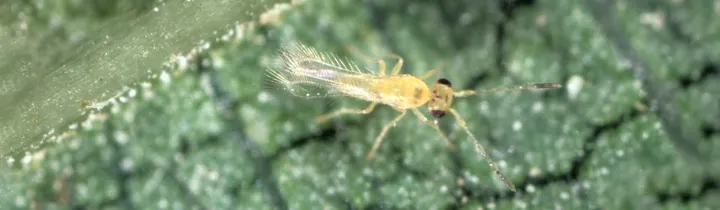
Anagrus aegyptiacus is a tiny parasitic wasp belonging to the order Hymenoptera and the family Mymaridae. Due to its microscopic size, it is virtually invisible to the naked eye under field conditions.
Adult wasps typically measure less than 1 mm in length. They are characterized by delicate, fan-shaped wings fringed with long hairs, a hallmark feature of the fairyfly family.
The body color usually ranges from light yellow to pale brown, which helps the insect blend into the leaf surface environment of citrus plants.
In agronomy, this species is recognized as an egg parasitoid, functioning as a vital natural control agent against various homopteran pests.
The insect possesses high agility and sensory capabilities, allowing it to locate and exploit host eggs with remarkable efficiency in citrus orchards.
What it damages
This species is primarily associated with citrus crops where it parasitizes the eggs of whiteflies and other related sucking insects.
The wasp does not cause direct injury to plants, fruits, or foliage. Its ecological impact is entirely centered on reducing the population of pests at the embryonic stage.
While generally beneficial, its population dynamics are closely linked to the availability of host eggs. In the absence of pests, the parasitoid population naturally declines.
Damage to the host occurs when the wasp larva consumes the contents of the egg, effectively preventing the pest from completing its life cycle.
Proper management of this parasitoid is essential for maintaining a healthy balance in the orchard's ecosystem and reducing reliance on chemical inputs.
When it appears
The activity of Anagrus aegyptiacus is highly dependent on ambient temperature and humidity levels within the citrus growing region.
The wasp has a short generation time, allowing it to produce multiple overlapping generations during the growing season, which maximizes its potential to control pest outbreaks.
Overwintering occurs as larvae or pupae within the host eggs, which may remain on fallen leaves or in crevices of the tree bark during colder periods.
Activity peaks during mid-summer, corresponding to the period when citrus whitefly egg-laying is most intense on the undersides of leaves.
Environmental stressors such as heavy rainfall or extreme heat can negatively impact the flight activity and host-searching behavior of adult wasps.
Signs of infestation
Identification of this species relies heavily on microscopic analysis of infested host egg clutches collected from the orchard.
The most reliable sign of parasitism is the presence of distinct, circular exit holes on the surface of the pest egg, indicating where the adult wasp emerged.
A darkening or discolored appearance of whitefly eggs on citrus leaves often indicates that they have been successfully parasitized by Anagrus species.
A reduction in the number of emerging whitefly nymphs is a key field indicator that natural enemies, including this egg parasitoid, are actively suppressing the pest population.
Yellow sticky traps used for pest monitoring can capture adult specimens, allowing researchers to confirm their presence and activity levels within the agroecosystem.
Control measures
The primary control strategy for protecting Anagrus aegyptiacus involves the careful selection and timing of insecticide applications.
- Prioritize the use of selective, non-toxic bio-pesticides.
- Avoid broad-spectrum chemical sprays during the peak flight season.
- Maintain buffer zones with nectar-rich plants to support adult parasitoids.
Integrating biological control into the orchard management plan helps maintain natural populations of this wasp, reducing the overall need for synthetic pesticides.
Regular monitoring of pest levels ensures that chemical interventions are only used when absolutely necessary, thus preserving the ecological balance of the orchard.
Taxonomy
- Latin name
- Anagrus aegyptiacus
- Order
- Hymenoptera
- Family
- Mymaridae
- EPPO code
- ANAGAE
Discussion
No discussions yet — be the first.