

Pest · Hemiptera (bugs, aphids, leafhoppers) · affects Winter wheat, Potato, Winter barley
Especially harmful
Leafhoppers
Cicadellidae
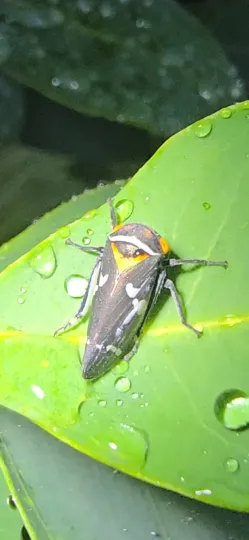
Description
How to identify
Leafhoppers (Cicadellidae) are a diverse family of insects within the order Hemiptera. Adult leafhoppers typically have wedge-shaped bodies ranging from 2 to 15 mm in length, often brightly colored or camouflaged.
These insects are well known for their powerful hind legs, which enable them to jump quickly when disturbed. Their mouthparts are designed for piercing plant tissues and sucking sap, which is their primary feeding method.
Nymphs resemble the adults but lack developed wings. They are highly active and are commonly found hiding on the undersides of leaves, making them difficult to spot during routine field checks.
The life cycle involves incomplete metamorphosis. Most species overwinter as eggs or adults in plant debris, bark, or soil, emerging in the spring to begin a new reproductive cycle.
Leafhoppers are prolific breeders, capable of producing multiple generations per season. This rapid turnover makes them a persistent threat to agricultural production throughout the growing period.
What it damages
Leafhoppers are polyphagous pests that attack a wide array of crops. Among the most susceptible are onions, fodder beets, winter rapeseed, cabbage, cucumbers, soybeans, sunflower, and winter barley.
Damage is caused by the removal of sap, which disrupts nutrient transport and photosynthesis. Heavy infestations result in chlorosis, stunting, and reduced vigor of the plant.
A major concern is the transmission of plant viruses and phytoplasmas. Leafhoppers serve as vectors for various diseases that cause significant economic losses by damaging crop quality and yield.
Direct damage appears as "hopperburn," where leaves turn yellow at the edges and eventually brown and necrotic. This condition severely impacts the plant's ability to develop fruit or seed.
In cases of severe infestation, entire fields can suffer from stunted development, leading to failure in reaching maturity and substantial economic loss for the farmer.
When it appears
Leafhopper activity typically commences in early spring as temperatures rise. The adults migrate from weeds or overwintering sites into emerging crop fields.
The peak activity of nymphs often aligns with mid-season growth stages. Monitoring programs should focus on these periods when the population density is likely to reach the economic threshold.
Hot and dry summer conditions are particularly favorable for leafhopper development. Their reproductive rate increases under such weather, requiring vigilant scouting.
As the season progresses toward autumn, leafhoppers prepare for winter. They shift their focus from succulent crops to perennial grasses or protected environments to survive the cold months.
Field managers should utilize yellow sticky traps and sweep nets to quantify populations early in the season, enabling timely intervention before damage becomes irreparable.
Signs of infestation
Early warning signs include the appearance of small white or yellow stippling marks on leaves, caused by the piercing-sucking mouthparts of the insects.
Observing a sudden jumping motion when foliage is disturbed is a clear indicator of leafhopper presence. Inspections should always include checking the undersides of leaves for nymphs.
Curling or cupping of leaves is a common stress response, often accompanied by yellowing (chlorosis) that starts from the leaf margins and spreads inwards.
Stunted plant growth and the development of abnormal, deformed flowers or fruits may indicate that a leafhopper-transmitted disease has infected the crop.
- Chlorotic spots and leaf stippling.
- Leaf curling and margin necrosis.
- Growth retardation and dwarfing.
- Poor fruit or grain development.
- Visible presence of nymphs and adults.
Control measures
Effective management begins with robust sanitation practices, such as controlling weeds in field borders that serve as overwintering reservoirs for leafhoppers.
Implementing strategic crop rotation disrupts the life cycle of the pest, forcing populations to move or perish due to the lack of suitable host plants in a given area.
Chemical control involving systemic insecticides is recommended when scouting indicates that population levels have exceeded the established economic injury threshold.
Biological control methods, such as encouraging natural predators or using insect-pathogenic fungi, can help suppress leafhopper populations within an integrated pest management program.
Following harvest, deep plowing or soil tillage is essential to destroy the crop residues where eggs and adults seek shelter for the winter, effectively reducing the pressure for the next season.
In brief
28
Damages crops
Content graph
Damages crops · 28
Content graph
Connections · Leafhoppers
Most often together:
Marketplace
Products · 1
Biology
Taxonomy
- Latin name
- Cicadellidae
- Order
- Hemiptera (bugs, aphids, leafhoppers)
- Family
- Cicadellidae
- EPPO code
- 1CICDF
Community
Discussion
No discussions yet — be the first.