
Chrysotoxum bicinctum
Chrysotoxum bicinctum
Description
How to identify
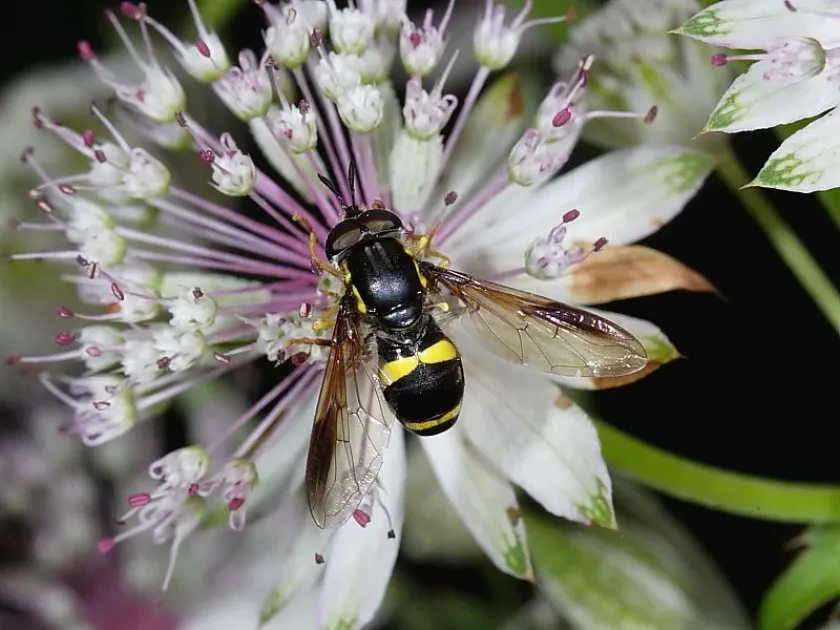
Chrysotoxum bicinctum is a species of hoverfly in the Syrphidae family, known for its distinct mimicry that makes it look like a small wasp or bee.
The adult fly features a yellow and black abdominal pattern with two prominent light-colored bands, which is a key identifying feature of the species.
The body is covered with sparse hairs, and the wings are clear with characteristic venation typical for the hoverfly family, allowing for stable hovering in the air.
While often confused with other species of hoverflies, Chrysotoxum bicinctum can be specifically identified by examining the abdominal tergal markings.
These insects are primarily beneficial as pollinators, but in certain agroecosystems, their larval stages may pose concerns for agricultural production.
What it damages
The damage is primarily caused by larvae, which can occasionally feed on the roots or root collars of young horticultural crops.
Feeding damage can cause plants to wilt or show signs of nutrient deficiency as the root system is unable to support the aerial part of the plant.
Injured root tissues become susceptible to secondary infections by soil-borne pathogens, such as fungi and bacteria causing various rot diseases.
In high-density populations, the larvae can cause significant setbacks in the early developmental stages of vegetable seedlings.
The overall impact on crop yield depends on the population density and the vulnerability of the plant species affected by the larvae.
When it appears
Adults are active during the warmer months, typically from late spring through mid-summer, depending on the climatic zone.
The life cycle involves an egg stage, larval stage, pupation, and emergence of adults, with one or two generations per year.
Overwintering usually occurs in the larval stage or as pupae hidden within the top layer of the soil or plant debris.
The timing of adult emergence is closely synchronized with the flowering period of various weeds and crops, providing necessary nectar.
Temperature fluctuations and rainfall patterns during the season heavily influence the population dynamics and reproductive success of the hoverflies.
Signs of infestation
Visible presence of adult flies on flowers or foliage during sunny days is the first indicator of their arrival in the field.
Plant wilting during the day, despite adequate moisture levels in the soil, is a strong sign of root-related damage by larvae.
Examining the soil around the base of the plant often reveals the larvae or the evidence of their feeding activity on the root structure.
Reduced vigor and stunted growth in vegetable batches are common symptoms observed in areas where the pest has established itself.
The appearance of necrotic lesions on the roots suggests a deeper issue involving both larval feeding and opportunistic pathogen attacks.
Control measures
Crop rotation is a fundamental practice to disrupt the life cycle of the pest and reduce its population density in the soil.
Deep autumn tillage is highly effective in disrupting overwintering sites, exposing larvae to cold temperatures and predators.
Weed management, particularly focusing on nectar-providing plants, can reduce the attractiveness of the field to adult hoverflies.
Chemical control involving systemic insecticides may be necessary in extreme cases to protect young seedlings from larval damage.
Biological control methods, including the use of beneficial nematodes or entomopathogenic fungi, offer a sustainable alternative for soil treatment.
Taxonomy
- Latin name
- Chrysotoxum bicinctum
- Order
- Diptera (flies)
- Family
- Syrphidae
- EPPO code
- CTOXBI
Discussion
No discussions yet — be the first.