
Chrysotoxum hoverflies
Chrysotoxum
Description
How to identify
The genus Chrysotoxum belongs to the hoverfly family (Syrphidae). They are large, striking flies that utilize Batesian mimicry, resembling wasps or hornets to deter predators.
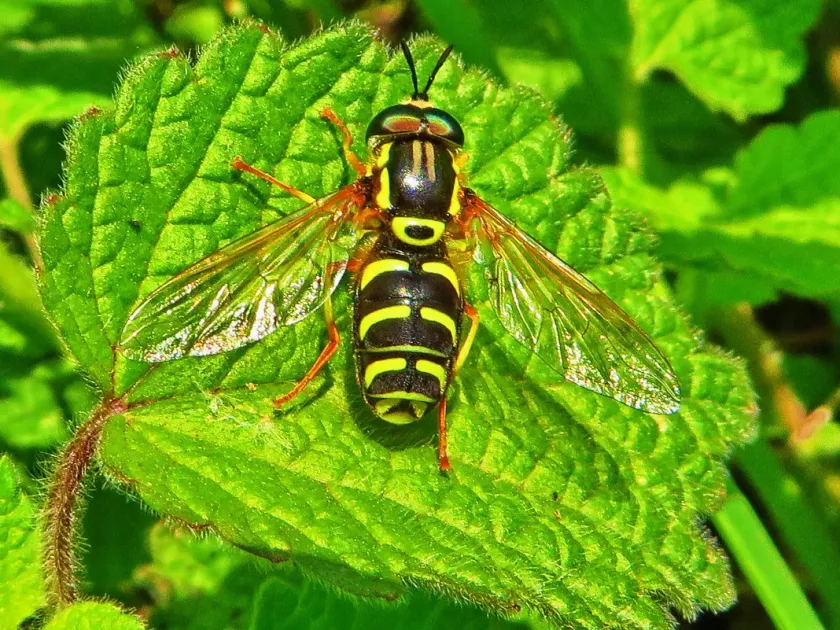
They are characterized by elongated, yellow-and-black patterned abdomens and clear wings, often with dark markings along the leading edge.
Unlike true wasps, they have only one pair of wings and lack the narrow "waist," which is a reliable key for identification in the field.
The larvae are typically flattened and slug-like, often residing in soil or specialized habitats like ant nests, which is atypical for many other syrphid larvae.
Hoverflies of this genus are expert fliers, capable of hovering perfectly still in mid-air before darting away at high speed.
What it damages
Adult Chrysotoxum flies are strictly beneficial to the ecosystem as they feed on nectar and pollen, acting as significant pollinators for various plants.
They do not consume plant tissues, leaves, or fruit, and are therefore not considered agricultural pests in any capacity.
The larvae, while little studied in some species, are generally not known to cause economic damage to crops or root systems.
Confusion often occurs when homeowners misidentify these mimics as dangerous wasps, leading to unnecessary and harmful pest control attempts.
In modern agronomy, protecting these insects is considered a best practice for maintaining healthy crop yields through pollination services.
When it appears
The flight period for Chrysotoxum adults typically occurs from late spring through late summer, corresponding with peak flowering times.
They are most active on warm, sunny days, which facilitate their ability to forage efficiently across large garden or field areas.
The life cycle is univoltine or bivoltine, with the species usually overwintering as larvae or pupae in protected soil environments.
Population density is heavily dependent on the availability of suitable floral resources, particularly members of the Apiaceae family.
As the season progresses, adult activity decreases as temperatures drop and the abundance of nectar sources declines in the landscape.
Signs of infestation
The primary sign of their presence is the visual observation of adults hovering around garden flowers, vegetables, and hedgerows.
Since they do not cause damage, there are no characteristic "signs of infestation" such as chewed leaves, wilting stems, or plant secretions.
If you see these flies in your crop, it is a positive indicator of good biodiversity rather than a warning sign of an impending pest outbreak.
It is important to look for other actual pests (like aphids or beetles) if your plants are showing symptoms of distress, rather than blaming the Chrysotoxum.
Monitoring using yellow sticky traps might capture these flies occasionally, but they should be counted as non-target, beneficial bycatch.
Control measures
No control measures are necessary for Chrysotoxum as they do not harm crops and contribute to the ecological health of the site.
Avoid applying broad-spectrum insecticides, especially during the bloom period, to ensure the survival of these effective pollinators.
Implement integrated pest management (IPM) strategies to preserve these insects, such as maintaining wildflower buffers and reducing tillage to protect overwintering larvae.
Education is the best "control" method; informing staff or gardeners that these are mimics and not wasps prevents irrational eradication efforts.
Focus your plant protection resources on actual threats while creating a welcoming environment for these essential hoverflies.
Taxonomy
- Latin name
- Chrysotoxum
- Order
- Diptera (flies)
- Family
- Syrphidae
- EPPO code
- CTOXSP
Discussion
No discussions yet — be the first.