
Hairy maggot blow fly
Chrysomya rufifacies
Description
How to identify
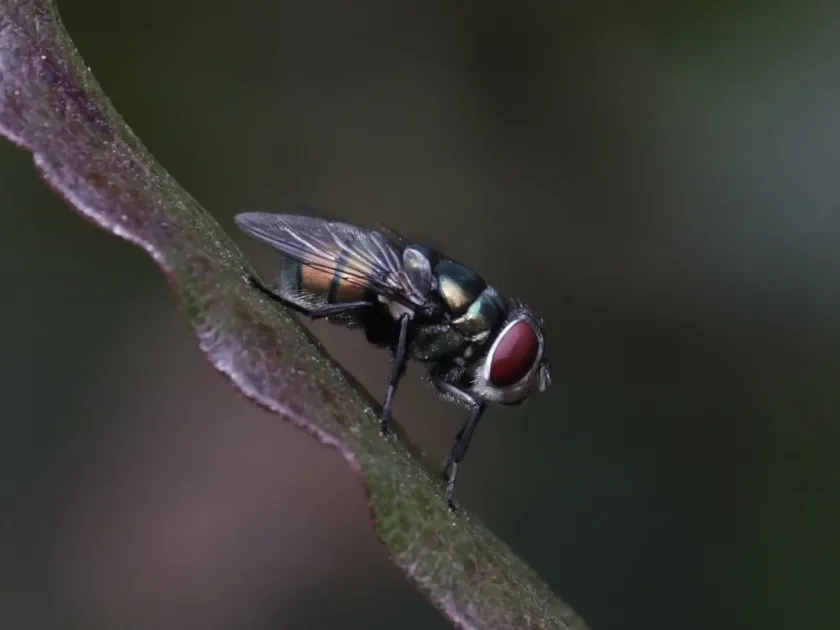
The Hairy maggot blow fly (Chrysomya rufifacies) belongs to the family Calliphoridae, known for its metallic green or blue iridescent coloration.
Adult flies measure between 6 to 12 mm in length. They possess large eyes and a robust body structure typical of the blow fly species.
The larvae are distinct due to the presence of numerous fleshy, hair-like processes on their body segments, which provide them with their common name.
These flies are highly mobile and possess a strong flight capacity, allowing them to locate suitable breeding sites over long distances.
The species is highly adaptable to various environmental conditions, particularly thriving in warm and humid climates across many continents.
What it damages
While primarily a scavenger, Chrysomya rufifacies can act as a secondary pest by colonizing fruits and vegetables that have sustained prior damage.
The larvae feed on decaying organic tissue, rapidly accelerating the decomposition process and promoting the spread of secondary bacterial infections.
In agriculture, the presence of these larvae leads to significant post-harvest losses if fruits or crops are not stored or handled correctly.
By breaking down tissue, they create entry points for various phytopathogens, potentially leading to crop failure in stored conditions.
The economic impact is manifested through the degradation of commodity quality, rendering produce unsalable due to larval infestation.
When it appears
Activity is most pronounced during warm seasons, as the fly’s metabolic processes are highly dependent on high ambient temperatures.
The life cycle is rapid, often completing in less than two weeks during peak summer, which results in multiple generations within one season.
Populations tend to increase significantly during late summer, correlating with the availability of decomposing organic matter in the field.
As temperatures drop, adult activity decreases significantly, and the pest overwinters as pupae in the soil or protected crevices.
Periods of high humidity can trigger mass breeding events, necessitating increased vigilance during such weather patterns.
Signs of infestation
A foul, sweetish odor emanating from piles of crop debris or damaged fruit is a primary indicator of active infestation by this species.
Visual identification of the characteristic "hairy" larvae feeding within plant tissue confirms the presence of the pest.
Adult flies hovering in large numbers near compost bins, trash containers, or harvest areas serve as a warning sign of a growing population.
Softened, liquified tissue in fruits and vegetables is a classic sign of the rapid enzymatic breakdown caused by larval feeding.
The discovery of brown, barrel-shaped puparia in the top layer of soil near an infestation site indicates the completion of a life cycle stage.
Control measures
Sanitation is the most effective control measure: removing and properly disposing of all decaying vegetable matter and waste is essential.
The implementation of mechanical traps, including bait traps, can significantly reduce the adult population in and around agricultural storage facilities.
Maintaining optimal storage conditions, specifically low humidity and cool temperatures, effectively prevents larvae from colonizing harvested crops.
Biopesticides or specialized insecticidal treatments can be applied in high-density areas, following local agricultural safety regulations and guidelines.
Integrated Pest Management (IPM) practices, such as timely harvesting and residue clearing, disrupt the fly's breeding cycle and minimize its impact.
Taxonomy
- Latin name
- Chrysomya rufifacies
- Order
- Diptera (flies)
- Family
- Calliphoridae
- EPPO code
- CHRMRU
Discussion
No discussions yet — be the first.