
Green blowfly
Chrysomya chloropyga
Description
How to identify
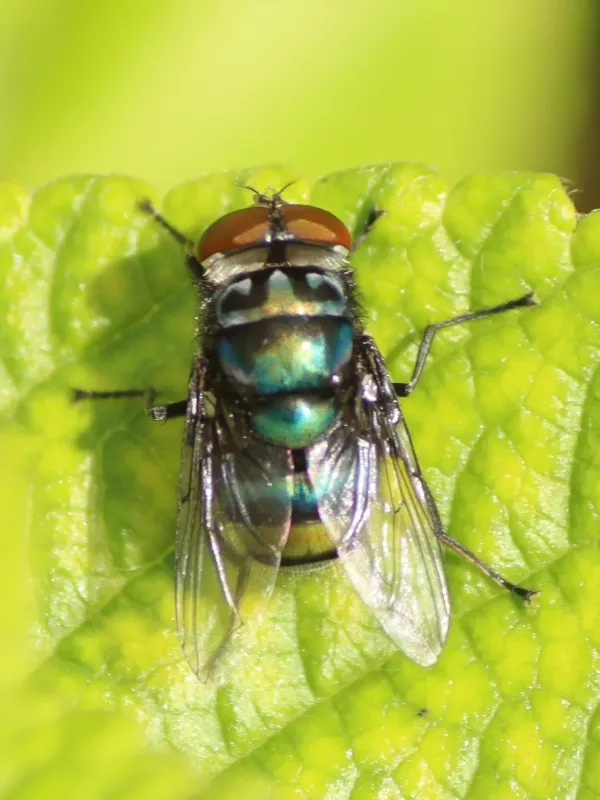
The green blowfly (Chrysomya chloropyga) belongs to the Calliphoridae family, order Diptera. It is characterized by a striking metallic green or blue-green sheen, which serves as its primary diagnostic feature for identification.
Adult flies possess well-developed sponging mouthparts adapted for liquid feeding. Their bodies are covered in dense, stiff hairs, or setae, which significantly increase their capacity to carry pathogens and bacteria.
The larvae follow a typical blowfly development pattern, transitioning through three instars. They are specialized consumers that feed primarily on decaying organic matter, making them efficient decomposers in nature.
This species is highly synanthropic, often found near livestock facilities, waste disposal sites, and areas where protein-rich organic matter is stored or processed.
Pupation typically occurs in the soil near the feeding site. This burrowing behavior protects the pupae from environmental stressors, such as temperature fluctuations and predators, ensuring higher survival rates.
What it damages
The green blowfly acts as a serious secondary pest in livestock agriculture. Its most significant impact is the infestation of animals, leading to conditions known as myiasis, where larvae feed on necrotic or healthy tissue.
Infested animals suffer from severe tissue damage, decreased growth rates, and reduced milk production. In severe cases, the constant irritation and secondary bacterial infections can lead to the death of the animal.
In stored agricultural products, particularly those high in protein, the fly causes significant economic loss. It contaminates the product with its larvae and excrement, making the batch unfit for further use or trade.
The flies serve as vectors for various diseases. By moving between waste and food supplies, they transmit pathogens such as Salmonella and various parasite eggs, compromising the sanitary status of the entire farm.
Beyond direct animal health issues, the presence of these flies necessitates expensive and labor-intensive sanitation protocols to prevent the spread of zoonotic diseases to farm workers and animals alike.
When it appears
The seasonal prevalence of Chrysomya chloropyga is largely determined by temperature. Optimal activity and reproduction usually occur within the range of 20°C to 30°C, especially in humid conditions.
In temperate regions, adult flies become active in early spring as temperatures rise. Their populations typically peak during the hottest months of the year when conditions are ideal for rapid egg-laying.
The life cycle from egg to adult can be completed in as little as 10 to 14 days under optimal environmental conditions. This rapid turnover leads to multiple generations per season, causing an exponential rise in fly numbers.
Overwintering occurs in the pupal stage within the soil or as adults in protected indoor environments like barns, where temperatures remain stable enough to allow survival during the winter months.
As soon as spring weather warms the substrate, the first generation of adults emerges. This triggers the need for early-season sanitation and pest control measures to prevent a mid-summer infestation outbreak.
Signs of infestation
The most immediate sign of an infestation is the distinctive, loud buzzing sound produced by large swarms of flies near waste areas or animal shelters.
Veterinary inspections are crucial for identifying signs of myiasis on livestock. These include open wounds, foul-smelling sores, and the presence of pale, maggot-like larvae actively feeding on the host's tissue.
Egg clusters are often found deposited in skin folds, near wounds, or on decomposing organic matter. These white, tightly packed clusters are a clear indicator of active reproductive activity.
Dark, pinpoint spots found on equipment, walls, and feeders indicate the presence of fly excrement. Such spots are early warnings that the population density has already reached significant levels.
Animals showing signs of distress, such as constant tail-flicking, rubbing against objects, or restlessness, suggest they are being targeted by flies and require immediate protective measures.
Control measures
The primary control strategy is strict farm sanitation. Regularly removing manure, burying or incinerating carcasses, and managing organic waste effectively deprives the flies of essential breeding sites.
Installing fine-mesh screens on windows and doors of livestock buildings is highly effective at preventing adult flies from entering areas where they can reach the animals.
The use of residual insecticides on interior walls and surfaces can reduce adult fly populations. However, chemical applications must be managed carefully to avoid contaminating feed or harming the livestock.
- Implement regular professional disinfection of stables and feed storage areas.
- Deploy UV light traps to attract and eliminate flies in closed facilities.
- Provide prompt veterinary care and antiseptic treatment for any animal skin injuries.
A successful management program combines structural prevention with persistent sanitation and targeted chemical control to keep blowfly populations below the economic damage threshold.
Taxonomy
- Latin name
- Chrysomya chloropyga
- Order
- Diptera (flies)
- Family
- Calliphoridae
- EPPO code
- CHRMCL
Discussion
No discussions yet — be the first.