
Old World screwworm fly
Chrysomya bezziana
Description
How to identify
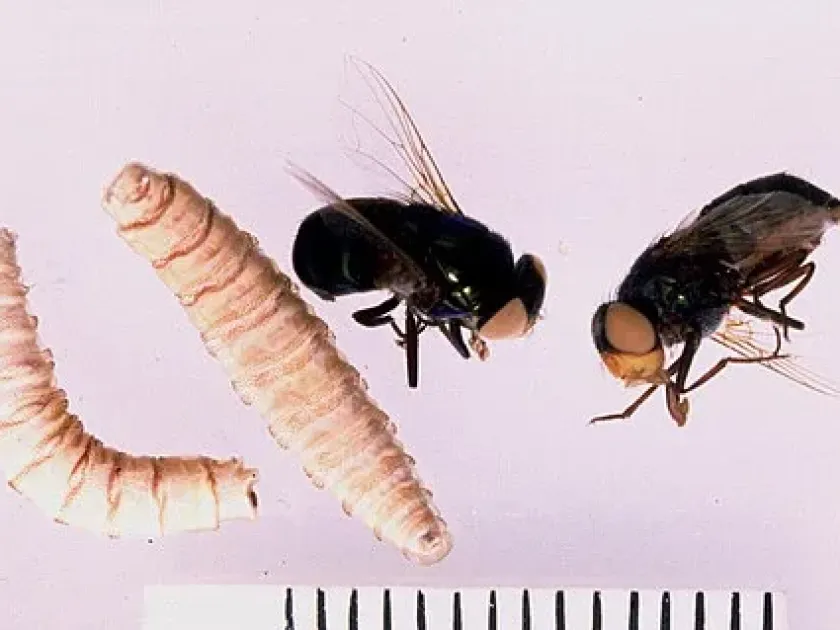
The Old World screwworm fly (Chrysomya bezziana) belongs to the family Calliphoridae, order Diptera. Unlike common blowflies, this species is an obligate parasite, meaning it requires living tissues of warm-blooded animals to complete its larval development.
Adult flies are robust, with a metallic blue or green body, often reaching up to 10 mm in length. The larvae, which are the damaging stage, are characterized by distinct segmental bands of recurved spines that help them anchor deeply within the host tissue.
The life cycle encompasses egg, three larval stages, pupal stage, and adult. A single female can deposit up to 200 eggs in clusters, primarily targeting open wounds or natural orifices of animals. The life cycle can be completed in as little as 15 to 25 days under optimal conditions.
These flies thrive in tropical and subtropical climates where temperatures remain consistently warm and humidity is high. They possess strong flight abilities, allowing them to track potential hosts over significant distances across pastures.
Because they do not feed on carrion, their populations are directly linked to the density and availability of livestock. They represent a significant threat to global animal husbandry and are considered a high-priority quarantine pest in many regions.
What it damages
The Old World screwworm fly causes direct economic losses by inducing traumatic myiasis in livestock. The larvae feed on living tissue, creating deep, necrotic lesions that can lead to severe physiological distress and death in untreated animals.
Wounds commonly occur around the navels of newborns, castration sites, dehorning sites, or areas where ticks have punctured the skin. These lesions become progressively deeper as larvae penetrate muscle tissue, potentially causing permanent damage or systemic infections.
The secondary bacterial infections associated with the screwworm feeding can lead to sepsis and toxemia. Livestock affected by significant infestations exhibit extreme weight loss, reduced fertility, and a total decline in productive output.
Economic damage includes the cost of veterinary intervention, medication, and the loss of animals that succumb to the infestation. The presence of this pest can also restrict international trade and movement of livestock due to quarantine requirements.
Consistent monitoring and protection of vulnerable animals are essential strategies for farmers operating in endemic areas to prevent major productivity losses.
Signs of infestation
The earliest signs of an infestation include the discharge of serosanguinous fluid from a wound, often accompanied by a pungent, foul odor. Animals appear restless and are frequently observed biting or rubbing the affected area to alleviate intense irritation.
A closer inspection of the wound reveals visible larval activity within the crater-like lesion. The surrounding tissue is typically inflamed, oedematous, and shows signs of localized necrosis due to the mechanical destruction caused by the larvae.
Affected livestock often show systemic signs such as lethargy, loss of appetite, and an arched back or stiff gait if the wound is in a sensitive area. In extreme cases, the animal may show signs of fever and shock.
As the larvae grow, the size of the wound increases rapidly. Left untreated, the condition can become terminal within days as the larvae erode deep into the body's musculature and surrounding healthy tissue.
Proper diagnosis requires a veterinary assessment to confirm the presence of Chrysomya bezziana larvae, as different fly species may colonize wounds, but few are capable of causing such severe, primary tissue damage.
Control measures
The primary control strategy is the diligent protection of all animal wounds. Any skin breach, whether from accidental injury or surgical procedures, must be treated immediately with antiseptic and insecticidal repellent sprays to prevent oviposition.
Effective management also involves a robust tick and ectoparasite control program, as tick bites are common entry points for the fly larvae. Ensuring animals are in good condition and free from parasites is a fundamental preventative step.
Surgical procedures should ideally be scheduled during periods of low fly activity. Following any surgery or branding, animals should be monitored closely and treated with long-lasting insecticidal dressings until the wounds are fully healed.
Good sanitation on farms is critical; this includes the prompt and proper disposal of carcasses and the maintenance of clean pens to discourage fly attraction. Avoiding overcrowding can also help in monitoring individual animal health.
Regional control initiatives often employ pheromone traps to monitor adult fly populations. Early detection of a population spike allows farmers to implement protective measures before significant livestock infestations occur.
Taxonomy
- Latin name
- Chrysomya bezziana
- Order
- Diptera (flies)
- Family
- Calliphoridae
- EPPO code
- CHRMBE
Discussion
No discussions yet — be the first.