
Chlumetia transversa
Chlumetia transversa
Description
How to identify
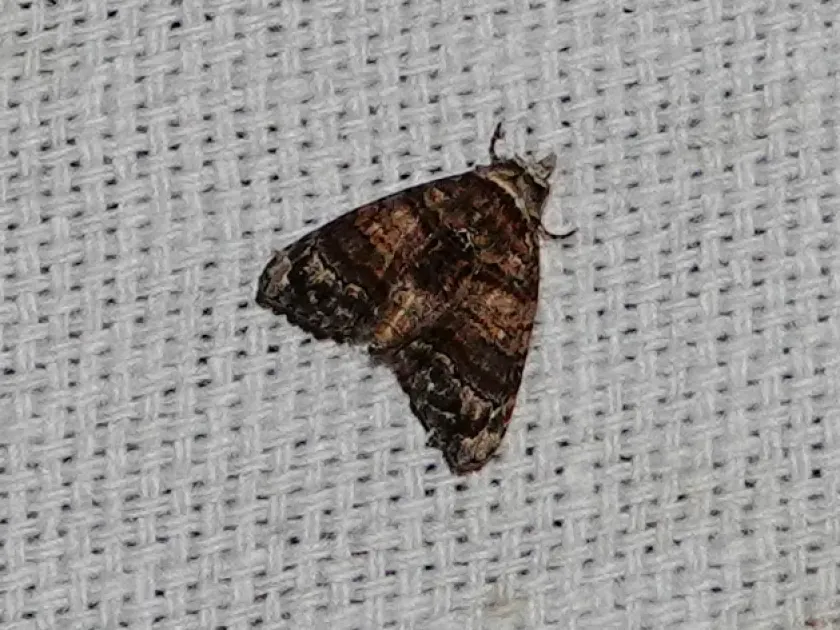
Chlumetia transversa is a species of moth belonging to the family Noctuidae. It is recognized as a significant agricultural pest, particularly affecting mango plantations in various regions.
The adult moth has a wingspan ranging from 20 to 25 mm. The forewings display characteristic transverse wavy lines, which serve as a primary feature for identification among similar species.
The body of the moth is covered with dense scales, providing a camouflaging effect that helps the insect remain hidden during daylight hours on tree bark or foliage.
Larvae pass through several instars, changing color as they grow. They are cryptic feeders, often hiding inside the tissues of the host plant, which makes them difficult to spot during early development.
Pupation occurs within a tough, silken cocoon often concealed in the soil or protected crevices of the host plant, ensuring protection from environmental stress and predators.
What it damages
The primary host plant of Chlumetia transversa is the mango tree (Mangifera indica), where it causes economic damage during the vegetative and reproductive phases.
Larvae feed on young tender shoots and terminal buds. This feeding activity leads to the desiccation of the shoot tips, severely stunting the growth of the tree's vegetative canopy.
The most severe impact occurs when larvae attack the inflorescences. By tunneling into the flower stalks, they cause the flowers to wither and drop prematurely, directly reducing fruit yield.
Damage to the inflorescences also promotes the growth of sooty mold, as the larvae produce honeydew or create entry points for secondary pathogens through their feeding tunnels.
Large populations of this pest can lead to total loss of the flower flush, making management of this moth a critical component of mango orchard care.
When it appears
The life cycle of Chlumetia transversa is strictly correlated with the phenological stages of the mango tree, particularly during periods of new leaf flushes and flowering.
Adult moths emerge after the wintering period, triggered by favorable temperatures and the availability of succulent new growth for oviposition.
The pest produces multiple generations annually. In tropical climates, reproduction can be continuous, provided that high-quality host tissues are available for the offspring.
Population peaks are typically observed during the rainy season when humidity levels are higher, favoring the development and survival of eggs and neonate larvae.
Monitoring the flight activity of adults using light traps is essential to determine the timing of insecticide applications or the implementation of other control measures.
Signs of infestation
Visible frass (excrement) accumulation on leaves and shoots is the most immediate sign of larval activity, indicating that the caterpillars are feeding inside the plant tissue.
The presence of webbed or twisted leaves at the tips of shoots is a common symptom, as larvae often tie leaves together to create a sheltered feeding site.
Withering or blackening of the flower panicles, often accompanied by a distinct smell of decaying plant tissue, strongly suggests infestation by this moth.
Exit holes in the young stems or twigs serve as a clear indicator of larval boreholes, which frequently cause the affected terminal parts of the branch to die off.
Frequent sightings of small, drab-colored moths resting on the underside of leaves during the day indicate a high risk of current egg-laying activity.
Control measures
Effective management of Chlumetia transversa relies on Integrated Pest Management (IPM) practices to minimize chemical residues on fruits.
- Regular pruning of infested shoots and panicles, followed by their immediate destruction, to lower the local pest population.
- Utilization of light traps to monitor adult populations and mass-trap them during periods of peak emergence.
- Application of biological control agents, including egg parasitoids and entomopathogenic bacteria like Bacillus thuringiensis.
- Strategic timing of systemic insecticide applications during the early stages of the flowering flush to protect the developing inflorescences.
- Maintaining a clean orchard floor to remove pupation sites, thereby reducing the carry-over population for the next season.
Taxonomy
- Latin name
- Chlumetia transversa
- Order
- Lepidoptera (butterflies)
- Family
- Euteliidae
- EPPO code
- CHLUTR
Discussion
No discussions yet — be the first.