
Chlumetia
Chlumetia
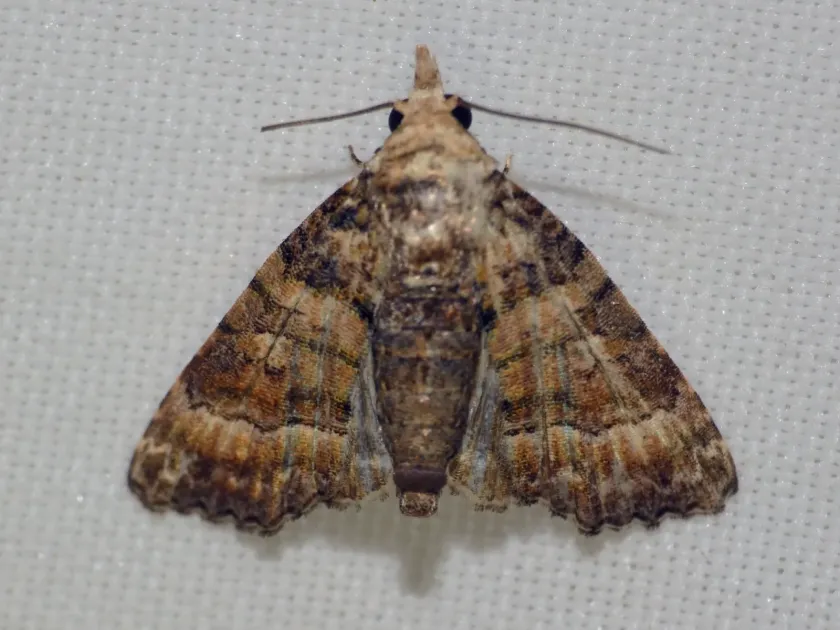
Description
How to identify
The genus Chlumetia belongs to the order Lepidoptera, family Noctuidae. These are small nocturnal moths that often remain unnoticed due to their cryptic coloration.
Adults typically have a wingspan of about 20–25 mm. The forewings are generally grayish-brown with a specific pattern that provides camouflage against tree bark.
Larvae pass through several instars, changing color from light green to reddish-brown. The body of the caterpillar is covered with fine, sparse hairs, which is a distinctive feature.
Pupae are formed in dense cocoons, which the pest hides in bark crevices or in the soil substrate directly beneath the tree canopy.
The genus includes several species, with Chlumetia transversa being the most prominent, particularly known for infesting tropical fruit crops.
What it damages
The primary host plants for this genus are members of the Anacardiaceae family, with mango (Mangifera indica) being the most susceptible crop.
The pest damages young shoots and inflorescences. Larvae bore into the terminal buds, causing immediate cessation of vegetative growth.
When inflorescences are infested, larvae consume the inner tissues of the flowers, leading to the shedding of buds and a significant reduction in fruit yield.
Severe infestations can cause deformation of young leaves and necrosis of shoots. Damaged areas often serve as entry points for fungal and bacterial pathogens.
The level of economic damage is directly proportional to population density, with heavy outbreaks potentially resulting in total loss of the fruit crop.
When it appears
The life cycle is closely synchronized with the phenological stages of mango development. Pest activity increases during periods of active sap flow.
The first generation of moths emerges in the spring when the tree produces new shoots. This is the peak time for oviposition on the foliage.
Development from egg to adult takes approximately 3 to 5 weeks, depending on the temperature and humidity conditions of the growing region.
Up to 4-5 generations may occur throughout the year, necessitating a sustained and systematic control approach during the entire growing season.
Population peaks usually occur shortly before the onset of the rainy season, when mango trees exhibit the most vigorous growth of new shoots.
Signs of infestation
The primary symptom of infestation is the wilting and subsequent drying of the tips of young shoots, commonly known as "shoot dieback".
Upon inspecting the inflorescences, one can observe larval frass (excrement) accumulating on the flower scales, along with evidence of petal feeding.
- Darkening and death of terminal buds.
- Curling of young leaves with subsequent marginal necrosis.
- Presence of webbing on infested inflorescences.
- Characteristic entry holes at the base of leaf petioles.
Detailed examination of the tree trunk may reveal cocoons hidden in the crevices of old bark, indicating successful pupation sites.
Control measures
The cornerstone of management is cultural control: pruning and timely destruction of infested shoots that harbor the larvae.
Monitoring using pheromone traps is highly recommended to determine the onset of moth flight and to optimize the timing of pesticide applications.
During the period of mass larval emergence, spraying with biological insecticides based on Bacillus thuringiensis or systemic chemical agents is effective.
Maintaining a natural balance of parasitoids and predators is crucial, as they play a significant role in suppressing Chlumetia populations in orchards.
Preventive whitewashing of tree trunks with lime helps to reduce the availability of suitable hibernation sites for pupae within bark crevices.
Taxonomy
- Latin name
- Chlumetia
- Order
- Lepidoptera (butterflies)
- Family
- Euteliidae
- EPPO code
- CHLUSP
Discussion
No discussions yet — be the first.