
Bombotelia
Bombotelia
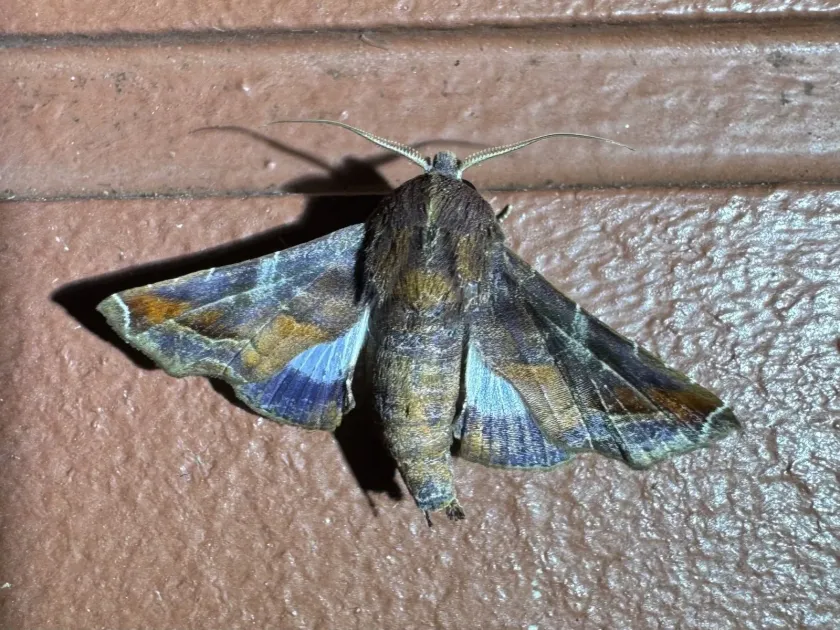
Description
How to identify
Bombotelia belongs to the order Lepidoptera, specifically the family Noctuidae. These are nocturnal moths characterized by cryptic coloration on their wings, which allows them to remain perfectly camouflaged against tree bark or leaf surfaces during daylight hours.
The larvae of this pest possess a cylindrical body with well-developed prolegs, enabling efficient movement across plant stems. Their coloration ranges from light green to brown, providing excellent concealment against natural predators.
Adult moths have a well-developed sucking mouthpart typical of noctuids. They are primarily active at night, when they fly to feed on nectar and locate suitable oviposition sites on host plants.
The life cycle involves four stages: egg, larva (caterpillar), pupa, and adult. The insect undergoes complete metamorphosis, with the duration of each stage heavily influenced by local climatic conditions.
Accurate species identification often requires professional entomological skills, as these moths may visually resemble other noctuid species. Agronomists often employ pheromone traps to monitor population density in fields.
What it damages
This pest targets a wide variety of ornamental and garden plants. The primary damage is caused by the larvae, which exhibit high voracity during their rapid growth phases.
Caterpillars consume leaf tissues, often skeletonizing the foliage or completely destroying the leaf blade. This significantly disrupts photosynthesis, leading to stunted plant growth and reduced vitality.
In cases of heavy infestation, larvae may attack young shoots and buds, causing permanent deformation of the plant structure and delaying development throughout the season.
The feeding wounds create entry points for secondary infections, including various fungal and bacterial pathogens. Plants weakened by caterpillar activity become significantly more susceptible to environmental stress.
The economic impact of Bombotelia is substantial, often resulting in severe yield losses or the complete loss of aesthetic value in park and garden settings, necessitating strict population control.
When it appears
The flight of adult moths typically begins in late spring or early summer, coinciding with the arrival of stable, warm nighttime temperatures. This period marks the mass emergence of adults from their pupal stage.
After mating, females lay eggs on the undersides of leaves of host plants. A typical clutch contains dozens of eggs, which hatch into young larvae within 7 to 10 days.
Peak larval activity occurs mid-summer, when feeding is most intense. During this time, regular inspections are essential to identify early signs of infestation and prevent large-scale damage.
By autumn, caterpillars finish their development and descend into the soil or find crevices in tree bark to pupate. The pupal stage serves as a period of diapause, allowing the pest to survive harsh winter conditions.
The number of generations per year varies by climate; in warmer regions, the pest may complete two or more generations, significantly increasing the risk to agricultural and ornamental crops.
Signs of infestation
The initial sign of a Bombotelia infestation is the presence of holes of varying sizes in leaves, often referred to as window-paning, where the larvae have consumed patches of the leaf tissue.
Droppings (frass), appearing as small dark pellets on the leaf surface or beneath the plant, are a reliable indicator of hidden caterpillar activity within the canopy.
Silk webbing used by larvae to pull leaves together provides additional protection from predators and wind, and serves as another clear visual cue for the presence of the pest.
In severe cases, affected plants exhibit noticeable yellowing and premature leaf drop. Without intervention, total defoliation can occur, which is particularly devastating for young, delicate nursery plants.
Conducting nocturnal inspections with a flashlight is the most accurate diagnostic method, as larvae are strictly nocturnal and prefer to remain hidden in dense foliage or bark crevices during the day.
Control measures
Effective management of Bombotelia requires an integrated pest management (IPM) strategy that combines cultural, biological, and chemical control methods.
- Cultivate the soil beneath plants regularly to expose and destroy overwintering pupae.
- Encourage natural predators, such as predatory bugs and parasitic wasps, to suppress population levels.
- Utilize light and pheromone traps to monitor and reduce adult moth populations during peak flight seasons.
- Apply biological insecticides, such as Bacillus thuringiensis, specifically during the early larval stages for maximum efficacy.
- Use systemic insecticides only when the economic threshold is reached to minimize the impact on non-target pollinators.
Rotating chemical products is crucial to prevent the development of resistance in the pest population. Always follow label instructions to protect beneficial insects and reduce environmental contamination.
Cultural prevention includes maintaining appropriate plant spacing and performing timely pruning of infested branches, which creates an environment less conducive to the pest's reproductive cycle.
Systematic monitoring of the planting site should be performed weekly throughout the growing season, particularly during hot and dry spells that accelerate the development of noctuid populations.
Taxonomy
- Latin name
- Bombotelia
- Order
- Lepidoptera (butterflies)
- Family
- Euteliidae
- EPPO code
- BOMTSP
Discussion
No discussions yet — be the first.