
Chlamydatus
Chlamydatus
Description
How to identify
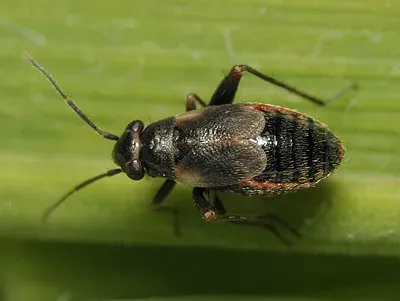
The genus Chlamydatus belongs to the family Miridae (plant bugs) within the order Hemiptera. These are typically small insects, with adults usually ranging from 2 to 4 millimeters in length.
The insects are generally dark brown or black, making them difficult to spot against soil or foliage. They possess a robust body shape and are covered with short, fine hairs.
Nymphs resemble smaller, wingless versions of the adults. They undergo several developmental stages, increasing in size as they molt until they reach the mature stage.
Chlamydatus bugs are highly mobile, allowing them to quickly escape disturbances or move between food sources. They tend to be more active during cooler periods of the day, often sheltering near the soil surface.
There are many species within this genus, and they exhibit varying degrees of host plant preference, which is a crucial factor for accurate identification and field assessment.
What it damages
Chlamydatus species feed on a wide variety of crops, including grains, vegetables, and technical crops. They cause the most damage during the early seedling and plant development stages.
These insects use their piercing-sucking mouthparts to penetrate plant tissues. While feeding, they inject saliva containing enzymes that cause cell death and tissue necrosis.
Feeding injury results in small necrotic spots on the leaves, which can lead to leaf deformation, yellowing, and stunted plant growth during critical establishment periods.
In cases of high population density, the combined feeding pressure can significantly reduce plant stand density, leading to substantial yield losses across large areas.
Early-stage damage to the growing points can cause the plants to become permanently stunted, making them more susceptible to subsequent environmental stresses or secondary infections.
When it appears
The life cycle of Chlamydatus is highly dependent on climate and temperature. They typically overwinter as eggs, which are deposited in plant debris or the upper layer of soil.
Hatching usually occurs in the spring, coinciding with the germination of seedlings. Soil moisture and surface temperature are critical factors influencing the survival of early-stage nymphs.
Active feeding by both nymphs and adults continues through the first half of the growing season. Depending on the region, the pest can complete multiple generations per year.
Populations may fluctuate depending on summer weather conditions; however, they often remain active throughout the season if host plants are readily available.
As temperatures drop in the autumn, the insects undergo diapause, seeking protected habitats to survive the winter and restart the cycle the following year.
Signs of infestation
The most common sign of infestation is the appearance of small, whitish, or necrotic spots on the leaves, which are the direct result of the insects piercing the leaf cells.
Leaf curling, crinkling, or general distortion of the foliage in young seedlings often indicates significant feeding pressure from the plant bugs.
During morning scouting, you may observe the bugs actively running on the leaves or falling to the soil surface when the plant is lightly disturbed.
Patches of reduced plant vigor, poor emergence, or overall chlorosis in a field are indicators that an assessment for Chlamydatus and other sap-sucking pests should be conducted.
Significant infestations can lead to the wilting of the plant's growing tips, which affects the overall development and productivity of the crop.
Control measures
Effective cultural control starts with deep tillage to bury crop residues, which helps eliminate overwintering sites for the pest's eggs and reduces the spring population.
Maintaining clean field borders and controlling weeds within the field is essential, as many weed species serve as alternate hosts and bridges for the pest population.
Implementing a diverse crop rotation strategy can significantly disrupt the life cycle of the bug, preventing continuous infestation across successive seasons.
If economic injury levels are exceeded, the use of registered insecticides is necessary, particularly focusing on pyrethroid or organophosphate treatments when nymphs are most active.
- Monitor insect activity using yellow sticky cards or sweep nets
- Time insecticide applications during the early morning or late evening
- Encourage natural predators by maintaining semi-natural habitats around fields
Taxonomy
- Latin name
- Chlamydatus
- Order
- Hemiptera (bugs, aphids, leafhoppers)
- Family
- Miridae
- EPPO code
- CHLASP
Discussion
No discussions yet — be the first.