
Chlaenius vestitus
Chlaenius vestitus
Description
How to identify
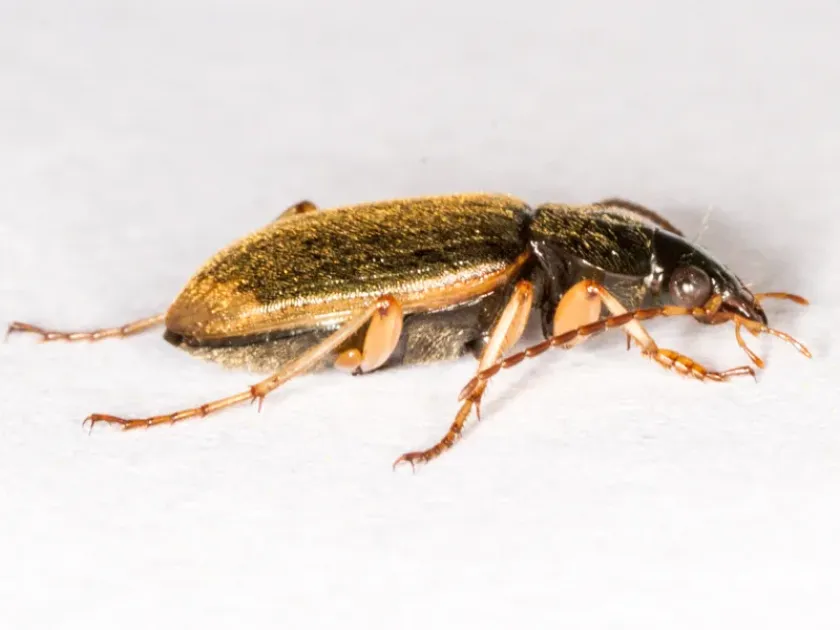
Chlaenius vestitus belongs to the family Carabidae (ground beetles) of the order Coleoptera. Adult beetles have an elongated body, approximately 10–12 mm in length, with a distinct metallic green or golden-green coloration.
The surface of the elytra is covered with fine hairs, giving the beetle a matte appearance that distinguishes it from many other glossy carabid species. Its legs and antennae are typically reddish-yellow or orange-brown.
The larvae are campodeiform and active, featuring well-developed mandibles and cerci at the tip of the abdomen. They prefer moist habitats and are often found in the rhizosphere, where they seek refuge from intense sunlight.
While adults are primarily nocturnal predators, they can exhibit facultative phytophagy under certain conditions, consuming vegetative plant parts. High activity of adults is typically observed during the warmer months of the year.
It is crucial to distinguish beneficial carabid predators from species that can become pests under high population densities. Monitoring for Chlaenius vestitus is essential during periods of mass emergence of the adults onto the soil surface.
What it damages
The damage is primarily caused by both adults and larvae, although the species is generally considered an occasional or minor pest. It can damage grain crops, industrial crops, and vegetables during their early developmental stages.
The damage manifests as gnawing on cotyledons, young leaves, and buds of seedlings. If the pest population is high, it can lead to the loss of young seedlings, resulting in thin and uneven crop stands in the field.
Beetles may also damage the reproductive organs of plants, including anthers and ovaries, negatively affecting grain yields. Damage is often patchy and highly dependent on soil moisture levels.
Waterlogged field areas are high-risk zones, as moisture is favorable for the development of Chlaenius larvae. In these areas, the pest can destroy the root systems of young plants, severely weakening their growth.
Crops are most susceptible during the seedling stage until the start of tillering. During this period, agronomists should perform regular field inspections for signs of beetle feeding activity.
Signs of infestation
The primary sign of infestation is characterized by holes or ragged edges on the cotyledons and leaves of seedlings. Inspecting the field in the morning hours may reveal the beetles themselves in the topsoil or under plant debris.
Noting damage on seedlings, especially in conjunction with humid weather conditions, is a strong indicator of this species. Crop thinning in specific parts of the field often becomes apparent within 5 to 7 days after emergence.
The presence of adults can be confirmed using pitfall traps installed in field rows. This allows for an accurate assessment of population density before deciding on necessary chemical treatments.
Larvae living in the soil may cause wilting of individual shoots without visible mechanical stem damage, which is caused by root feeding. This is frequently misidentified as a fungal root disease.
Visual monitoring with a flashlight at night helps confirm adult activity, as they are most active during darkness, providing a reliable method to identify their presence in the crop area.
Control measures
Effective control starts with proper agricultural practices, including thorough soil tillage, which disrupts the larval development cycle and destroys their hiding places. Optimizing sowing dates to ensure plants pass through vulnerable stages quickly is vital.
Using insecticidal seed treatments is the most reliable method to prevent damage to emerging seedlings. Neonicotinoid and pyrethroid-based products have proven highly effective against these ground beetles.
In cases of high pest populations during the growing season, localized or broadcast insecticide sprays (systemic or contact) applied in the evening are recommended for effective control.
Eliminating weeds on field edges and throughout the field significantly reduces the pest population by removing additional food sources and shelter. Maintaining a clean field is a foundation for managing this species.
Crop rotation with less attractive species helps naturally suppress population levels in subsequent years. It is recommended to alternate crops combined with deep soil cultivation to reduce overwintering populations.
Taxonomy
- Latin name
- Chlaenius vestitus
- Order
- Coleoptera (beetles)
- Family
- Carabidae
- EPPO code
- CHNUVE
Discussion
No discussions yet — be the first.