
Chilocorus stigma
Chilocorus stigma
Description
How to identify
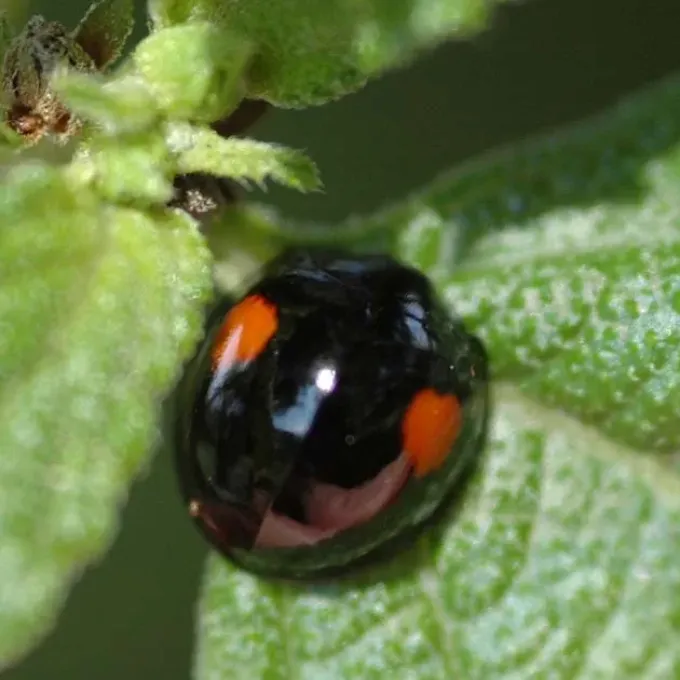
Chilocorus stigma, commonly known as the twice-stabbed lady beetle, is a species of ladybird beetle (Coccinellidae) recognizable by its glossy, jet-black, hemispherical body featuring two distinct bright red spots, one on each elytron.
The larvae of this beetle have a very different appearance compared to adults. They are elongated, dark-colored, and covered in branched spines, which provide defense against predators during their development.
Eggs are typically laid in small crevices or under the protective coverings of scale insects. This strategic placement ensures that neonate larvae have immediate access to their primary food source.
The life cycle undergoes complete metamorphosis, including egg, four larval instars, pupal, and adult stages. The duration of these stages is highly temperature-dependent, usually resulting in multiple generations per year in warmer climates.
This beetle is a highly effective predator rather than a pest. It is often found in infested trees, where it plays a vital role in biological control of various tree-damaging insects.
What it damages
Chilocorus stigma does not feed on plant tissues. It is strictly a predator that feeds on Coccoidea, specifically various species of scale insects and armored scales that infest woody plants.
Both the adult beetles and the larvae are specialized hunters. They have the ability to penetrate the protective shields of scale insects, devouring the soft bodies underneath, which effectively reduces the pest population.
In orchards and ornamental plantings, the presence of these beetles is a sign of a healthy ecosystem working to suppress scale infestations. They are considered an essential component of integrated pest management (IPM).
While some people mistake the beetle for a pest due to its presence on damaged trees, it is actually performing a cleaning service. Removing these beetles would likely lead to a surge in scale insect damage.
By naturally reducing the population of scale insects, these lady beetles prevent the yellowing of leaves, stunting of growth, and dieback that usually accompany heavy pest infestations.
When it appears
Adults typically emerge from hibernation in the early spring as temperatures begin to rise. They start searching for host plants where overwintered scale insects are present.
Throughout the summer, the beetle remains active, with multiple generations overlapping. This constant activity ensures that the predatory pressure on scale insects is maintained throughout the critical growing season.
As autumn approaches and temperatures drop, the beetles look for protected overwintering sites, such as bark crevices, leaf litter, or debris, to survive the winter months.
The success of the population in the following year depends heavily on the mildness of the winter and the abundance of food available during the previous summer season.
Monitoring the seasonal dynamics of these beetles can help growers time any necessary interventions to avoid harming these beneficial predators when they are most active.
Control measures
The best way to "control" Chilocorus stigma is to preserve its population by creating a supportive environment. The primary goal should be the reduction of chemical insecticide use, especially broad-spectrum sprays.
- Use selective insecticides that target only specific pests rather than broad-spectrum toxins.
- Protect nesting and overwintering sites by leaving some organic debris in the garden.
- Manage ants, as they are known to defend scale insects from predators like lady beetles.
- Maintain high plant diversity to provide alternative resources for the beetles.
- Integrate biological control methods into the overall orchard management strategy.
Practicing selective pruning and ensuring healthy orchard conditions can improve the hunting efficiency of the beetles by providing them with better access to branches infested with scale.
When considering pest outbreaks, wait to see if the predator population can naturally suppress the scale before resorting to more aggressive intervention strategies.
By fostering a favorable habitat for these predators, growers can enjoy a self-regulating system that significantly reduces the reliance on external chemical inputs and maintains long-term orchard health.
Taxonomy
- Latin name
- Chilocorus stigma
- Order
- Coleoptera (beetles)
- Family
- Coccinellidae
- EPPO code
- CHICST
Discussion
No discussions yet — be the first.