
Kidney-spot ladybird
Chilocorus renipustulatus
Description
How to identify
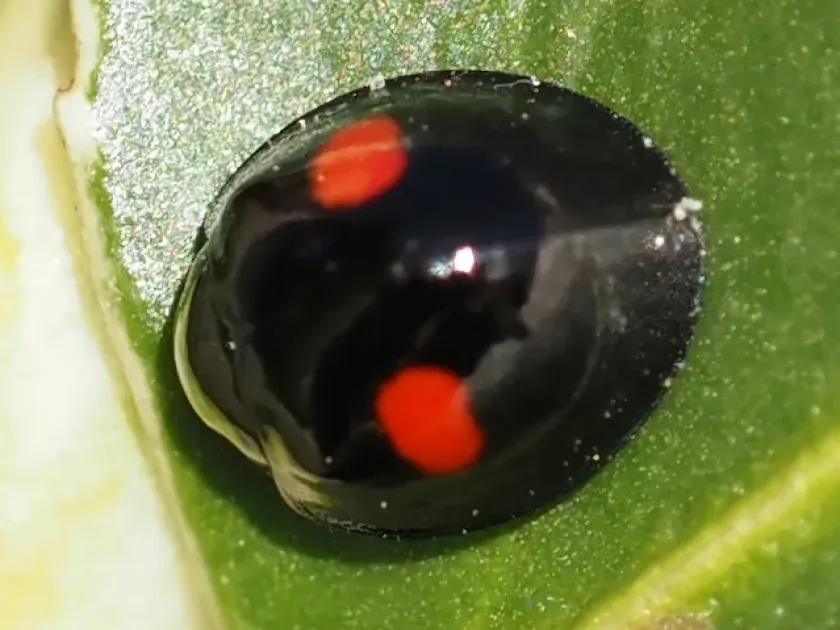
The kidney-spot ladybird belongs to the family Coccinellidae, within the order Coleoptera. Adult specimens feature a distinct hemispherical body shape with glossy, jet-black elytra.
The species is easily identified by two prominent red or orange kidney-shaped spots, one on each elytron. Adults typically measure between 3 and 4.5 millimeters in length.
Larvae are elongated and covered with various spines, giving them a fierce appearance, which is common for several predator species within this family. They lead a secretive lifestyle.
The pupae often develop inside the shed skin of the final larval instar, which cracks along the back to protect the developing insect from predators and environmental hazards.
Correct identification is based on the specific shape of the spots and its host tree preference, which distinguishes it from other common Chilocorus species found in similar habitats.
What it damages
Crucially, the kidney-spot ladybird is not a pest but a highly beneficial **entomophage**. It plays a vital role in maintaining the health of trees by preying on scale insects.
The primary diet of both larvae and adults consists of various scale insects (coccids) that damage fruit and ornamental trees by sap-sucking, which can lead to branch death.
By consuming these pests, the ladybird prevents large-scale infestations that could otherwise severely weaken the tree's physiological state and overall fruit productivity.
The presence of this beetle is a positive sign for any orchard management program, as it demonstrates a functional level of biological control without the need for chemical intervention.
They are frequently found on apple, pear, plum, and various ornamental trees, where they effectively patrol the bark to eradicate pest colonies.
When it appears
Adult beetles overwinter in sheltered locations, such as crevices in tree bark or leaf litter at the base of trees, providing protection against winter temperature extremes.
As spring temperatures rise, the adults emerge from diapause, aligning their activity period with the initial movement and feeding of scale insects in the canopy.
The flight period is extended throughout the growing season, typically reaching a peak in late spring and early summer, coinciding with their peak egg-laying activity.
Larvae remain highly active during the summer months, feeding intensively on prey to support their rapid development under optimal climate conditions.
In autumn, as temperatures decline, adult beetles gradually reduce their activity levels and seek secure sites to hibernate, ensuring the continuation of the next generation.
Signs of infestation
The presence of this predator is indicated by finding black beetles with red spots on tree trunks, especially near dense colonies of scale insects.
Exuviae (shed larval skins) found on the bark surface are clear evidence that the beetle is breeding successfully and actively controlling the pest population in the vicinity.
A noticeable decrease in scale insect density over a season, even in areas where chemical pesticides were avoided, is a typical outcome of high ladybird activity.
These beetles are generally calm and can be observed moving slowly across the bark, making them easy to monitor for agricultural scouting purposes.
Successful colonization is marked by the absence of severe tree damage and the maintenance of a diverse ecosystem within the orchard or garden plot.
Control measures
Agricultural protection measures for this insect involve habitat preservation rather than eradication, as they are essential allies in sustainable crop protection.
- Avoid the use of broad-spectrum pesticides during the peak activity months of spring and summer.
- Selectively use narrow-spectrum or biological pesticides if control of other pests is absolutely required.
- Maintain hedgerows and nearby natural vegetation to provide essential overwintering habitats.
- Reduce mechanical cleaning or stripping of bark, which provides necessary refuge for hibernating adults.
- Promote integrated pest management (IPM) strategies that prioritize natural predators over chemical solutions.
Taxonomy
- Latin name
- Chilocorus renipustulatus
- Order
- Coleoptera (beetles)
- Family
- Coccinellidae
- EPPO code
- CHICRE
Discussion
No discussions yet — be the first.