
Chilocorus kuwanae
Chilocorus kuwanae
Description
How to identify
Chilocorus kuwanae is a species of ladybird beetle (Coccinellidae) that serves as a highly efficient predator in agricultural and forest ecosystems. It is widely recognized for its specialized hunting behavior against various pests.
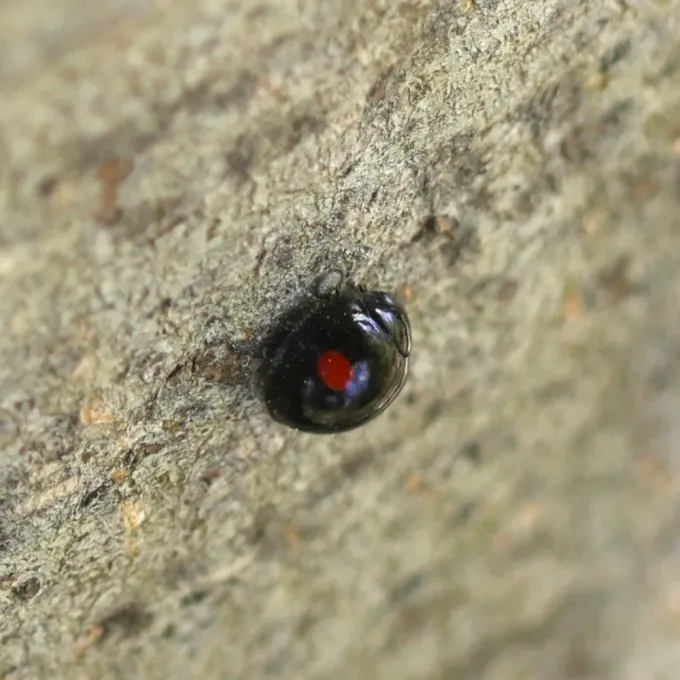
Adult beetles have a characteristic rounded, convex shape with a glossy black appearance. They typically measure between 3 and 5 millimeters in length, making them well-adapted to navigating the surfaces of tree bark.
The larvae are distinct from adults, possessing elongated bodies covered in small spines. Their dark, cryptic coloration allows them to blend in with the tree trunks while hunting for food.
Eggs are small, oval, and pale-colored, usually laid individually or in clusters near colonies of prey. This placement ensures that emerging larvae have immediate access to a food source.
The pupal stage is often attached to branches or stems. This stationary phase is crucial for the beetle's development and is protected by the remnants of the larval skin.
What it damages
It is critical to distinguish Chilocorus kuwanae from actual plant pests. This insect is a beneficial predator and does not consume plant tissues, sap, or foliage, meaning it causes no harm to crops or garden plants.
The species primarily targets scale insects and soft scales, which are notorious for damaging fruit trees, ornamental plants, and various tree species by draining plant nutrients and causing dieback.
Instead of causing damage, this beetle provides a significant service to farmers and gardeners. By reducing pest populations, it helps maintain the health and vigor of the plants it inhabits.
In many regions, this predator is highly valued for its role in suppressing pest outbreaks. Its presence reduces the need for heavy chemical treatments, promoting a healthier environment.
The only negative interaction with this species arises when improper pesticide application is used, which eliminates this helpful predator and leads to secondary outbreaks of scale insects.
When it appears
Activity of the adult beetles begins in early spring as temperatures rise, typically when they exceed 10-12 degrees Celsius. After wintering, they become active and start searching for prey.
The peak activity of both larvae and adults coincides with the development stages of scale insects, which usually occurs during the late spring and early summer months.
This predator can complete multiple generations during a single growing season if the food supply is adequate. This rapid reproductive cycle makes them excellent candidates for biological control.
As autumn arrives and temperatures decline, adult beetles seek shelter to enter a state of diapause. They successfully overwinter in bark crevices and protected areas on trees.
Their ability to survive winter conditions ensures a stable population for the following spring, allowing for sustained control of garden pests throughout the year.
Control measures
Control measures concerning Chilocorus kuwanae are focused on conservation and population management. The most effective strategy is the avoidance of broad-spectrum insecticides during the beetle's active period.
Integrated Pest Management (IPM) practices should be employed, prioritizing selective biological agents that do not harm beneficial species like lady beetles.
Maintaining a diverse garden environment with native plants provides essential refuge and supplemental nectar sources, which helps sustain predator populations even when prey density is low.
Educating growers on identifying this insect is vital to prevent accidental killing. Awareness of its beneficial status encourages farmers to preserve natural populations rather than eliminating them.
Regular monitoring of pest populations using non-intrusive methods helps determine the precise timing for any necessary interventions, ensuring that natural predators like Chilocorus kuwanae are preserved.
Taxonomy
- Latin name
- Chilocorus kuwanae
- Order
- Coleoptera (beetles)
- Family
- Coccinellidae
- EPPO code
- CHICKU
Discussion
No discussions yet — be the first.