
Chilocorus distigma
Chilocorus distigma
Description
How to identify
Chilocorus distigma is a species of ladybird beetle (family Coccinellidae) widely recognized in agricultural entomology as a highly efficient predator.
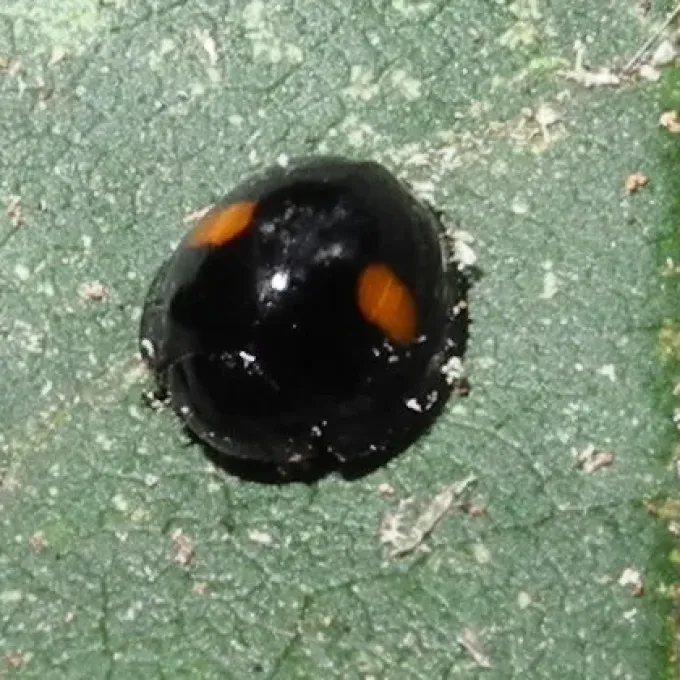
The adult beetle is easily identified by its shiny black, hemispherical body and two distinctive reddish spots on the elytra (wing covers).
The larvae are typically spiny and elongated, with specialized projections that help them crawl on plant surfaces while searching for their prey.
They are distinct from harmful pests because they belong to a family of beneficial beetles that serve as natural regulators in ecosystems.
While often confused with other small insects, the presence of these beetles is a sign of a healthy, balanced orchard environment.
What it damages
Chilocorus distigma does not damage crops; instead, it provides essential ecosystem services by feeding on scale insects and mealybugs.
These scale insects are serious pests that cause wilting, stunted growth, and death of branches in trees and shrubs, which the beetle helps to prevent.
By consuming large numbers of eggs, nymphs, and adult scale insects, the beetle reduces the need for heavy pesticide usage in orchards.
There is no economic damage caused by this insect, as it does not target leaves, fruit, or roots of agricultural or ornamental plants.
Its predatory behavior is highly specialized, making it a valuable biological control agent for fruit growers and nursery managers.
When it appears
The lifecycle begins in the spring as temperatures rise, signaling the beetles to emerge from their overwintering sites to begin feeding and reproduction.
During the summer months, the activity of both larvae and adults is at its peak, coinciding with the reproductive cycles of their host prey.
The insects undergo complete metamorphosis, passing through the stages of egg, larva, pupa, and adult throughout the growing season.
As the weather cools in autumn, the beetles search for suitable overwintering habitats, such as bark crevices or dense foliage, to survive the winter.
The timing of each generation can vary depending on regional climate conditions and the local abundance of scale insect populations.
Control measures
Since Chilocorus distigma is a beneficial insect, the main goal is to protect and conserve its populations within agricultural landscapes.
Farmers should avoid broad-spectrum insecticide applications that could harm these predatory beetles during their peak activity season.
If chemical intervention is necessary, growers should select selective pesticides that are known to be non-toxic to ladybird beetles.
Encouraging biodiversity by planting companion crops or maintaining buffer strips can provide shelter and alternative food sources for these predators.
Monitoring pest populations is essential to ensure that chemical treatments are used only when necessary, thus protecting the natural balance.
Taxonomy
- Latin name
- Chilocorus distigma
- Order
- Coleoptera (beetles)
- Family
- Coccinellidae
- EPPO code
- CHICDT
Discussion
No discussions yet — be the first.