
Chilocorus discoideus
Chilocorus discoideus
Description
How to identify
Chilocorus discoideus belongs to the ladybird beetle family (Coccinellidae), though unlike its strictly beneficial predatory relatives, it can act as a plant pest in specific environmental conditions.
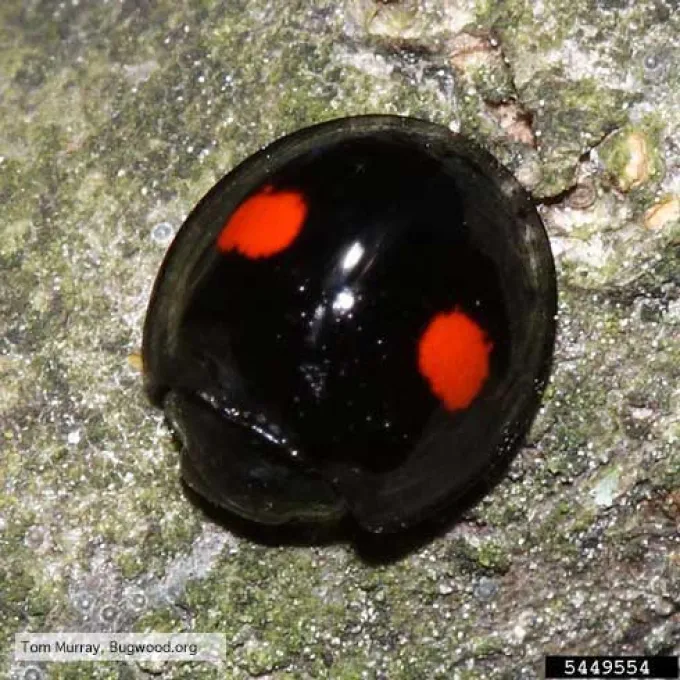
The adult beetle possesses a characteristic hemispherical body shape, typically black with a distinctive, bright central spot on the elytra, making it visually recognizable.
The size of the adult beetle ranges from 3 to 5 millimeters, which allows for easy detection during routine inspection of foliage and plant branches in the field.
The larvae are elongated and covered with noticeable spines, which serves as a defensive adaptation for their survival against potential predators in their habitat.
Pupae are typically found attached to the underside of leaves or tree bark, often exhibiting cryptic coloration that helps them blend into their immediate surroundings.
What it damages
This pest mainly affects fruit and ornamental woody crops, particularly citrus trees, where it can gather in large numbers to feed on tender plant tissues.
The insect feeds on vegetative plant parts, causing tissue loss, leaf deformation, and a significant weakening of the overall health of the infested tree.
Damage to young, rapidly growing shoots is particularly problematic, as it leads to stunted growth, loss of structural integrity, and decreased photosynthetic capacity.
Persistent feeding leads to the appearance of necrotic spots on the foliage, which can eventually cause premature leaf drop and negatively impact the tree's vigor.
While many species in the genus Chilocorus are beneficial predators, this particular species can shift to phytophagy when its primary food source is unavailable, posing a threat to crops.
When it appears
The activity of this pest is highly dependent on temperature, with peak populations usually observed during the warm spring and summer months when plants are actively growing.
The lifecycle includes multiple generations per season, enabling the pest to rapidly increase its population size and spread across large areas if environmental conditions remain favorable.
Adult beetles typically overwinter in sheltered locations, such as under tree bark, in leaf litter, or in crevices, which ensures high survival rates until the next season.
With the arrival of warmer spring temperatures, the beetles emerge from hibernation and begin migrating to young foliage to feed and initiate the mating process.
As autumn approaches and temperatures decline, the insects retreat to their overwintering sites, significantly reducing their presence and visibility on the host plants.
Signs of infestation
The most common sign of infestation is the presence of irregular, ragged bite marks along the leaf margins caused by the feeding activity of both adults and larvae.
Frass (insect excrement) found on the surface of leaves and the presence of cast-off larval skins are clear indicators that a population is actively developing on the plant.
Clusters of eggs are often deposited on the underside of leaves or near branch junctions, where they are shielded from direct sunlight and environmental hazards.
Deformation or curling of newly developed leaves is a sign that the pest has interfered with the plant's normal physiological development and sap flow.
- Bite marks on leaf edges.
- Presence of eggs in clusters.
- Stunted young shoot development.
- Visible larvae or adult beetles.
Control measures
Controlling this pest requires an integrated approach, prioritizing methods that minimize negative impacts on the environment while effectively managing the population.
Manual removal of adult beetles and infested plant parts is a viable strategy for small-scale gardens or early-stage infestations where chemical intervention is not yet required.
Biological control, such as encouraging natural predators or utilizing entomopathogenic agents, can effectively suppress population spikes without causing ecological disruption.
In cases of severe infestation, systemic insecticides may be applied, ensuring adherence to safety guidelines and pre-harvest intervals to protect both the user and the crop quality.
Sound agricultural practices, such as proper pruning, weeding, and balanced fertilization, are essential for increasing plant vigor and reducing their susceptibility to pest attacks.
Taxonomy
- Latin name
- Chilocorus discoideus
- Order
- Coleoptera (beetles)
- Family
- Coccinellidae
- EPPO code
- CHICDC
Discussion
No discussions yet — be the first.