
Chilocorus circumdatus
Chilocorus circumdatus
Description
How to identify
Chilocorus circumdatus is a small predatory beetle belonging to the Coccinellidae family, commonly known as ladybirds or ladybugs, within the order Coleoptera.
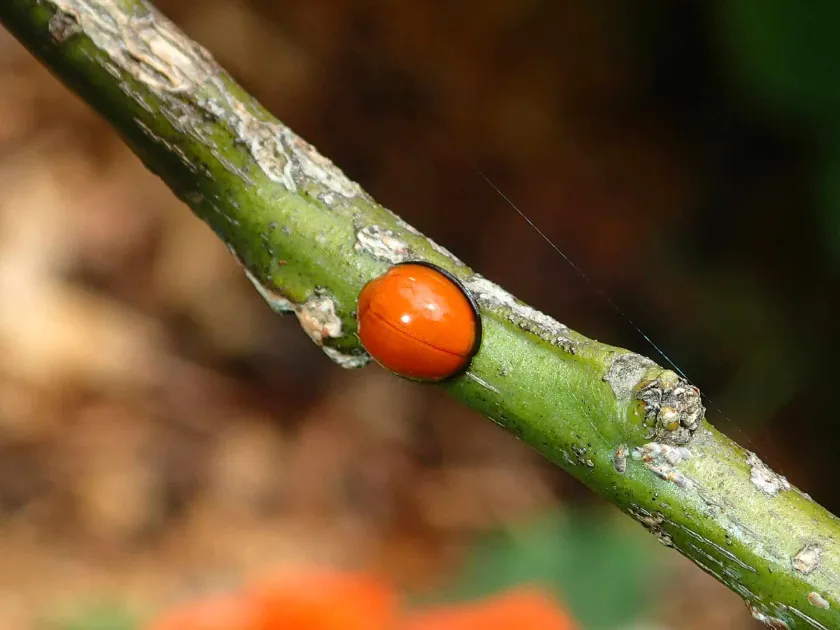
Adult beetles are easily identified by their hemispherical shape and shiny dark, almost black appearance, characterized by a distinct yellowish-orange border along the edge of the elytra.
The larvae are typically spiny, elongated, and highly active, patrolling branches and leaves to locate their prey. They undergo four larval instars before pupation.
The life cycle is temperature-dependent, allowing for multiple generations per year in tropical and subtropical regions, which makes it a persistent control agent.
This beetle is widely recognized for its efficiency in predatory behavior, serving as a primary biological control agent for various orchard and ornamental plant pests.
What it damages
Chilocorus circumdatus is not a plant pest; it is a specialized predator. It plays a critical role in agricultural ecosystems by consuming scale insects and mealybugs.
Its diet consists primarily of various Coccoidea species that suck sap from plants, often causing severe damage, wilting, and secondary fungal infections.
By actively feeding on these pests, Chilocorus circumdatus helps clean plant surfaces and prevents the population explosions of harmful scales in plantations.
No damage to crops, fruit, or foliage occurs from the presence of this insect, as its mouthparts are adapted solely for predating on soft-bodied insects.
Therefore, this species is considered highly beneficial and is often introduced intentionally into environments where scale insect control is required.
Control measures
Conservation of Chilocorus circumdatus in agricultural systems focuses on creating favorable conditions for its survival and population growth rather than eradication.
The most important measure is the elimination or reduction of broad-spectrum synthetic insecticides, which can be highly toxic to these beneficial predators.
Integrated Pest Management (IPM) programs should prioritize the use of selective chemicals that target only specific pests while remaining safe for the ladybird population.
Maintaining floral diversity near crop fields provides essential supplemental nutrition, such as pollen and nectar, for the beetles during periods when scale insect numbers are low.
Farmers are encouraged to monitor scale insect population density and timing of predator appearance to ensure maximum efficacy of natural control without unnecessary interventions.
Taxonomy
- Latin name
- Chilocorus circumdatus
- Order
- Coleoptera (beetles)
- Family
- Coccinellidae
- EPPO code
- CHICCI
Discussion
No discussions yet — be the first.