
Chilocorus
Chilocorus calvus
Description
How to identify
Chilocorus calvus belongs to the Coccinellidae family (lady beetles), order Coleoptera. While many lady beetles are beneficial, certain species or high-density populations can require monitoring due to their interaction with orchard health and tree development.
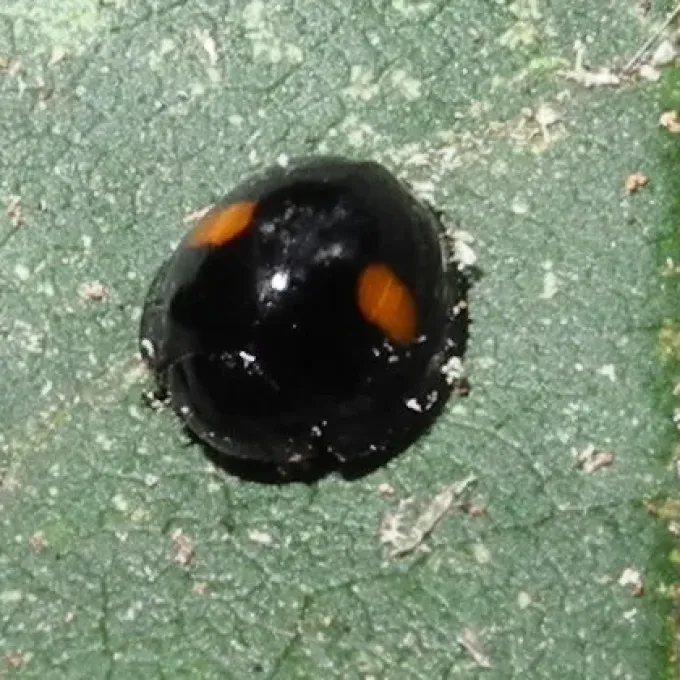
Adult beetles are typically hemispherical in shape, featuring a shiny black or dark brown exoskeleton. Their small size and dark coloration make them perfectly camouflaged against the bark of fruit trees during the day.
Larvae are characterized by numerous spines along their body, which serve as a primary defense mechanism against predators. They are usually grey or brownish, blending seamlessly with the rough surface of tree trunks.
The life cycle involves complete metamorphosis, progressing through egg, larval, pupal, and adult stages. Pupae are often found attached to sheltered areas on the underside of leaves or within bark crevices.
Wintering adults seek refuge in protected micro-habitats, such as deep cracks in the bark or beneath forest litter, which allows them to survive cold temperatures and emerge early in the spring.
What it damages
Primary hosts for this insect include stone and pome fruit trees. They tend to concentrate on trees that have existing bark damage or are under stress, using these areas to establish their populations.
The damage is mainly observed during the early stages of vegetation, specifically during bud burst and shoot elongation. Persistent feeding can cause micro-lesions on young tissues, resulting in restricted growth.
High infestations may lead to the weakening of branches, especially in young saplings, making the trees more susceptible to secondary environmental stressors and frost damage during winter.
A significant risk associated with their feeding activity is the creation of entry points for pathogens. This can lead to the development of wood rot or the spread of bacterial infections within the tree vascular system.
Economic damage is usually assessed based on the tree vigor and the cumulative effect of the infestation on fruit set and overall orchard productivity throughout the growing season.
Control measures
Cultural control is the first line of defense. Proper orchard hygiene, including the mechanical removal of loose, old bark from trunks, significantly reduces the availability of overwintering sites.
Maintaining strong tree vigor through balanced irrigation and nutrient management helps trees tolerate minor damage and prevents the build-up of massive pest populations that could cause economic losses.
Biological monitoring is highly recommended. Utilizing pheromone traps provides growers with accurate data on the start of activity periods, ensuring that any intervention is timed correctly for maximum efficacy.
If population levels exceed the economic threshold, biological control agents or soft-chemical biopesticides are preferred to ensure the safety of beneficial insects and pollinators present in the garden.
Broad-spectrum chemical treatments should be avoided to prevent upsetting the natural ecological balance. If systemic treatments are required, they should be applied early, respecting the required harvest safety intervals.
Taxonomy
- Latin name
- Chilocorus calvus
- Order
- Coleoptera (beetles)
- Family
- Coccinellidae
- EPPO code
- CHICCL
Discussion
No discussions yet — be the first.