
Chilocorus
Chilocorus
Description
How to identify
Chilocorus is a genus of predatory beetles belonging to the family Coccinellidae (ladybirds). Unlike many other insects in agricultural fields, these are recognized as highly beneficial predators.
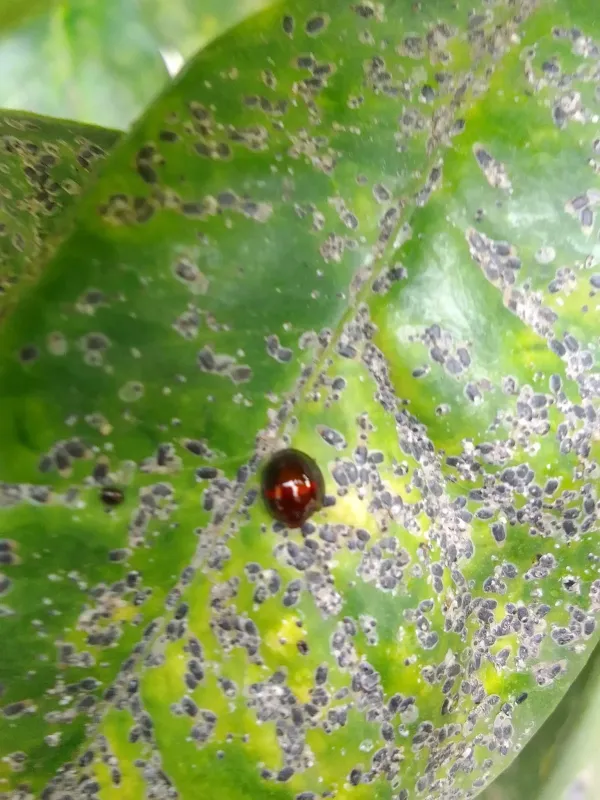
Adult beetles typically possess a hemispherical, strongly convex body shape. They are generally glossy black, sometimes featuring distinctive red or orange spots on their elytra.
The larvae are easily distinguishable by their spiny appearance, covered in branched scoli. This morphological trait serves as a defense mechanism against potential predators.
The life cycle undergoes complete metamorphosis, including egg, larval, pupal, and adult stages. Pupation often occurs on the bark of trees, protected by the larval exuviae.
It is crucial to correctly identify this insect in the field, as it is a natural ally to the grower rather than a threat to crop health.
What it damages
Chilocorus is not a plant pest; it does not damage crops. On the contrary, it plays a vital role in reducing the populations of devastating plant-sucking insects.
The primary food sources for Chilocorus species are scale insects and armored scales (Diaspididae). These pests often cause severe damage to fruit trees and ornamental shrubs.
Both adults and larvae are specialized predators that feed on all developmental stages of scale insects, effectively cleaning tree trunks and branches.
Their presence in an orchard acts as a biological regulator, preventing the outbreak of scale insect populations and protecting the tree's health.
In terms of agricultural significance, these beetles are considered essential agents of biological control, providing an eco-friendly service to the ecosystem.
When it appears
The activity of Chilocorus is synchronized with the life cycles of the scale insects they hunt, usually beginning in early spring as temperatures rise.
Adult beetles overwinter in sheltered locations, such as deep cracks in the bark of mature trees, under leaf litter, or in protected crevices.
Active feeding and reproduction typically reach their peak during late spring and summer when host pest populations are most abundant.
Depending on the climatic zone and temperature, the insect may complete several generations within a single growing season.
As autumn approaches and temperatures drop, the beetles seek secure overwintering sites to enter diapause and survive the cold winter months.
Control measures
Since Chilocorus is a beneficial insect, management practices should focus on conservation and creating favorable conditions for their survival.
The use of broad-spectrum insecticides is highly discouraged, as these chemicals are lethal to beneficial ladybirds and can disrupt natural pest control.
When chemical intervention is necessary for other pests, growers should select selective pesticides that have minimal impact on non-target predatory populations.
Maintaining a balanced orchard environment, including the preservation of natural habitats like older trees with rough bark, supports the long-term presence of the predator.
Integrated Pest Management (IPM) strategies emphasize the protection of Chilocorus as an effective tool for sustainable and profitable crop production.
Taxonomy
- Latin name
- Chilocorus
- Order
- Coleoptera (beetles)
- Family
- Coccinellidae
- EPPO code
- CHICSP
Discussion
No discussions yet — be the first.