
Cheilosia illustrata
Cheilosia illustrata
Description
How to identify
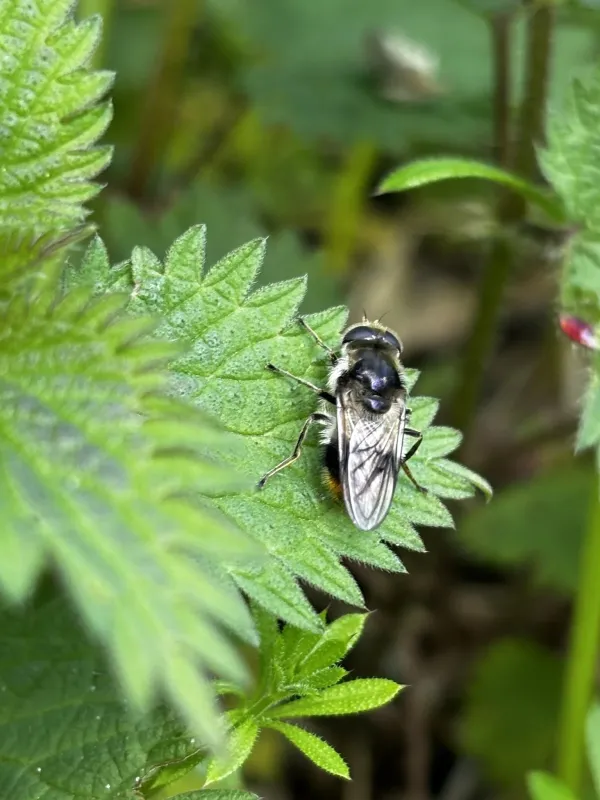
Cheilosia illustrata is a species of hoverfly belonging to the family Syrphidae in the order Diptera. These flies are widely known for their mimicry, as adults look remarkably like bumblebees due to their dense, fuzzy hair.
The body of the adult fly is covered in thick setae, often exhibiting golden or reddish-brown coloration, which serves as a protective mechanism against predators.
Unlike many other Syrphidae species that act as natural predators of aphids, the larvae of Cheilosia illustrata are primarily phytophagous, feeding on the internal tissues of host plants.
The life cycle encompasses four distinct stages: egg, larva, puparium, and adult. Adults are frequently found visiting various flowering plants to feed on pollen and nectar during the daytime.
Accurate identification of the species requires microscopic examination of the antennal structures and body bristles, as several species within the Cheilosia genus share similar physical characteristics.
What it damages
The larvae of this species typically target plants from the family Asteraceae. They are commonly associated with thistles and other closely related wild plants.
In an agricultural context, they may feed on roots and stems, causing structural damage and hindering the nutrient transport within the plant.
By mining the stems or root systems, the larvae weaken the plant, making it more susceptible to secondary environmental stresses and pathogenic infections.
While Cheilosia illustrata is not considered a primary agricultural pest of major crops, it can impact ornamental plants and wild flora that share habitats with cultivated lands.
The degree of economic damage is generally low, but significant localized infestations can lead to stunted growth or premature senescence of the affected host plants.
When it appears
The adult flies are most active during the spring and summer months, typically emerging when ambient temperatures are sufficient for mating and feeding.
Females lay their eggs on the stems or at the base of suitable host plants, ensuring that emerging larvae have immediate access to their preferred food source.
The larval phase lasts for several weeks, during which they grow by consuming plant tissues, eventually reaching the pupation stage before the onset of cooler weather.
Overwintering occurs in the puparial stage, which is usually buried in the soil or protected within the hollowed remnants of the host plant.
The species usually completes one generation per year, although varying weather conditions can occasionally shift the timing of emergence and development.
Signs of infestation
Visible signs of infestation include boreholes or irregular holes on the stalks of the plants, often accompanied by decay or discolored plant tissue.
Affected plants may show signs of wilting or loss of vigor that cannot be attributed to drought or obvious fungal diseases.
Upon closer inspection, the interior of the stems may reveal tunnels or hollowed-out sections created by the feeding larvae.
Premature yellowing of leaves or the presence of malformed flower heads can also indicate that the plant's vascular system has been compromised by the larvae.
The presence of adult flies in the vicinity, particularly on flowers near the affected patches, is a strong indicator of the pest's presence in the area.
Control measures
Cultural control, such as the removal and destruction of host weeds like thistles, is the most effective way to manage the population of this hoverfly.
Tillage practices, especially deep plowing, can effectively disrupt the overwintering puparia located in the soil, reducing the subsequent year's population.
Maintaining a balanced ecosystem that supports natural parasites and predators is essential for keeping the hoverfly population below economic damage thresholds.
Chemical control is rarely necessary and is not recommended as a primary strategy due to the beneficial roles other hoverfly species play in pollination.
- Practice proper weed management.
- Remove and compost crop residues.
- Monitor the crop for early signs of stem damage.
- Promote biodiversity around agricultural plots.
Taxonomy
- Latin name
- Cheilosia illustrata
- Order
- Diptera (flies)
- Family
- Syrphidae
- EPPO code
- CHELIL
Discussion
No discussions yet — be the first.