
Cheilosia baroni
Cheilosia baroni
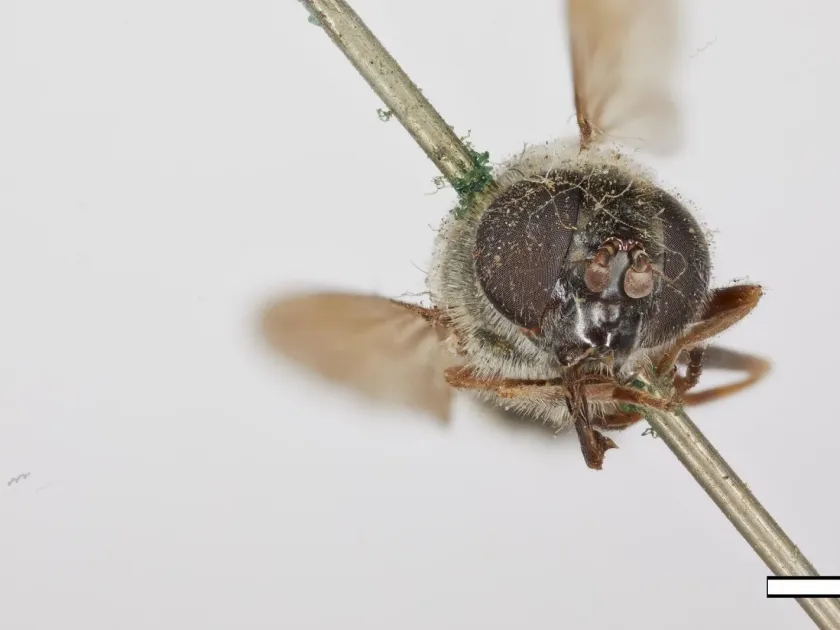
Description
How to identify
Cheilosia baroni belongs to the hoverfly family (Syrphidae), order Diptera. While many hoverflies are known for their predatory larvae, this specific species is a phytophagous insect that feeds on plant tissues.
The adult flies are often small and resemble bees or wasps, which is a common form of Batesian mimicry in the Syrphidae family. They are typically seen near flowering plants where they feed on nectar and pollen.
The life cycle consists of four stages: egg, larva, pupa, and adult. The larval stage is the one responsible for the damage as it develops internally within the plant host.
Identification often relies on the host plant species and the specific symptoms observed, as adult flies are difficult to distinguish from many other similar-looking Syrphids without expert analysis.
These insects prefer habitats where their host plants are abundant, often manifesting in greenhouses or vegetable gardens during the warmer months of the year.
What it damages
Larvae of Cheilosia baroni are known to bore into the stems, crowns, or roots of plants in the Asteraceae family, significantly disrupting their vascular systems.
By consuming internal plant tissues, the larvae obstruct the movement of water and nutrients, which quickly leads to the wilting and eventual death of the affected parts.
Young seedlings are particularly vulnerable, and even a single larva can cause the total collapse of a plant before it reaches maturity, resulting in significant yield loss.
In addition to direct feeding damage, the larvae facilitate the entry of secondary pathogens, including bacteria and fungi, which cause the tissue to rot rapidly.
The cumulative effect of this damage often results in stunted growth, uneven crop development, and reduced aesthetic value for decorative plant species.
Signs of infestation
The most prominent sign of infestation is localized wilting, where a plant appears dehydrated despite adequate soil moisture, signaling damaged root or stem systems.
Upon closer inspection, entry holes or exit points may be visible at the base of the plant stem, often accompanied by dark, necrotic tissue or frass accumulation.
Plants affected by the larvae may show abnormal bending or structural weakness, making them prone to snapping or breaking under minimal mechanical stress.
Yellowing of leaves starting from the bottom of the plant is often observed, which indicates a systemic problem with nutrient uptake due to internal larval activity.
In flowering plants, the damage frequently leads to flower bud abortion or distorted blooms as the plant lacks the resources to support its reproductive cycle.
Control measures
Crop rotation is the most effective cultural practice to manage populations, as it removes the specific host plants required for the larvae to complete their development.
Proper sanitation, including the removal and destruction of crop residues at the end of the season, is vital to eliminate overwintering sites for the pupae.
Deep cultivation of the soil in late autumn can expose larvae and pupae to predators and harsh weather conditions, significantly reducing the survival rate for the next season.
Early detection and the immediate removal of infested plants help to contain the spread of the pest within a field or garden environment.
- Installation of physical barriers like mesh netting to prevent female flies from laying eggs.
- Monitoring adult activity using yellow sticky traps to time preventive measures.
- Application of biological control agents where appropriate to suppress larval development.
Taxonomy
- Latin name
- Cheilosia baroni
- Order
- Diptera (flies)
- Family
- Syrphidae
- EPPO code
- CHELBA
Discussion
No discussions yet — be the first.