
Cheilosia antiqua
Cheilosia antiqua
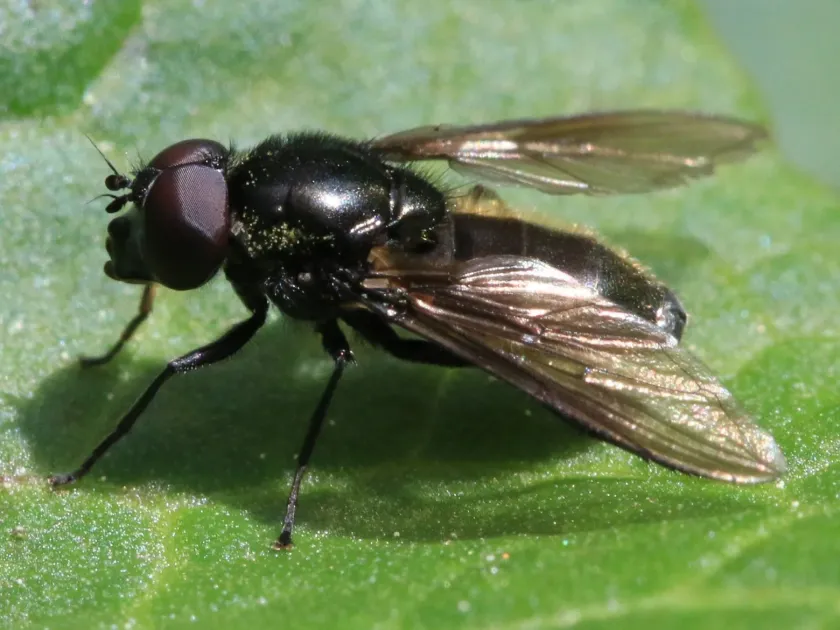
Description
How to identify
Cheilosia antiqua is a species of hoverfly belonging to the family Syrphidae in the order Diptera. These flies are often distinguished by their hairy bodies, which give them a bee-like appearance, a form of Batesian mimicry that helps them avoid predation.
Adults possess specialized wing venation and mouthparts adapted for feeding on floral nectar. Due to the high diversity of the genus Cheilosia, precise identification typically requires expert examination of morphological traits, such as the shape of the antennae and thoracic bristles.
The larval stage is the most significant from an agronomic perspective. These larvae are apodous (legless) and exhibit a cylindrical body shape adapted for an endophytophagous lifestyle, residing and feeding inside plant tissues.
The life cycle encompasses complete metamorphosis: egg, larva, puparium, and adult. The insect typically undergoes diapause during the winter months, often as a larva or a puparium, buried within the soil or protected by plant debris near the host plant.
Emergence occurs in the spring when temperatures rise, at which point the adults fly to forage for pollen and nectar before seeking suitable host plants to lay their eggs, ensuring the next generation has immediate access to food.
What it damages
The primary hosts for Cheilosia antiqua are plants within the Asteraceae family. The larvae bore into stems, petioles, or even flower buds, causing physical destruction of the plant’s internal vascular and supporting tissues.
This feeding activity often leads to the deformation of stems and the failure of flower buds to open properly. In many cases, the affected portion of the plant wilts or dies prematurely, resulting in significant aesthetic and commercial loss for growers.
The damage caused by larvae creates entry points for secondary pathogens, such as fungi and bacteria. These infections can lead to stem rot, which can cause the plant to collapse entirely, especially if the infestation is heavy or combined with environmental stress.
Infestations are particularly problematic in nurseries and commercial fields of specialty crops like artichokes or ornamental asters, where a large number of plants are grown in close proximity, facilitating the rapid spread of the pest.
Economic damage is twofold: direct loss of biomass and yield, and secondary loss due to decreased quality and marketability of the plants, which no longer meet visual standards for decorative or food purposes.
Signs of infestation
The earliest signs of infestation are small entry holes on the stems or at the base of the flower stalks. These sites may show signs of discoloration or exuding sap, which indicates that the larvae are active within the plant tissue.
Plants infested with Cheilosia antiqua often appear stunted or lopsided. Leaves above the site of the infestation may turn yellow or wilt, as the larval tunneling disrupts the flow of water and nutrients from the root system to the upper canopy.
Dissection of the stem frequently reveals the presence of white, legless larvae surrounded by frass and necrotic plant material. The internal tissue often appears tunneled or hollowed out, which weakens the mechanical stability of the stem.
The observation of adult flies hovering around the plants during the flowering season can serve as a warning sign. While they appear to be pollinators, their presence in large numbers during the critical growth phase should alert growers to monitor for larval damage.
Advanced signs of injury include the drying and shedding of buds before they bloom, as well as the eventual collapse of the entire stem under light pressure or during wind events due to the internal structural damage.
Control measures
Cultural management is the cornerstone of Cheilosia antiqua control. The most effective preventative measure is the thorough removal and destruction of crop residues at the end of the season to eliminate overwintering sites for the larvae and puparia.
Deep cultivation of the soil post-harvest is recommended to disrupt the pupation sites, exposing larvae or pupae to environmental stress or predation by soil-dwelling insects, which significantly reduces the population for the following year.
In cases where infestations reach economic thresholds, systemic insecticides may be applied. These should be timed carefully to coincide with the period of egg-laying or early larval emergence, before the pests become protected within the stems.
Biological control using parasitoids is an area of ongoing research. Encouraging natural predators, such as wasps or other beneficial insects that prey on larvae, can contribute to a balanced ecosystem and keep pest levels under control without heavy chemical use.
- Implement strict crop rotation patterns to minimize host availability.
- Use yellow sticky traps for monitoring adult population spikes.
- Immediately rogue and destroy any heavily infested plant material.
- Maintain soil health to increase the plant's natural resistance to tissue damage.
Taxonomy
- Latin name
- Cheilosia antiqua
- Order
- Diptera (flies)
- Family
- Syrphidae
- EPPO code
- CHELSA
Discussion
No discussions yet — be the first.