
Cheilosia
Cheilosia
Description
How to identify
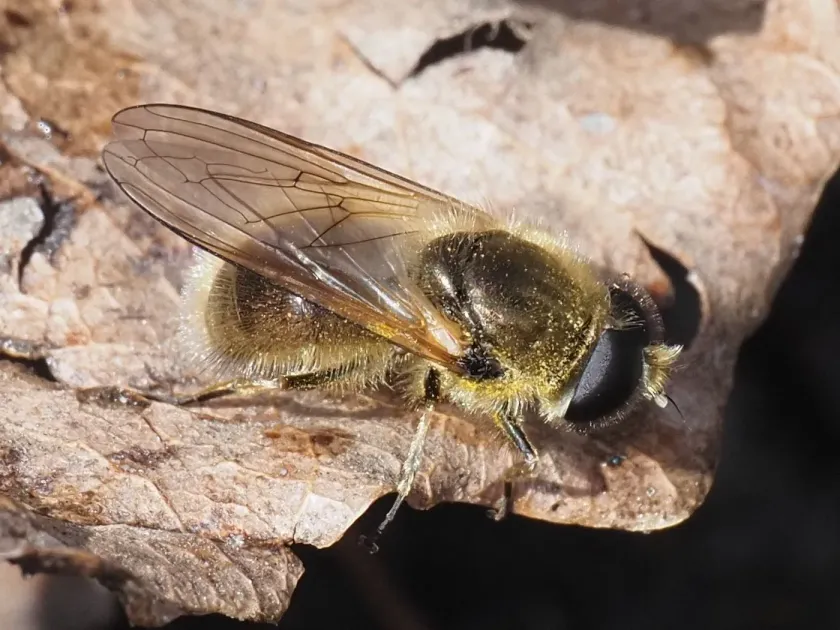
Cheilosia is a large genus of hoverflies belonging to the family Syrphidae within the order Diptera. While many hoverflies are beneficial, many species in this genus are known to be phytophagous.
Adult flies typically exhibit dense, hair-like setae, often resembling bumblebees or bees, which serves as a mimicry strategy to avoid potential predators in the environment.
The larvae are distinct in their morphology, often featuring a cylindrical or somewhat flattened shape with various spicules or fleshy outgrowths on their body segments.
The life cycle encompasses a complete metamorphosis, moving through egg, larval, pupal, and adult stages, with larvae being the primary stage responsible for plant injury.
Due to the vast number of species within the genus, morphological differentiation often requires professional entomological expertise and microscopic observation.
What it damages
Cheilosia larvae act as internal feeders, attacking the stems, roots, rhizomes, and bulbs of various herbaceous plants, including many ornamental and some vegetable crops.
By boring into the plant tissues, the larvae create tunnels that destroy internal vascular systems and provide entry points for secondary bacterial and fungal infections.
This feeding behavior causes significant physiological stress to the plant, leading to stunted growth, wilting, and eventually the death of the affected individual.
In cases of high infestation, entire stands of susceptible plants can be lost, posing a significant threat to nurseries and managed garden landscapes.
The damage is often insidious, as the external appearance of the plant may remain normal until the larval population has already caused extensive internal decay.
When it appears
Adult activity usually begins in early spring, as females seek out suitable host plants to lay their eggs, typically near the root crown or soil surface.
Larval development proceeds throughout the growing season, heavily influenced by local environmental conditions and the availability of host plant tissues.
Depending on the species and the climate, the insect may complete one or multiple generations per year, making ongoing monitoring crucial for management.
Overwintering typically occurs in the larval stage, residing within the soil or inside the remnants of host plants, remaining dormant until spring warming.
The highest risk period for plants often correlates with the peak of the spring and early summer growing season when new growth is most succulent.
Signs of infestation
Early symptoms of infestation often include a subtle lack of vigor, yellowing of the foliage, and premature wilting that does not respond to irrigation.
Close inspection of the crown or base of the stem often reveals small exit holes or entry wounds, sometimes accompanied by plant sap oozing or dark staining.
- Softened or necrotic tissue at the base of the stem or root system.
- Presence of internal tunneling and larval frass within hollowed stems.
- Sudden collapse of stems without clear evidence of foliage diseases.
When soil is removed from the base of an infested plant, the larvae may be found within the upper soil layer or directly embedded in the host tissue.
Symptoms may be mistaken for root rot or physiological disorders, making it essential to look for the physical presence of the larvae to confirm the pest diagnosis.
Control measures
Integrated pest management (IPM) is recommended, starting with rigorous sanitation to remove and destroy all infested plant debris and potential overwintering sites.
Crop rotation and selecting resistant plant varieties can help minimize the impact of the pest in high-risk zones over the long term.
Systemic insecticides may be used as a last resort in professional settings, timed carefully to target the newly hatched larvae before they enter the plant tissue.
Biological control agents, such as beneficial nematodes, can be applied to the soil to infect and control the larval stages of the fly effectively.
Maintaining optimal plant health through balanced fertilization and appropriate irrigation helps plants better tolerate or recover from minor infestation levels.
Taxonomy
- Latin name
- Cheilosia
- Order
- Diptera (flies)
- Family
- Syrphidae
- EPPO code
- CHELSP
Discussion
No discussions yet — be the first.