
Cheilomenes propinqua
Cheilomenes propinqua
Description
How to identify
Cheilomenes propinqua belongs to the order Coleoptera and the family Coccinellidae. It is important to note that while this species often acts as a beneficial predator in many ecosystems, it can display phytophagous behavior under specific environmental stressors.
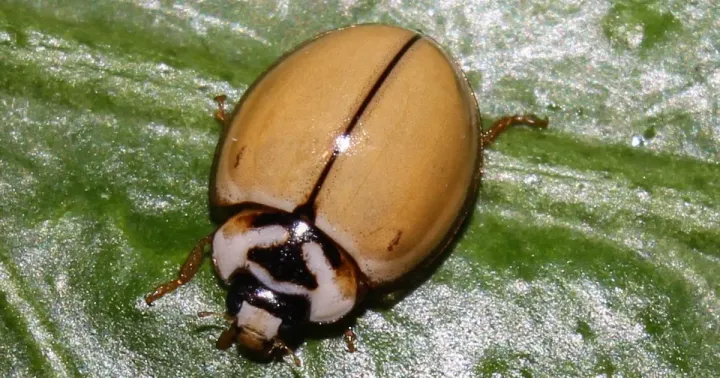
Adult beetles exhibit the classic dome-shaped body morphology typical of ladybirds. Their elytra display vibrant patterns ranging from yellow to orange with distinct black markings of varying shapes.
Larvae are campodeiform in shape, characterized by bodies covered in protective protrusions and bristles. They undergo several larval instars, increasing in size and intensity of pigmentation.
Females typically deposit eggs in compact clusters on the underside of leaves or near colonies of potential prey, ensuring a food source for emerging larvae.
Development is highly temperature-dependent. The life cycle accelerates significantly within the optimal thermal range of 22 to 28 degrees Celsius.
What it damages
Economic damage occurs primarily when natural prey is scarce, leading the insects to feed on various leguminous, vegetable, and cereal crops.
Both adults and larvae can damage plant tissues by scraping the epidermis of leaves, resulting in necrotic spots and a general reduction in vegetative vigor.
Feeding damage manifests as skeletonized leaf blades, which significantly impairs photosynthetic efficiency and may lead to premature leaf drop.
Severe infestations during critical flowering and fruit-setting stages can cause substantial yield losses, impacting the overall quality and quantity of the harvest.
Feeding sites often serve as entry points for secondary fungal and bacterial pathogens, exacerbating the overall phytosanitary decline of the crop.
When it appears
Activity commences with the onset of stable spring temperatures. Population peaks are generally observed in mid-summer when lush vegetation provides abundant habitat.
Depending on local climatic conditions, the species may complete multiple generations per season, complicating long-term population management.
Adults overwinter in plant debris, under tree bark, or within the upper layers of the soil, remaining in a state of diapause until environmental conditions improve.
Mass migration into crop fields is frequently triggered by drought, forcing the beetles to seek moisture from the succulent tissues of crops.
Early monitoring using yellow sticky traps or visual inspections should begin at the budding stage to detect initial colonization.
Signs of infestation
The primary indicator of presence is the discovery of bright yellow egg clusters densely grouped together on the abaxial surface of leaves.
Distinctive damage patterns appear as small perforations that expand over time, resulting in a characteristic lacy appearance of the foliage.
Accumulation of larval excrement, visible as tiny black deposits on the affected surfaces, indicates active feeding colonies.
Adults are frequently observed on stems or leaf stalks, particularly during the cooler morning and evening hours when they are most mobile.
General growth retardation and leaf deformation in affected areas serve as a visual cue for growers to initiate targeted inspections.
Control measures
Biological control strategies emphasize the use of natural enemies, including parasitic wasps, which play a crucial role in regulating population numbers.
Cultural practices involve the systematic removal of weeds and alternative host plants, which serve as reservoirs for the pest during the off-season.
Chemical control should be implemented only when infestation levels surpass economic thresholds, utilizing selective systemic insecticides.
Crop rotation and maintaining spatial distance between fields can significantly mitigate the risk of pest migration from untreated landscapes.
The application of biological pesticides based on entomopathogenic fungi offers an environmentally responsible approach to managing larval populations.
Taxonomy
- Latin name
- Cheilomenes propinqua
- Order
- Coleoptera (beetles)
- Family
- Coccinellidae
- EPPO code
- CHIMVI
Discussion
No discussions yet — be the first.