
Cheilomenes
Cheilomenes
Description
How to identify
Cheilomenes is a genus of ladybird beetles (Coccinellidae) belonging to the order Coleoptera. It is vital to clarify that these beetles are primarily beneficial predators rather than agricultural pests, though they are frequently misidentified due to their constant presence on infected crops.
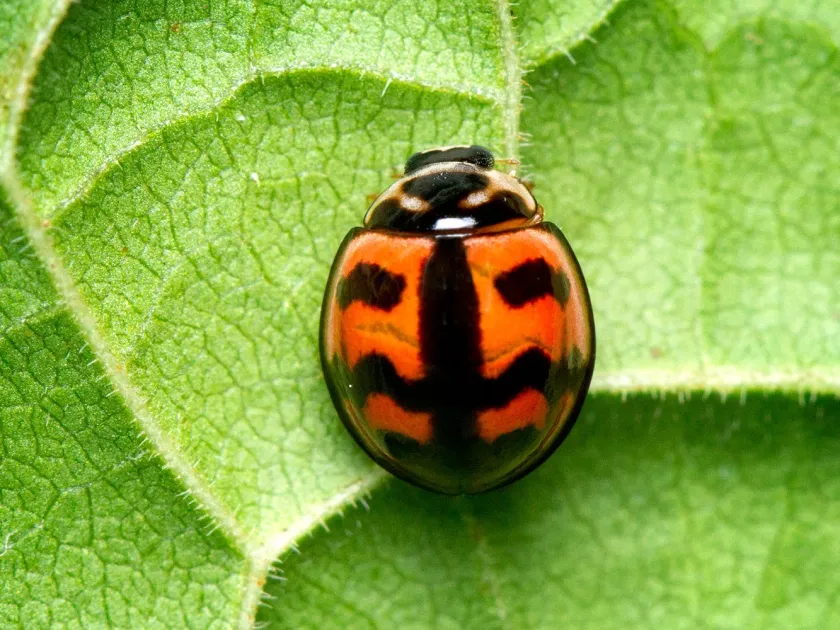
Adult beetles are typically characterized by a bright orange or red color with distinct black markings on their elytra. Their body shape is rounded and strongly convex, a key morphological feature that helps agronomists distinguish them from various harmful leaf-eating beetles.
The larvae of Cheilomenes are campodeiform, often dark-colored with bright spots or patterns. They are highly active and mobile, traversing plant stems and foliage efficiently to locate prey. This mobility is a telltale sign of their predatory nature.
The life cycle encompasses four larval stages, a pupal stage, and the adult stage. The duration of their development is closely tied to the density of aphid populations, which are their primary food source in the field.
Correct field identification is crucial. If a beetle is seen patrolling aphid colonies rather than consuming plant tissue, it is almost certainly a predatory species helping to suppress the pest population.
What it damages
Cheilomenes does not cause damage to crops. In fact, it is a significant natural enemy of aphids, scales, and other small sap-sucking insects. Its presence on crops like cotton, citrus, and cereals is a signal that there is a food source present for these predatory beetles.
The misconception that they are pests arises when farmers notice them on wilting or damaged plants. However, the beetles are there to feed on the actual culprits, such as aphids, which are the ones causing the physical damage to the plant tissue.
While adult beetles may occasionally feed on nectar or moisture during extreme environmental stress, this behavior is negligible in terms of economic damage. They provide a vital ecosystem service by acting as a biological control agent.
Unnecessary chemical interventions against these predators often lead to a resurgence of primary pests. By eliminating the beneficial insects, the farmer loses the free biological control service they provide, leading to a need for more frequent chemical sprays.
In agricultural practice, their role is to serve as a natural regulator. Their feeding habits keep aphid populations below the economic injury level, thereby preserving crop health and yields without the need for additional synthetic pesticide applications.
Control measures
The best management strategy for Cheilomenes is conservation. Farmers should aim to preserve these beneficial populations by reducing the use of broad-spectrum insecticides that negatively impact non-target predatory species.
Implementing Integrated Pest Management (IPM) practices is the most effective way to ensure that beneficial populations remain high. This includes monitoring the populations of both pests and predators before deciding on any chemical control measure.
Maintaining floral strips or hedgerows around fields provides essential alternative food sources for adults, helping them survive during periods when the prey population is low or after a harvest, ensuring they remain present for the next season.
If chemical application is necessary to control severe pest outbreaks, preference should be given to selective pesticides that are less toxic to beneficial arthropods. This allows the Cheilomenes population to survive and continue its role in the ecosystem.
- Prioritize biological control over chemical applications.
- Avoid spraying during peak predator activity periods.
- Use selective, IPM-compatible insecticides if chemical control is unavoidable.
Taxonomy
- Latin name
- Cheilomenes
- Order
- Coleoptera (beetles)
- Family
- Coccinellidae
- EPPO code
- CHIMSP
Discussion
No discussions yet — be the first.