
Crab-eating fox
Cerdocyon thous
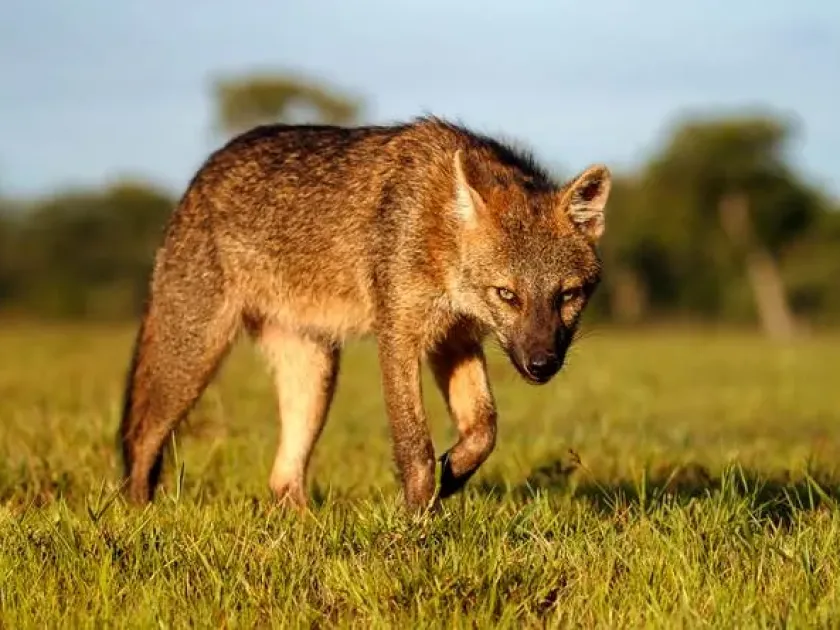
Description
How to identify
The crab-eating fox, scientifically known as Cerdocyon thous, is a member of the Canidae family, order Carnivora. Despite its name, it is an opportunistic omnivore rather than a strictly meat-eating predator.
The animal is mid-sized, typically weighing between 5 and 8 kilograms, with a grizzled greyish-brown coat. Its build is robust, allowing it to navigate through dense vegetation and agricultural environments with ease.
Its biology is characterized by high behavioral flexibility. While it primarily hunts small vertebrates, its diet shifts significantly toward fruit, vegetables, and crops when these resources become seasonally abundant in its habitat.
This species is predominantly nocturnal, which is a major factor in its ability to raid agricultural plots without being immediately detected by farmers or livestock guarding dogs.
The crab-eating fox maintains a stable population across various environments, from tropical forests to savannahs, often moving into agricultural fringes where food is easily accessible and relatively abundant.
What it damages
The crab-eating fox causes significant agricultural damage by consuming various crops during their ripening stages. Its omnivorous appetite makes it a frequent guest in orchards and vegetable plantations.
Corn plantations are particularly vulnerable, especially when the cobs reach the milk-waxy stage. The fox breaks the stalks to reach the cobs, leading to heavy losses for the grower.
Melon and watermelon crops often suffer from the animal's habit of biting into the fruit to access the inner contents. These punctures lead to rapid spoilage and the onset of fungal diseases on the produce.
In fruit orchards, they consume both fallen fruits and those on lower branches. Their presence often leads to physical damage to young trees through gnawing or trampling during nocturnal feeding activities.
Furthermore, their presence in large numbers can lead to the destruction of irrigation infrastructure, such as drip lines and plastic mulches, as they roam through fields searching for food or water sources.
Signs of infestation
Identifying a crab-eating fox presence usually starts with finding tracks along field perimeters. Their footprints are typical of small canids, showing a distinct pattern of pad marks on soft soil or mud.
Damage to corn crops is easily recognized by the torn husks and remnants of cobs left on the ground, often accompanied by teeth marks that are larger than those of rodents.
Excrement samples are a definitive diagnostic tool. Because of their omnivorous diet, the droppings often contain visible seeds, pieces of fruit skin, or remnants of crop vegetation that the animal has ingested.
Nocturnal vocalizations, such as sharp barks or whining sounds emanating from nearby bushes or hedgerows, are a reliable indication that the animals are active in the area during the night.
Small denning sites located in proximity to fields—often found within old tree stumps or dense thickets—confirm that an individual or family group is using the agricultural area as a primary foraging ground.
Control measures
The primary defense against the crab-eating fox is the installation of robust, perimeter-fenced barriers. Burying the wire at least 20-30 cm deep prevents the animal from digging underneath the fence.
Utilizing motion-activated light and sound deterrents is a highly effective non-lethal method to keep these nocturnal visitors away from high-value crop areas during the most sensitive growth phases.
Maintaining a clear buffer zone around fields by removing unnecessary weeds and shrubs reduces the attraction of the area by eliminating potential hiding spots and cover for the animals.
Commercial taste or scent-based repellents can be applied to the perimeter of the plots, although these usually require frequent reapplication, especially after rainfall, to maintain their effectiveness.
For sustainable farm management, integrating guard animals or utilizing professional wildlife relocation services can help mitigate the impact of the fox in areas where crop damage has become a chronic economic issue.
Taxonomy
- Latin name
- Cerdocyon thous
- Family
- Canidae
- EPPO code
- CANIBR
Discussion
No discussions yet — be the first.