
Cephalota circumdata
Cephalota circumdata
Description
How to identify
Cephalota circumdata belongs to the order Coleoptera and the family Carabidae, specifically the subfamily Cicindelinae. These are highly agile predators commonly found in saline soils and arid environments.
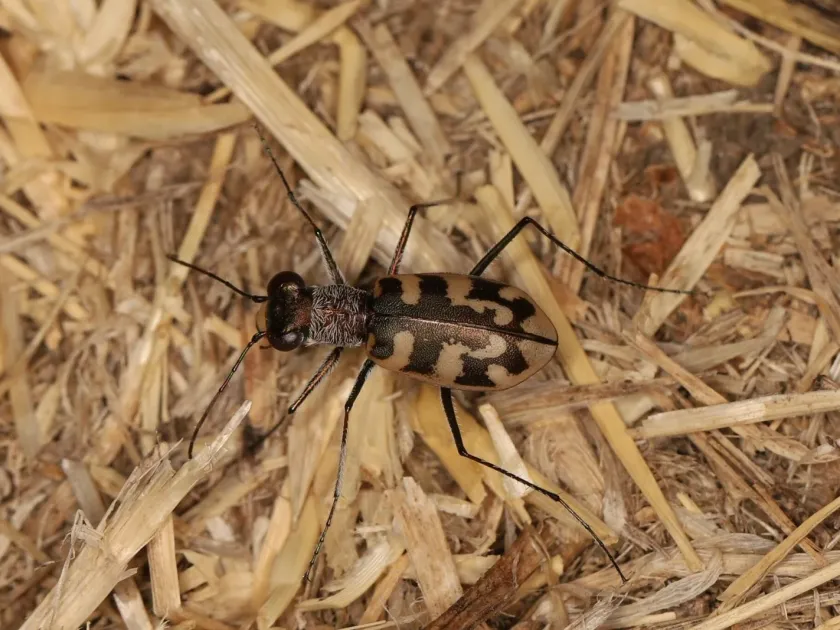
The adult beetle is characterized by a metallic sheen and a distinct pale margin on the elytra, which provides excellent camouflage against sandy or saline backgrounds.
The larvae are specialized soil dwellers that construct deep vertical tunnels to ambush prey, featuring powerful mandibles that are highly effective at capturing small invertebrates.
Physiologically, these beetles possess long legs that allow them to reach high speeds, making them efficient hunters that can easily dominate their ecological niche.
They prefer sparse vegetation, often congregating in areas where high salt content inhibits competitive insect species, which gives them a distinct advantage in specific agricultural landscapes.
What it damages
Although naturally predaceous, Cephalota circumdata can act as a pest when their natural prey population is insufficient, forcing them to feed on the root systems of agricultural crops.
The larvae are known to damage the roots and root collars of seedlings, which causes wilting, stunted growth, or the total death of young plants in the field.
Crops cultivated on saline soils are at the highest risk, as these environments are the natural habitat of this species and provide the best conditions for their reproduction.
Heavy infestations can lead to significant thinning of stands, particularly in sensitive vegetables, cereals, and melons during their initial growth stages.
Damage is often localized, but when high density occurs, the economic impact on the yield of the affected field becomes significant for the producer.
When it appears
Adult beetles typically emerge from their overwintering burrows in late spring as soil temperatures rise, initiating their mating and egg-laying cycle.
Peak abundance is usually observed during the warmest months, June and July, when larval development and hunting activities are at their highest intensity.
As autumn approaches and soil temperatures drop, the larvae retreat deeper into the soil profile to pass the winter safely in an inactive state.
The generation cycle is primarily univoltine, but environmental conditions like soil moisture and the presence of food sources can accelerate or prolong the developmental stages.
The timing of the adult peak is a crucial window for farmers to conduct monitoring and implement necessary control measures before extensive crop damage occurs.
Signs of infestation
Small, neat vertical holes in the soil surface are the most prominent sign that larvae are present and establishing hunting zones in the field.
Patches of seedlings exhibiting signs of sudden wilting without clear disease symptoms are a strong indicator of underground root feeding by beetle larvae.
Direct examination of the root zone of affected plants will reveal physical scars or shredded tissues caused by the sharp mandibles of the larvae.
Observations of fast-moving adult beetles in the early morning or late evening confirm the presence of the species within the crop canopy and on the soil.
Uneven crop establishment, specifically in areas with visible soil salinity, suggests that the population density of the beetle has exceeded safe thresholds.
Control measures
Deep autumn plowing is the most effective mechanical method, as it disrupts the larval tunnels and exposes them to environmental extremes during winter.
Integrated pest management strategies should focus on crop rotation, which helps in breaking the life cycle of the beetle by altering their habitat conditions.
Chemical control involving seed treatment or soil-applied insecticides can provide a necessary layer of protection for the vulnerable early development stages of the crop.
Improving soil health and drainage can indirectly reduce the suitability of the environment for this salt-tolerant species, discouraging colonization.
- Use soil pitfall traps to monitor population spikes during spring.
- Maintain weed-free field perimeters to reduce beetle shelter.
- Targeted spot treatments with approved insecticides in high-density areas.
Taxonomy
- Latin name
- Cephalota circumdata
- Order
- Coleoptera (beetles)
- Family
- Carabidae
- EPPO code
- CPHTCI
Discussion
No discussions yet — be the first.