
Cephalota tiger beetle
Cephalota
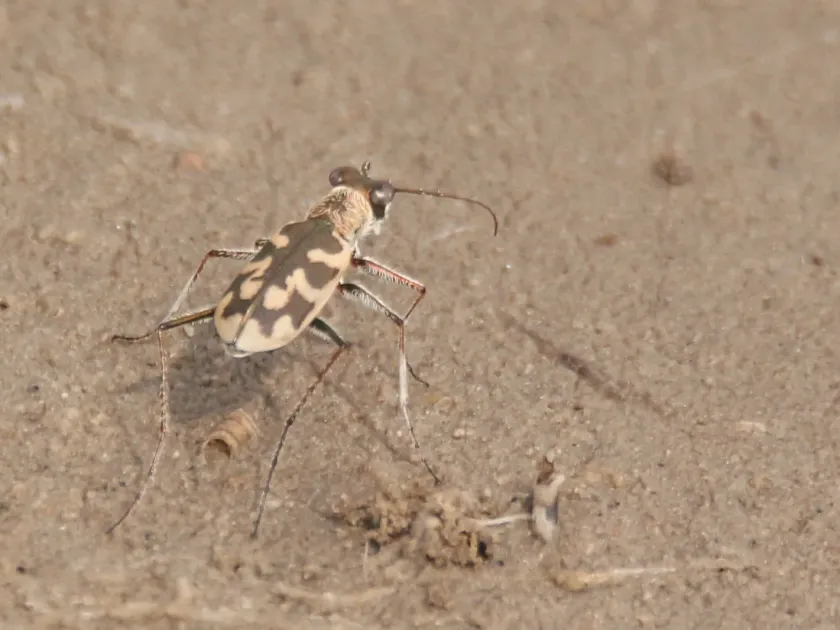
Description
How to identify
The Cephalota genus belongs to the family Carabidae, specifically the subfamily Cicindelinae. These beetles are highly active predators characterized by elongated bodies and prominent sickle-shaped mandibles.
Adult beetles are easily identified by their iridescent or metallic elytra, often featuring intricate patterns that serve as camouflage on sandy or loose soil surfaces.
Their larvae are specialized creatures that live in vertical, cylindrical burrows in the soil, equipped with strong jaws to ambush prey walking nearby.
As agile runners and fierce hunters, these beetles are widely known for their ability to move quickly, which is a signature trait of the tiger beetle family.
These insects are highly sensitive to their environment and generally inhabit open, sunny areas where they can efficiently hunt other invertebrates.
What it damages
Cephalota tiger beetles are not agricultural pests. Their physiological structure and predatory habits make them incapable of damaging crops.
They do not consume plant materials such as roots, leaves, stems, or fruits, meaning they pose no threat to agricultural productivity.
Instead, they play a vital role in natural pest control, feeding on small insects and other invertebrates that may otherwise harm crops.
Their presence on a farm is a positive ecological indicator, signifying a healthy and balanced soil ecosystem that supports biodiversity.
Farmers are encouraged to view these beetles as biological assets rather than threats, as they contribute to the natural reduction of pest populations.
When it appears
The life cycle of these beetles typically spans one to two years, depending on the climatic conditions of their habitat and prey availability.
Adults are most active during the warmer months, typically from late spring through late summer, when temperatures support their high-speed metabolism.
Larval stages remain active within their soil burrows throughout the entire growing season, constantly patrolling for potential prey items.
During the winter, both adults and larvae retreat deep into the soil to hibernate, protecting themselves from extreme cold and ensuring survival for the next season.
Daily activity is concentrated in sunny periods, as these beetles rely on solar radiation to reach the optimal body temperature for hunting.
Control measures
No control measures are required for Cephalota tiger beetles, as they are beneficial natural enemies rather than pests.
In fact, the use of broad-spectrum insecticides should be discouraged in their habitats, as it harms beneficial predators and can lead to secondary pest outbreaks.
Integrated Pest Management (IPM) practices prioritize the conservation of such predatory species to maintain biological equilibrium in the field.
Sustainable farming techniques that protect soil health and reduce excessive chemical input are the best way to support these useful insects.
Encouraging the presence of tiger beetles is an effective component of ecological pest management strategies in modern agroecosystems.
Taxonomy
- Latin name
- Cephalota
- Order
- Coleoptera (beetles)
- Family
- Carabidae
- EPPO code
- CPHTSP
Discussion
No discussions yet — be the first.