
Larch web-spinning sawfly
Cephalcia lariciphila
Description
How to identify
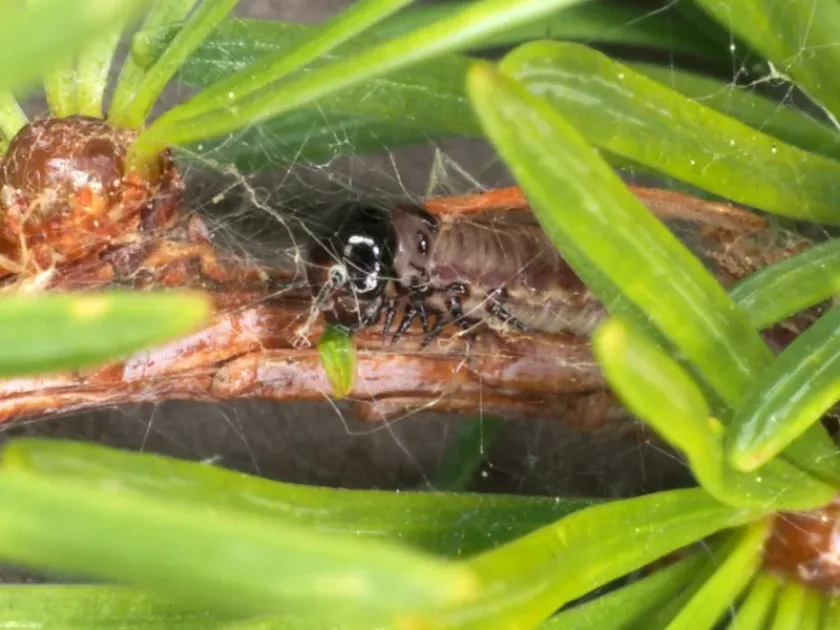
The Larch web-spinning sawfly (Cephalcia lariciphila) is a species of the Pamphiliidae family. The adult insect is a small, dark-colored hymenopteran measuring about 10–12 mm in length.
The larvae, which are the main cause of concern, grow up to 25 mm long. They are typically light green or yellowish-brown, featuring a distinctively dark, hardened head capsule.
The defining behavior of this species is the construction of webbed nests. Larvae live inside these silk-like structures, which protect them from environmental stress and predators while they feed.
This sawfly undergoes a complete metamorphosis. Adults emerge in spring to mate, and the resulting larvae spend their developmental phase on the host plant before moving to the soil for pupation.
Recognizing the adult stage is difficult due to their mobility, but the larval stage is easily identified by the presence of silk webbing around the needles of the host larch trees.
What it damages
This pest is highly specialized and feeds exclusively on the Larch genus (Larix). Both adults and larvae focus their attention on the needles, causing significant damage during outbreaks.
Larvae consume large quantities of needles, often stripping branches completely. This severe defoliation significantly impairs the tree's ability to perform photosynthesis.
Continuous attacks over successive years can lead to stunted growth, loss of vigor, and the eventual decline of affected trees, especially in young plantations.
Weakened trees become susceptible to secondary infestations by bark beetles or other opportunistic wood-boring insects, which can be even more destructive than the sawfly itself.
In ornamental settings, the aesthetic damage is immediate and severe, as the trees lose their dense, green look and appear ragged and bare throughout the growing season.
When it appears
Adults emerge in the spring, typically around May, coinciding with the flushing of new larch needles. This period is crucial for the initiation of the annual life cycle.
Larval activity reaches its peak in early to mid-summer. This is when the larvae are most visible, as they are actively feeding and enlarging their webbed nests.
By late summer, the larvae descend to the forest floor. They burrow into the soil, where they create a earthen chamber to enter a diapause state for the winter months.
The timing of emergence can shift depending on temperature trends. A warm, humid spring often triggers earlier activity and can lead to more successful survival rates for the larvae.
Effective scouting and monitoring programs are most successful when focused on the late spring emergence period, allowing for timely intervention before significant damage occurs.
Signs of infestation
The presence of conspicuous silken webbing between needles is the primary indicator of an infestation. These nests are often filled with larval droppings, known as frass.
Needle yellowing and premature browning start at the sites of the webs. As the larvae consume the foliage, the branches begin to show noticeable gaps and sparse clusters of needles.
A ragged, thin appearance of the canopy, especially in the mid and lower levels of the tree, is a strong visual clue that the population density of the sawfly is increasing.
Underneath the infested branches, one may find accumulation of needles and larval debris, confirming that the feeding process is active above.
Severe infestations might result in the tree being almost entirely stripped of its foliage by mid-summer, leaving the twigs exposed and vulnerable to drying out.
Control measures
Biological control methods are often preferred in forest ecosystems. Encouraging natural predators, such as birds and parasitic wasps, can help keep population levels in check.
Chemical intervention with insecticides may be necessary during severe outbreaks. Treatments must be timed precisely to catch the larvae before they are fully protected by their webs.
Cultural practices, such as tilling the soil around the base of the tree in autumn, can destroy the pupal cells, preventing the next generation of adults from emerging successfully.
Pheromone traps are excellent tools for monitoring the flight period of adults, providing foresters with the data needed to trigger control measures only when necessary.
- Use of Bacillus thuringiensis (Bt) sprays for eco-friendly control.
- Sanitation pruning to remove heavily infested branches.
- Maintaining healthy tree vigor through proper irrigation during droughts.
Taxonomy
- Latin name
- Cephalcia lariciphila
- Order
- Hymenoptera
- Family
- Pamphiliidae
- EPPO code
- CEPCAL
Discussion
No discussions yet — be the first.