
Spruce web-spinning sawfly
Cephalcia isshikii
Description
How to identify
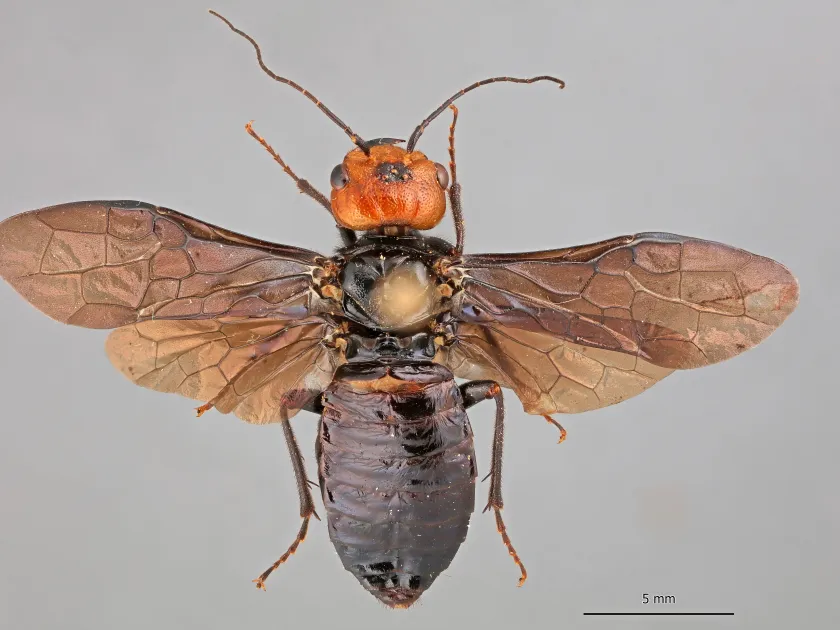
The spruce web-spinning sawfly (Cephalcia isshikii) is a member of the Pamphiliidae family. The adult insect is about 12–15 mm long with a dark-colored body and transparent wings, making it resemble a typical wasp.
The larvae are distinct in their appearance: they lack legs and possess a bright green body with a dark-colored head. They are easily identified by the presence of long, thread-like appendages at the posterior end of their body.
Unlike most sawflies, these insects spend their entire larval stage within silk webs. They construct intricate nests by spinning silk threads around spruce needles, which provide them with constant protection from predators.
A unique feature of this species is its ability to enter diapause. The larvae can remain in the soil for several years before pupating and emerging as adults, which makes predicting population outbreaks a significant challenge.
Females deposit their eggs individually or in small clusters on the underside of current-year needles. This placement ensures that the larvae have immediate access to food once they hatch, allowing them to begin nest construction quickly.
What it damages
The primary hosts of this pest are various spruce species (genus Picea). While it shows a preference for certain species, mass infestations can cause damage to virtually any spruce tree within the proximity of the colony.
The larvae feed on spruce needles, shearing them off at the base and incorporating them into their silk nests. Within these nests, they accumulate waste and needles, which creates a messy appearance on the affected branches.
Young trees and forest undergrowth are the most vulnerable. Severe needle loss leads to extreme stress, significantly weakening the tree and making it highly susceptible to secondary attacks from bark beetles or wood borers.
In ornamental settings and nurseries, the damage is particularly detrimental due to the loss of aesthetic value. Defoliation reduces the tree's ability to photosynthesize, eventually leading to branch death and potentially total tree mortality.
The pest is difficult to detect early because the web nests are usually located within the dense parts of the crown. By the time needles turn yellow and fall, the infestation is often already well-established.
When it appears
Adults typically emerge from the soil in late spring, usually around May or June. This timing aligns with the flush of new growth on spruce trees, providing suitable conditions for egg-laying and larval development.
The larval feeding period occurs throughout the summer, peaking in June and July. This is when the larvae are most active, expanding their web nests and consuming large quantities of needles from the host tree.
By late summer, the larvae finish their development. They abandon their webs and drop to the ground, where they burrow into the upper layers of the soil to prepare for overwintering and eventual pupation.
The insect overwinters in the soil as a pre-pupa. This phase allows them to survive the cold winter months protected by the forest litter, emerging only when environmental cues signal the start of a new season.
Due to the potential for multi-year diapause, populations can fluctuate dramatically from one year to the next. Favorable spring weather conditions and soil moisture are critical factors for successful adult emergence.
Signs of infestation
The most reliable sign of an infestation is the presence of silk webbing around needles on specific branches. Over time, these nests become littered with brownish frass (larval excrement) and dried needle remnants.
- Visible silk webs wrapping needles together.
- Yellowing and premature needle drop during mid-summer.
- Finding green, legless larvae inside webbed nests.
- Noticeable thinning of the tree crown.
- Accumulation of dark frass pellets on lower branches or the forest floor.
Infested trees often appear sparse or sickly, especially in the lower and middle portions of the crown. Damaged branches may become brittle and lose their natural color as the feeding process progresses.
When examining a tree, one might notice that needles are missing from the base of the shoots, leaving bare twigs. This is a tell-tale sign that larvae have harvested them for their food supply.
Early identification is essential for successful management. If silk nests are spotted, a rapid assessment of the tree crown should be conducted to determine the severity and extent of the infestation.
Control measures
Biological control is preferred in forest ecosystems. The application of entomopathogenic fungi or bacterial agents helps manage population levels while minimizing the impact on non-target beneficial insects.
Chemical control is effective in nursery and ornamental environments. Systemic insecticides applied during the peak larval feeding stage in June provide the best results in protecting the host trees from defoliation.
Cultural practices, such as tilling the soil beneath the canopy in the autumn, can be highly effective. This disrupts the overwintering chambers, exposing the larvae to predators and environmental stress.
Promoting a healthy environment for insectivorous birds can help keep sawfly populations in check. Bird houses and habitat preservation in surrounding areas are useful strategies for long-term integrated pest management.
Regular monitoring using pheromone traps or visual inspections is key. Tracking the emergence of adults allows for the timing of protective measures, ensuring that the control effort is applied during the most vulnerable life cycle stage.
Taxonomy
- Latin name
- Cephalcia isshikii
- Order
- Hymenoptera
- Family
- Pamphiliidae
- EPPO code
- CEPCIS
Discussion
No discussions yet — be the first.