
Weinstein flat mite
Cenopalpus wainsteini
Description
How to identify
The Weinstein flat mite (lat. Cenopalpus wainsteini) belongs to the family Tenuipalpidae, within the order Trombidiformes, known for causing significant agricultural damage.
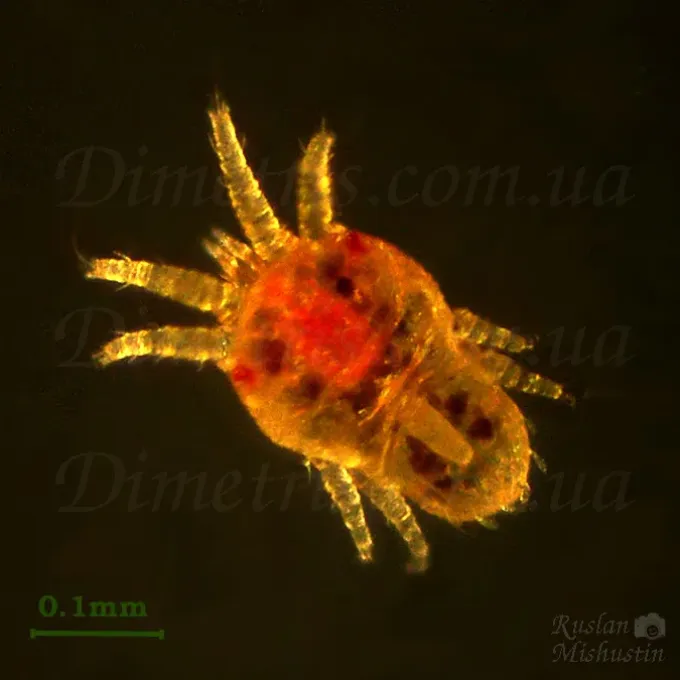
This microscopic pest is characterized by a flattened, oval-shaped body, which allows it to thrive in the tight spaces of bark crevices and dormant buds.
Adults are typically reddish-brown, making them extremely difficult to spot against the textured surface of tree bark or the veins of a leaf without magnification.
Their life cycle includes egg, larva, protonymph, deutonymph, and adult stages, all of which occur directly on the host plant's surface tissues.
Overwintering occurs primarily in the adult female stage, as they seek shelter within the bark of main branches and the bases of fruit buds to survive cold seasons.
What it damages
This species is a specialized pest that primarily targets various fruit-bearing trees, with apple and pear orchards being the most susceptible hosts.
By piercing the leaf epidermis with their stylets, these mites feed on plant cell sap, which disrupts essential physiological processes such as photosynthesis.
The damage caused by feeding leads to nutrient depletion in the foliage, resulting in stunted growth and a significant reduction in fruit quality and yield.
Severe infestations often occur during hot, dry weather conditions, which stress the plants and allow the mite population to increase rapidly.
Prolonged feeding causes premature leaf drop and negatively impacts the tree's ability to store energy for the following season's fruit bud development.
Signs of infestation
The first noticeable sign of an infestation is a distinct chlorotic or mottled appearance on the leaves, which gradually spreads across the entire foliage.
Leaves may exhibit a bronze or silver discoloration and often curl or deform, signaling a loss of internal moisture and cellular integrity.
Unlike common spider mites, this species does not produce dense, visible silk webbing, making early detection more difficult for orchard managers.
Stunted development of new shoots and sparse canopy density are indicative of high population levels during the active growth stage of the tree.
A confirmed diagnosis requires inspecting the underside of the leaves near the midrib using a magnifying glass to identify the presence of these tiny mites.
Control measures
Successful management strategies focus on both cultural practices and chemical control to keep mite populations below the economic injury level.
Cultural methods, such as removing old bark and maintaining optimal plant vigor through balanced irrigation, help limit potential nesting sites and improve resilience.
Chemical control involves the use of selective acaricides during critical growth periods, ensuring that applications are timed to target the most vulnerable life stages.
Resistance management is vital; therefore, rotating products with different modes of action is highly recommended to prevent the development of resistant mite strains.
- Regular orchard monitoring starting from the early bud-burst stage.
- Dormant oil applications to target overwintering females on bark.
- Use of biological control agents where applicable to maintain ecosystem balance.
Taxonomy
- Latin name
- Cenopalpus wainsteini
- Order
- Mites
- Family
- Tenuipalpidae
- EPPO code
- CENOWA
Discussion
No discussions yet — be the first.