
Flat mite
Cenopalpus pulcher
Description
How to identify
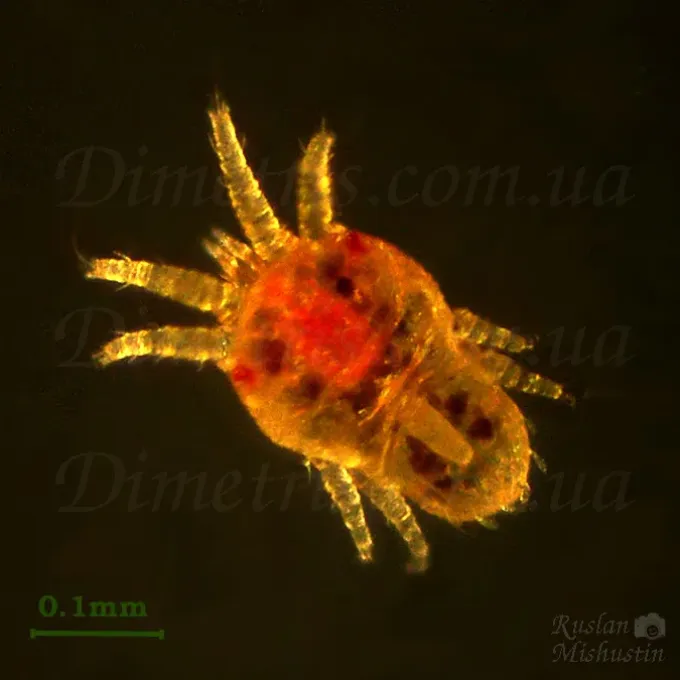
The flat mite (Cenopalpus pulcher) is a significant pest belonging to the family Tenuipalpidae within the order Trombidiformes. These microscopic mites are characterized by a flattened, bright red body, measuring less than 0.3 mm in length.
Unlike spider mites, they do not spin webs, making them harder to detect without a magnifying glass. They typically aggregate in colonies on the undersides of leaves, along veins, and on the bark of twigs during the overwintering phase.
What it damages
This mite is a polyphagous pest that primarily infests rosaceous fruit trees. Apples, pears, quinces, and stone fruits like plums, cherries, and peaches are highly susceptible to its feeding activity.
Beyond fruit orchards, the mite is frequently found on grapevines and various ornamental shrubs. The cumulative damage from sap-feeding leads to tree physiological stress, resulting in reduced fruit yield and lower overall vigor.
When it appears
The life cycle begins in early spring as overwintering females emerge from cracks in the bark to feed on budding foliage. As temperatures rise, the rate of reproduction increases significantly, leading to multiple generations per season.
Peak populations usually occur during the heat of mid-summer. Dry and hot weather conditions are highly favorable for their development, often leading to rapid population explosions that can quickly overwhelm a tree's defenses.
Signs of infestation
Infestation signs manifest as chlorotic spots on leaves, which gradually turn yellow or bronze. As the damage progresses, the affected leaves may undergo necrosis or drop prematurely, weakening the entire tree canopy.
Fruit quality is also negatively impacted; infestations cause skin scarring, corky spots, and deformities. These visual defects significantly reduce the market value of the harvested produce and affect the tree's storage capacity for nutrients.
Control measures
Control measures rely heavily on the application of selective acaricides during the growing season. It is crucial to monitor population levels and apply treatments when the density exceeds the economic threshold to prevent severe damage.
Cultural practices, such as pruning and removing old bark, help to destroy overwintering sites for females. Maintaining balanced fertilization and adequate irrigation helps trees withstand the stress induced by mite feeding, ensuring better overall health.
Taxonomy
- Latin name
- Cenopalpus pulcher
- Order
- Mites
- Family
- Tenuipalpidae
- EPPO code
- BRVPOU
Discussion
No discussions yet — be the first.