
Flat scarlet mite
Cenopalpus lineola
Description
How to identify
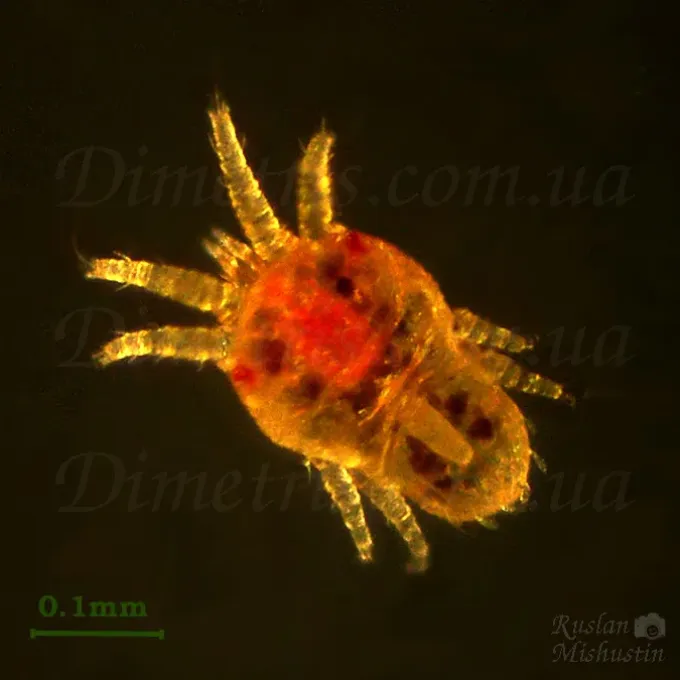
The flat scarlet mite (Cenopalpus lineola) belongs to the Tenuipalpidae family, often referred to as false spider mites. These are microscopic organisms characterized by a flattened, oval-shaped body that allows them to hide effectively in bark crevices.
Adults are easily recognized by their reddish-brown color and distinctively bright red legs. Unlike typical spider mites, they do not spin webs, which often leads to the misdiagnosis of symptoms in commercial orchards and home gardens.
The life cycle of the mite consists of the egg, larva, two nymphal stages, and the adult. They primarily overwinter as fertilized adult females, hiding in protected niches such as under bark scales or near the base of buds.
Activity resumes in early spring as temperatures rise. The female starts laying eggs on the surface of bark and developing buds. The number of generations per year is highly dependent on climate, with warmer summers leading to more rapid population growth.
These mites are highly adapted to the bark environment. Their flat bodies are an evolutionary response to surviving under pressure in narrow spaces, making them difficult to reach with standard contact-based pest control methods.
What it damages
The flat scarlet mite is a notorious pest of various fruit crops, particularly apples, pears, and many other Rosaceae species. Its feeding habits directly interfere with the plant's physiological processes.
By piercing the plant tissues and sucking cell sap, the mites damage the leaves and young shoots. This leads to impaired photosynthesis, causing the plant to lose vitality and reducing its overall growth potential.
Symptoms of heavy infestation include the yellowing, browning, and premature shedding of leaves. If a tree is consistently attacked over several seasons, its winter hardiness significantly decreases, making it prone to freezing damage.
Fruits can also be affected by a reduced supply of nutrients, leading to poor development, stunted size, and loss of quality. In serious cases, the tree may experience a significant drop in yield, impacting economic output.
The pest is difficult to spot during the early stages of infestation, which means that by the time visible damage occurs, the population is usually already at a high density, necessitating immediate intervention.
Signs of infestation
Initial signs include the poor development or drying of buds during the early spring growth flush. A careful inspection of the wood surface may reveal colonies of these minute, reddish mites near the bud scales.
Leaf damage manifests as chlorotic spots that eventually spread, giving the foliage a dull, unhealthy appearance. Unlike spider mites, there is no web to guide you, so look for discoloration instead.
Affected shoots often show restricted development and may become brittle. The overall canopy of an infested tree appears sparse and weakened, with visible patches of browning foliage occurring mid-summer.
During the peak of the season, check the undersides of leaves along the main veins. This is where the mites prefer to aggregate and feed, often causing the leaves to curl or lose their natural flexibility.
Using a magnifying glass to check samples of bark or leaves is the most reliable method for diagnosing the presence of this pest before it spreads to adjacent trees in the orchard.
Control measures
Effective management begins with early-season dormant oil sprays. These treatments are essential for suffocating the overwintering females before they emerge and begin the reproductive cycle.
The use of specific acaricides is recommended during the growing season. It is crucial to rotate chemical agents with different modes of action to prevent the development of pesticide resistance in the mite population.
Good horticultural practices, such as removing old bark and performing regular pruning, reduce the available overwintering sites for the mites, thereby limiting the size of the initial spring population.
Biological control is a significant component of integrated pest management. Conserving beneficial predators, such as phytoseiid mites, is vital for maintaining a natural balance in the garden.
- Apply acaricides based on local monitoring and pest threshold levels.
- Ensure uniform spray coverage, especially on the undersides of leaves and twigs.
- Avoid broad-spectrum insecticides that may harm natural mite predators.
Taxonomy
- Latin name
- Cenopalpus lineola
- Order
- Mites
- Family
- Tenuipalpidae
- EPPO code
- CENOLI
Discussion
No discussions yet — be the first.