
Iranian flat mite
Cenopalpus irani
Description
How to identify
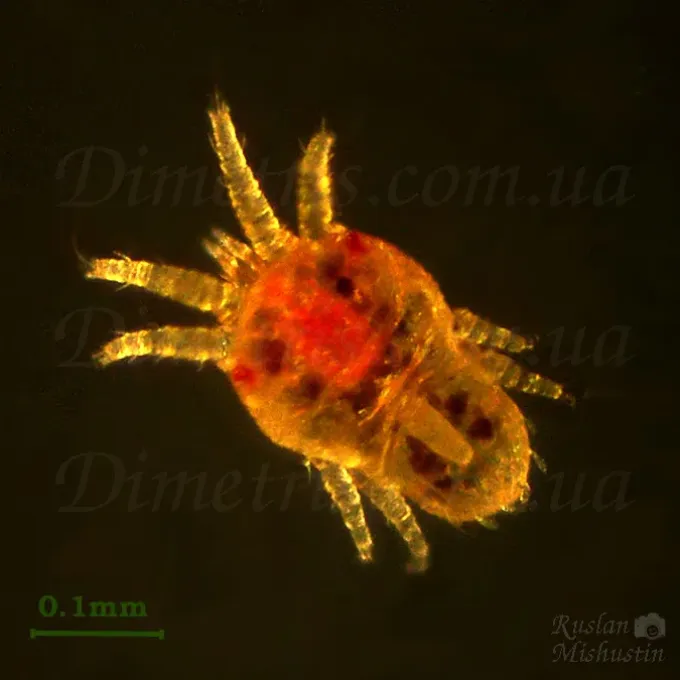
The Iranian flat mite (Cenopalpus irani) is a member of the Tenuipalpidae family, commonly known as false spider mites or flat mites. These mites are extremely small, with a flattened body shape that allows them to thrive in narrow spaces like bark crevices.
Adult mites are typically reddish to brown in color. Unlike members of the Tetranychidae family, they produce little to no webbing, making them difficult to spot during routine garden inspections without magnification.
Their life cycle includes the egg, larva, protonymph, deutonymph, and adult stages. All active stages feed on plant sap, and development is highly dependent on ambient temperature.
Fertilized females serve as the overwintering stage, hiding under loose bark, in cracks of woody parts, or among leaf debris. As temperatures rise in spring, they emerge to infest new foliage.
The population can explode during hot, dry summer months when the developmental cycle shortens significantly, allowing for multiple generations within a single season.
What it damages
This mite species primarily targets pome fruits, such as apples, pears, and quinces. Occasionally, it can also cause damage to various stone fruit species within commercial orchards.
The mites feed by piercing plant cells on the undersides of leaves. This process removes chlorophyll and essential nutrients, leading to decreased photosynthetic efficiency and plant stress.
Heavy infestations often result in the yellowing of foliage and can lead to premature leaf drop, which significantly weakens the tree's overall vigor.
When populations reach high densities, the mites move onto young fruit and buds. This feeding activity can cause fruit deformation and reduce the overall marketability of the harvest.
Prolonged damage negatively impacts the tree's ability to store reserves, which in turn reduces the potential for successful fruit bud formation for the following season.
Signs of infestation
Initial signs include the appearance of tiny chlorotic spots on the underside of leaves. As feeding continues, these spots merge, creating larger bleached areas.
Affected leaves may develop a bronzed or silver metallic sheen. In severe cases, leaves start to curl and dry out, eventually dropping prematurely from the canopy.
Fruit quality is affected by the development of corky patches or netting on the skin. This cosmetic damage is often a result of mite activity on the developing fruit surface.
Detection requires a magnifying glass or hand lens. Gardeners should focus their search along the midribs and veins of leaves where the mites prefer to congregate.
Monitoring should begin early in the season, immediately following bud break, as this is when the overwintering females begin their migration to the developing leaves.
Control measures
Effective management relies on the timely application of specific acaricides. Treatments should target both adult mites and their eggs to suppress population growth efficiently.
It is essential to rotate different classes of chemical agents to prevent the mites from developing pesticide resistance, which is common in this family of pests.
Orchard sanitation is a critical component of integrated pest management. Removing and burning old bark, as well as clearing leaf litter, reduces the number of successful overwintering sites.
Maintaining vigorous tree health through adequate irrigation and nutrient management helps plants withstand mite attacks and recover more quickly from potential stress.
- Apply dormant or early-season acaricide sprays.
- Use biological control agents when appropriate in late summer.
- Prune and destroy heavily infested branches during the dormant period.
Taxonomy
- Latin name
- Cenopalpus irani
- Order
- Mites
- Family
- Tenuipalpidae
- EPPO code
- CENOIR
Discussion
No discussions yet — be the first.