
Caulotops
Caulotops
Description
How to identify
Caulotops is a genus of plant bugs belonging to the family Miridae, order Hemiptera. These insects are characterized by their small size and typical piercing-sucking mouthparts, adapted for feeding on plant sap.
Adult insects usually exhibit an elongated body shape. Their coloration often ranges from pale green to brownish, providing excellent camouflage against the host plant's foliage. The body surface is frequently covered in fine, short hairs.
Identifying the specific species of Caulotops often requires a detailed microscopic examination of the pronotum structure and the wing venation patterns. Nymphs closely resemble adults but lack fully developed wings and possess less distinct pigmentation.
These bugs lead a relatively secretive lifestyle, spending much of their time on the underside of leaves or within the protective crevices of host plants. Their activity levels are strongly influenced by ambient temperature and relative humidity.
The population growth of this pest can be rapid under favorable environmental conditions, making early detection a critical component of successful integrated pest management strategies.
What it damages
Caulotops species primarily infest plants within the family Agavaceae, most notably agaves. They cause significant damage by feeding on young plant tissues, which drains vital nutrients and weakens the host.
In addition to agave, these bugs are known to infest ornamental succulents in greenhouses and nurseries. They show a clear preference for tissues with high moisture content, which facilitates their feeding process.
Both adults and nymphs cause damage by continuously feeding throughout the growing season. This persistent feeding leads to a loss of turgor pressure and a general decline in the plant's metabolic health.
Infestations typically start as localized clusters but can spread across large plantations if left unchecked. A high population density can result in severe disfigurement or death of the host plant.
Damage sites also create vulnerabilities, allowing secondary infections by phytopathogenic fungi and bacteria to enter the plant, which often exacerbates the original injury caused by the insects.
Signs of infestation
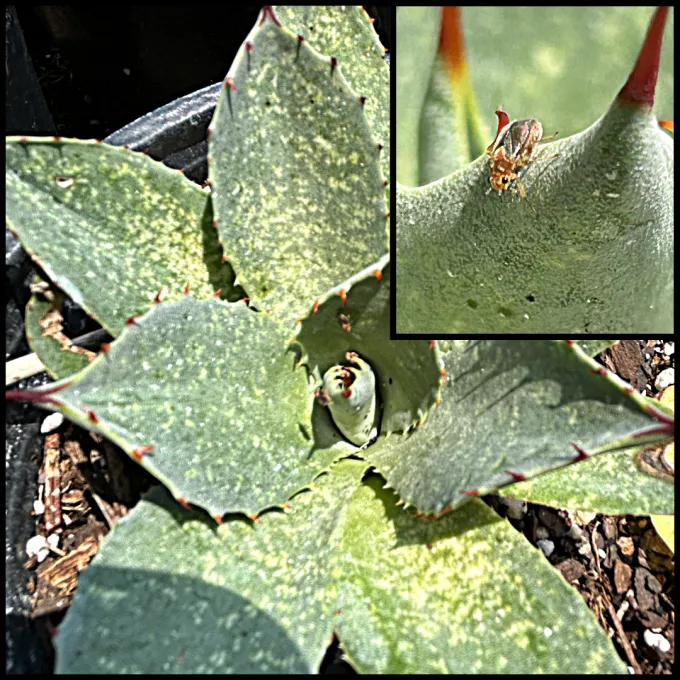
The primary symptom of a Caulotops infestation is the presence of small, light-colored, or chlorotic spots on the leaves. These spots are the direct result of the insects piercing the leaf tissue to feed.
Careful inspection of the underside of the leaves often reveals the presence of bugs, their shed skins (exuviae), and characteristic dark fecal spots. Severe infestations frequently lead to the deformation of young leaves and growth tips.
In advanced cases, affected leaves may wither, dry out, and fall prematurely. The entire plant often exhibits stunted growth and an overall unhealthy, stressed appearance that reduces its aesthetic and commercial value.
A specific sign to look for is a sticky, glossy residue on the leaf surface, caused by plant sap leaking from feeding punctures. This residue often becomes a breeding ground for sooty mold growth.
Regularly inspecting protected areas of the plant, such as leaf axils and the central rosette, is crucial, as the insects tend to cluster there during the day to avoid direct sunlight.
Control measures
Effective management begins with regular monitoring of crops. Proactive scouting allows for the identification of initial infestation hotspots, enabling targeted interventions before the pest population reaches damaging thresholds.
Biological control options include the introduction or conservation of natural enemies, such as predatory bugs, lacewings, or parasitic wasps. These beneficial organisms can significantly suppress pest population growth.
Good agricultural practices are essential for plant vigor. Avoid over-application of nitrogen fertilizers, as succulent growth is highly attractive to sap-sucking insects. Maintain clean growing conditions to minimize overwintering sites.
When the damage threshold is exceeded, the use of systemic insecticides is recommended. These chemicals are highly effective because they are absorbed by the plant tissue, reaching the insects in their hidden locations.
Post-treatment monitoring is necessary to evaluate the efficacy of the measures taken and to prevent resurgence. Always follow label instructions carefully to ensure both safety and optimal pest control results.
Taxonomy
- Latin name
- Caulotops
- Order
- Hemiptera (bugs, aphids, leafhoppers)
- Family
- Miridae
- EPPO code
- CAUTSP
Discussion
No discussions yet — be the first.