
Catopsilia rurina
Catopsilia rurina
Description
How to identify
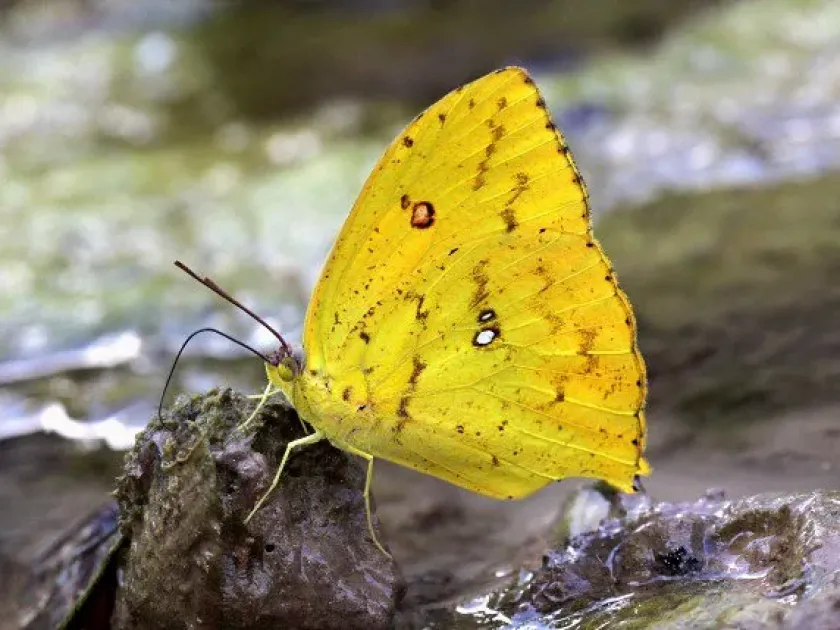
Catopsilia rurina belongs to the family Pieridae within the order Lepidoptera. This diurnal butterfly in its adult stage displays characteristic wing coloration ranging from yellowish to greenish-white, often with distinct dark margins.
The larvae (caterpillars) of this species possess a cylindrical body shape and protective green coloration, allowing them to effectively blend in with the leaves of their host plants. They are equipped with a well-developed head capsule and chewing mouthparts for intensive feeding.
The life cycle encompasses four distinct stages: egg, larva, pupa, and imago. The larvae undergo several molts before pupating, typically attaching themselves to stems or the undersides of leaves.
Adult butterflies are highly mobile, facilitating the rapid spread of the species across agricultural landscapes. While the adults feed on nectar, the primary economic damage is inflicted by the larval stage.
Females lay eggs directly on the host plants, often choosing the undersides of leaves to protect the clutch from direct sunlight and potential natural predators.
What it damages
The primary food source for the larvae of this species consists of plants within the Fabaceae (legume) family. The pest frequently targets both wild and cultivated varieties, including plants of the genus Senna and related agricultural crops.
In intensive farming, Catopsilia rurina can cause significant damage to young plantings by consuming tender foliage and terminal buds. This feeding activity reduces photosynthetic capacity and stunts the plant's overall growth.
Mass infestations lead to severe defoliation, which significantly lowers the yield of legume crops during critical growth periods. In severe cases, high caterpillar populations can result in the complete loss of leaf mass on individual plants.
Damaged tissues provide entry points for secondary infections, such as fungal and bacterial pathogens, which further weaken the plant and reduce the marketable quality of the produce.
The economic impact is primarily determined by the density of the caterpillar population during the active growth phase, when the crop is most vulnerable to biomass loss.
Signs of infestation
The first visual sign of infestation is the skeletonization or scalloping of the leaf edges on leguminous crops. Leaves may show irregular holes resulting from active larval feeding.
Accumulations of frass (caterpillar droppings) found on the soil surface or beneath the leaves serve as a key indicator of infestation, confirming the presence of actively feeding colonies.
During inspection, clusters of small, light-colored eggs can often be found on the undersides of leaves. These eggs possess a specific morphology characteristic of this butterfly genus.
The presence of adult butterflies in the field is a warning sign that requires increased monitoring, as their arrival typically precedes the emergence of new caterpillar generations.
Stunted growth of specific shoots and visible damage to leaf venation patterns further indicate that a colony of larvae is actively utilizing the plant's resources.
Control measures
Biological control methods are highly effective against this pest, particularly the use of Bacillus thuringiensis-based products, which selectively target lepidopteran larvae without harming beneficial entomofauna.
Cultural control practices include the timely removal of leguminous weeds, which can act as reservoirs for maintaining the pest population between growing seasons.
When the economic threshold of damage is reached, insecticides with either broad-spectrum or selective action may be applied. It is crucial to rotate chemical modes of action to prevent the development of resistance.
Encouraging the presence of natural enemies, such as parasitic wasps or predatory bugs, helps maintain Catopsilia rurina populations at safe levels within integrated pest management programs.
Monitoring using light traps or pheromone traps allows for precise timing of adult flight peaks, enabling targeted pesticide applications that minimize environmental impact while maximizing crop protection.
Taxonomy
- Latin name
- Catopsilia rurina
- Order
- Lepidoptera (butterflies)
- Family
- Pieridae
- EPPO code
- CATPRU
Discussion
No discussions yet — be the first.