
Catopsilia pyranthe
Catopsilia pyranthe
Description
How to identify
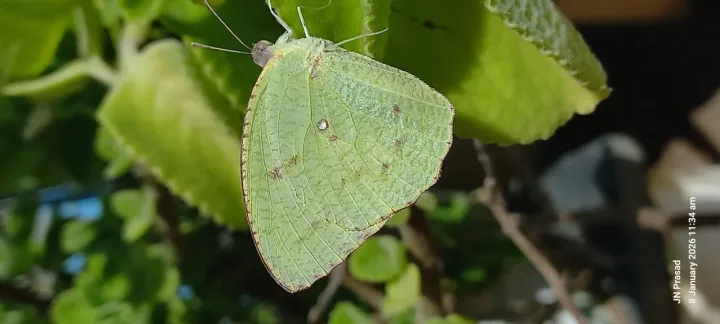
Catopsilia pyranthe, commonly known as the Mottled Emigrant, is a butterfly belonging to the Pieridae family. Adults typically have a wingspan ranging from 50 to 70 mm, with wing coloration varying from white to greenish-yellow.
The larvae (caterpillars) of this species are usually bright green, characterized by a prominent white or yellow lateral stripe. Their skin often features small black dots, giving the caterpillar a slightly rough, textured appearance.
The pupae of the insect are shaped and colored to mimic parts of the host plant for camouflage. They attach themselves to stems or leaves using a silk girdle, ensuring stability throughout the transformation period.
The larval stage is the most significant in terms of life cycle duration and resource consumption. Adult butterflies are active migrants capable of traveling long distances to locate suitable host plants for oviposition.
Taxonomically, the species is classified under the order Lepidoptera and the family Pieridae. It is a thermophilic pest primarily found in the tropical and subtropical regions of Asia and Oceania.
What it damages
The primary food sources for the larvae are plants within the Fabaceae (legume) family. The species poses a specific threat to various Cassia species, including medicinal senna and other ornamental legumes.
In an agricultural context, this pest can damage forage legume crops. Mass infestations of the insect can lead to complete defoliation of plants within a field, significantly reducing biomass.
Caterpillars consume leaf blades, often leaving behind only the tough veins. During population outbreaks, they may also target young shoots and flower buds, resulting in severe losses of potential seed yields.
Damage to the leaf surface substantially lowers the photosynthetic capacity of the plant. This weakens the root system and increases susceptibility to secondary pathogens or other pest infestations.
Most significant damage is reported in nurseries and young plantations, where intensive leaf feeding can stunt growth or cause the death of saplings. Adult butterflies do not damage plants, as they feed solely on nectar.
When it appears
The insect's activity is directly dependent on temperature and humidity levels. Breeding peaks occur during the warmer seasons when average daily temperatures exceed 25 degrees Celsius.
The developmental cycle from egg to imago can be quite rapid, allowing the species to produce several generations within a single growing season, posing a risk of continuous field infestation.
Butterfly migration patterns are often correlated with the onset of the rainy season, when host plants show vigorous growth. This is the period when mass egg-laying on the undersides of leaves typically occurs.
In regions with distinct seasonality, activity declines during dry or cold periods, when the insects enter a state of dormancy at the pupal stage.
Monitoring for the pest should begin as soon as the first leaves appear on host crops, as early colonization by larvae is critical to plant development.
Signs of infestation
The initial signs of infestation are characteristic holes or notched edges on the leaves. Young caterpillars start by skeletonizing the leaf, consuming soft tissues between the veins.
The presence of frass (caterpillar droppings) on leaves situated below feeding areas is a reliable indicator of active larval presence. The droppings usually appear as small, dark granules.
Visual inspection of the undersides of leaves can reveal egg clusters. These are typically laid in groups, featuring a yellowish tint and an elongated shape.
The caterpillars themselves, while adept at mimicking the leaf color, can be spotted upon careful examination of the terminal shoots and new growth.
Bare branches and a significant reduction in the plant's overall foliage are late-stage signs of infestation, requiring immediate containment efforts.
Control measures
Biological control is the preferred management strategy. The use of natural enemies, such as predatory wasps or parasitoid flies, effectively helps to suppress pest populations.
Application of bacterial formulations based on Bacillus thuringiensis is highly effective against younger larval instars while remaining safe for beneficial insects.
Mechanical removal of caterpillars and pruning of heavily infested plant parts are justified in small home gardens or confined greenhouse environments with low population numbers.
Chemical protection should be reserved for emergency cases, utilizing contact-stomach insecticides registered for use on legume crops.
- Regular plantation monitoring to identify early egg clusters.
- Implementation of crop rotation to disrupt the insect's life cycle.
- Attracting natural predators by planting nectar-rich flowers along the field perimeter.
Taxonomy
- Latin name
- Catopsilia pyranthe
- Order
- Lepidoptera (butterflies)
- Family
- Pieridae
- EPPO code
- CATPPY
Discussion
No discussions yet — be the first.