
Orange-barred sulphur
Catopsilia philea
Description
How to identify
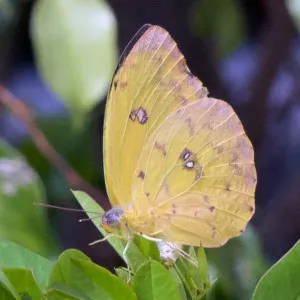
The orange-barred sulphur (Catopsilia philea) is a large, charismatic butterfly belonging to the Pieridae family (the whites and sulphurs). It is widely distributed across the Americas.
Adults are known for their vibrant yellow or orange wings with distinctive dark margins, which serve as a primary diagnostic feature for identification.
The larvae are typically green with pale longitudinal stripes, providing excellent camouflage while feeding on the leaves of their host plants.
Like all Lepidoptera, they undergo complete metamorphosis, progressing through egg, larval (caterpillar), pupal, and adult stages over several weeks.
The pupae are generally attached to stems or the underside of leaves by a silken girdle, often resembling a natural outgrowth of the plant to avoid detection by predators.
What it damages
Catopsilia philea caterpillars primarily feed on plants within the legume family (Fabaceae), with a strong preference for species in the Cassia and Senna genera.
While often viewed as beautiful pollinators in their adult stage, the caterpillars can become significant pests when they occur in high densities, particularly in nurseries and ornamental gardens.
The damage is caused by the voracious appetite of the larvae, which can strip a plant of its foliage, leading to reduced photosynthetic capacity and stunted growth.
Heavy infestations can lead to complete defoliation, which causes physiological stress to the plant and makes it susceptible to secondary environmental pressures.
Damage to the leaf tissue also disrupts the overall aesthetics and health of the host plant, potentially affecting its ability to bloom or produce seeds.
Signs of infestation
The most common sign of an infestation is irregular leaf margins where the caterpillars have been feeding, often leaving only the main veins intact.
Finding frass (caterpillar droppings) on the leaves beneath the feeding site is a reliable indicator that larvae are present in the upper canopy.
Careful observation of the underside of leaves and stems often reveals the larvae resting or feeding, as they are naturally adapted to remain hidden.
The presence of pupae securely fastened to plant parts is a definitive sign that a generation has completed its development and the cycle may continue.
- Ragged, eaten leaf edges.
- Presence of green larvae on the underside of foliage.
- Accumulation of larval frass on lower leaves.
Control measures
For small-scale infestations in home gardens, manual removal of larvae is a highly effective and eco-friendly method to manage the population.
Biological control agents, such as formulations of Bacillus thuringiensis (Bt), are highly effective against these caterpillars while remaining safe for beneficial insects.
In cases of severe outbreak, targeted application of appropriate insecticides may be necessary, provided that environmental guidelines and safety precautions are followed.
Promoting a healthy environment for natural predators, such as wasps, birds, and spiders, acts as a long-term strategy for suppressing caterpillar numbers.
Removing alternative host plants, such as wild leguminous weeds near the target crop, can help break the lifecycle and prevent repeated outbreaks in the area.
Taxonomy
- Latin name
- Catopsilia philea
- Order
- Lepidoptera (butterflies)
- Family
- Pieridae
- EPPO code
- CATPPH
Discussion
No discussions yet — be the first.