
Casnoidea indica
Casnoidea indica
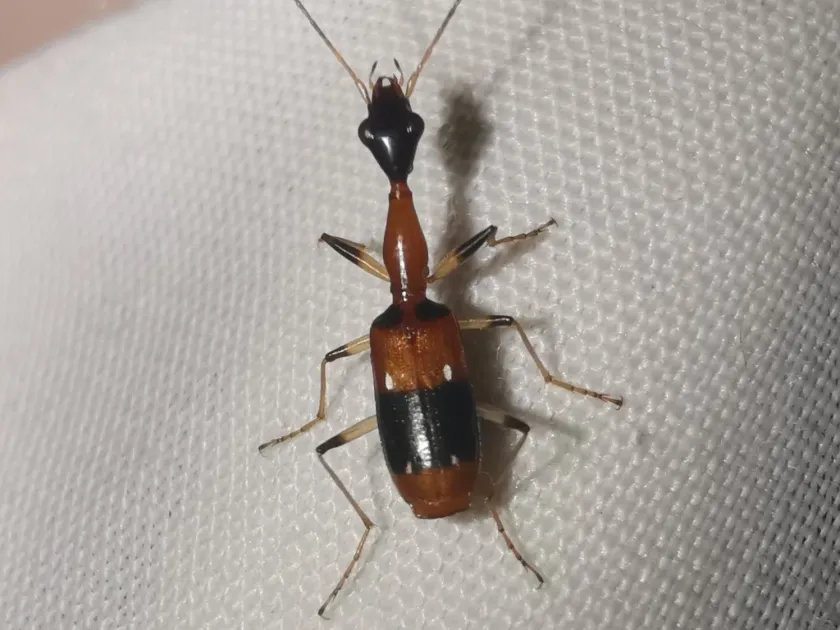
Description
How to identify
Casnoidea indica belongs to the ground beetle family (Carabidae) within the order Coleoptera. This species is recognized by its elongated body, typical of the Lebiinae subfamily.
Adult beetles usually exhibit a dark color with a metallic sheen. Their physical structure includes a slender pronotum and long antennae, which facilitate swift movement through dense foliage.
Larvae of this species are cryptic, often residing in the root zone or leaf axils where they find protection from predators and environmental stress.
Due to the similarity with other predatory ground beetles, accurate identification often requires a laboratory examination of specific morphological characteristics.
The biology of Casnoidea indica is heavily influenced by moisture, making the species thrive in areas with high humidity and favorable soil conditions.
What it damages
This pest primarily targets cereal crops and various vegetable plants. Significant damage is often recorded in rice fields and other grain-growing regions.
Both adults and larvae consume plant tissues, specifically feeding on the leaf parenchyma, which impairs the plant's ability to perform photosynthesis effectively.
During outbreaks, this pest can decimate large areas of young crops, leading to substantial yield losses and poor plant establishment in the field.
Larval feeding on the root collar can cause plants to lodge or wither, creating sparse patches across the agricultural landscape which reduces overall field uniformity.
Weakened plants are subsequently more vulnerable to secondary infections, including fungal and bacterial pathogens, which further complicate the health of the crop.
When it appears
The life cycle of Casnoidea indica is closely tied to climatic conditions. Activity begins as temperatures rise during the early spring season.
Population peaks typically occur during the summer months when environmental conditions favor multiple generations and rapid reproductive rates.
As autumn approaches, the beetles enter a dormant state, overwintering in the soil or protected debris within the field to survive lower temperatures.
The migration of adults into crop fields often aligns with the tillering phase of cereal crops, which is a critical time for monitoring and early detection.
Heavy rainfall during the growing season can trigger sudden population spikes, as adequate moisture is essential for the development of the larval stage.
Signs of infestation
The first signs of infestation include small, irregular holes in the leaf blades, which expand over time as the larvae grow larger and increase their consumption rate.
Yellowing and wilting of the upper leaves are often observed, indicating damage to the stem or root crown which interferes with nutrient and water transport.
- Presence of insect frass on the leaves.
- Visible damage along the edges of the foliage.
- Direct observation of beetles in plant leaf axils during the early morning.
Because these insects are nocturnal, evening inspections with a flashlight are often more effective for identifying the presence of the pest than daylight surveys.
Severe infestations give the field a skeletonized appearance, which is highly noticeable when inspecting the crop diagonally during routine scouting.
Control measures
Effective management requires an integrated approach that combines cultural, biological, and, if necessary, chemical control strategies.
Rigorous weed management in and around the fields is crucial, as weeds often serve as alternative hosts and refuge sites for the beetles during the off-season.
Adhering to proper crop rotation schedules and optimizing planting times can help crops reach stages of maturity where they are less susceptible to beetle damage.
Chemical control should be implemented only after confirming that the pest population has exceeded the established economic threshold for the specific crop.
Biological control alternatives, including the use of entomopathogenic fungi or natural predators, offer promising results in reducing populations while maintaining ecological balance.
Taxonomy
- Latin name
- Casnoidea indica
- Order
- Coleoptera (beetles)
- Family
- Carabidae
- EPPO code
- CASNID
Discussion
No discussions yet — be the first.